Vanish DrySerum is a dissolving nanofiber acne mask that delivers azelaic acid, niacinamide, zinc, and tea tree to the skin in a single ten-second application, and is marketed as a gentle, barrier-repairing alternative to harsh acne treatments like benzoyl peroxide and retinoids. The promise is clear skin without burning, peeling, or irritation, with bold claims that it works better than almost anything else, including prescription options. The real question is how much of that is supported, and whether this novel format is worth its likely premium price.
If you have sensitive, easily irritated skin and you are tired of acne treatments that leave you red and peeling, the gentle approach here will sound appealing, and there is genuine substance behind it. Here is our honest position up front: the active ingredients in DrySerum are legitimate, evidence-based, and genuinely gentler than the harsh treatments it criticizes, so the core idea has real merit, especially for mild acne and sensitive skin. But the marketing significantly overstates the evidence, leans on unverified clinical percentages, frames proven treatments unfairly, and makes promises about severe and cystic acne that a topical mask cannot keep. This review separates the legitimate skincare science from the salesmanship, and is clear about when you should see a dermatologist instead.
We analyzed the product, checked the dermatological evidence for its ingredients, and compared it to proven alternatives. Here is the complete, balanced picture.
TL;DR Summary
- What it is: A dissolving nanofiber mask delivering azelaic acid, niacinamide, zinc, and tea tree, applied for about 10 seconds, aimed at gentle acne treatment and barrier repair.
- The ingredients are legitimate: Azelaic acid is a genuinely effective, gentle acne active; niacinamide is a solid supportive ingredient. The gentle, barrier-friendly approach is sound for mild acne and sensitive skin.
- But gentler does not mean stronger: Evidence suggests azelaic acid is likely less effective than benzoyl peroxide and comparable to retinoids, so “works better than anything” overstates it.
- The clinical claims are unverified: The 89%, 96%, and “0% irritation” figures are the seller’s own, with no published study, sample size, or method provided.
- It overpromises on serious acne: Claims about clearing cystic acne and beating prescription treatment are not realistic, and moderate-to-severe acne needs a dermatologist.
- It does not replace your whole routine: You still cleanse and moisturize (their own steps say so), and you still need sunscreen.
- Cheaper proven options exist: Azelaic acid and niacinamide are available inexpensively over the counter and by prescription.
- Best for: People with mild acne or sensitive, easily irritated skin who want a gentle, barrier-friendly product and have realistic expectations.
- Skip it if: You have moderate-to-severe or cystic acne (see a dermatologist), or you want maximum value from proven actives.
Quick Verdict Box
Ossaward Rating: 3.1 / 5
One-line summary: A gentle, legitimately formulated acne product built on real, evidence-based ingredients and a sound barrier-friendly philosophy, undermined by unverified clinical claims, an overpromise on severe acne, fear-based marketing against proven treatments, and better-value alternatives that use the same actives.
| Best for | Mild acne and sensitive, easily irritated or rosacea-prone skin |
| Avoid if | You have moderate-to-severe or cystic acne (see a dermatologist) |
| Key actives | Azelaic acid, niacinamide, zinc, tea tree |
| Format | Dissolving nanofiber mask, about a 10-second application |
| Strength | Gentle and barrier-friendly, evidence-based actives |
| Weakness | Unverified claims; gentler, not stronger, than proven options |
| Guarantee | 45-day money-back |
| Sold here via | The GiddyUp offer page |
Reviewed by Rosie Chapman, Ossaward wellness and skincare reviewer. Approach: evaluating the ingredients against published dermatological evidence, separating verified facts from brand claims, and flagging when professional care is the right path.
Product Overview Table
| Specification | Detail |
|---|---|
| Product | Vanish DrySerum (nanofiber acne mask) |
| Brand | Vanish Skincare |
| Format | Dissolving nanofiber mask applied to damp skin |
| Key ingredients | Azelaic acid, niacinamide, zinc ferment, tea tree extract |
| Application | Cleanse, apply mask to damp skin, wait about 10 seconds, peel, moisturize |
| Best suited to | Mild acne; sensitive, oily, combination, rosacea-prone skin |
| Claimed timeline | Improvements in 2 to 3 weeks (brand-cited) |
| Guarantee | 45-day money-back |
| Not a substitute for | Medical care for moderate-to-severe or cystic acne |
| Sold here via | The GiddyUp offer page |
What Is Vanish DrySerum?
Vanish DrySerum is a dissolving nanofiber mask that delivers concentrated skincare actives to the face in a single short application, positioned as a gentle, barrier-repairing acne treatment rather than a harsh, stripping one. You cleanse, dampen your skin, apply the thin fiber mask, wait about ten seconds for it to dissolve and release its actives, peel away any residue, and follow with moisturizer. The headline ingredients are azelaic acid, niacinamide, zinc, and tea tree.
The core philosophy is genuinely sound, and worth stating plainly because it is the product’s biggest strength. A lot of acne treatment focuses on aggressively attacking the skin, which can leave it dry, red, and irritated, and a healthy skin barrier really does matter for acne-prone skin. Choosing gentle, anti-inflammatory actives like azelaic acid and niacinamide, and pairing them with a barrier-friendly approach, is legitimate dermatological thinking, especially for people with mild acne or sensitive, reactive skin who do not tolerate harsher treatments well. So the concept here is not a gimmick.
The questions, which the rest of this review works through carefully, are whether the novel nanofiber format delivers meaningfully more than a normal serum, whether the bold clinical and “better than everything” claims hold up, and whether the product is worth its price compared with the same proven actives sold more cheaply. The honest answer is mixed: good ingredients and philosophy, overstated marketing.
The Ingredients: Genuinely Legitimate and Gentle
This is where DrySerum earns real credit. Azelaic acid and niacinamide are well-studied, effective, and gentle acne ingredients, and the formula is a sensible, barrier-friendly choice for mild acne and sensitive skin. Let us look at each.
Azelaic acid is the star, and it is a genuinely good one. It is a recognized acne treatment that works by calming inflammation, gently unclogging pores, reducing acne-causing bacteria, and fading the dark marks (post-inflammatory hyperpigmentation) that breakouts leave behind. It is especially well regarded for sensitive, rosacea-prone, or easily irritated skin, where harsher options are poorly tolerated. Importantly, published evidence finds azelaic acid is comparable to topical retinoids in effectiveness, which is a real endorsement of the ingredient. So a product built around azelaic acid has a legitimate, evidence-based foundation.
Niacinamide is a strong supporting player. It helps regulate oil, calms inflammation and redness, strengthens the skin barrier, and improves tone. The honest nuance is that for acne specifically, niacinamide is generally supportive rather than corrective on its own; it helps the conditions around acne more than it clears active breakouts directly. Paired with azelaic acid, though, it is a sensible complement.
Zinc has some supporting evidence for acne and oil control, and tea tree extract has mild antibacterial and anti-inflammatory properties, though tea tree can itself cause irritation or allergy in some people, which matters given the “zero irritation” marketing.
The bottom line on ingredients: this is a legitimate, gentle, barrier-friendly acne formula, and for the right skin (mild acne, sensitivity) the actives can genuinely help. That is the real reason to consider it.
Where the Marketing Overstates the Case
The ingredients are real, but several of DrySerum’s headline claims go well beyond what the evidence supports. These are the points to keep your guard up about.
“Works better than benzoyl peroxide, retinoids, and anything else.” This is the biggest overstatement. Gentler does not mean stronger. Published evidence actually suggests azelaic acid is probably somewhat less effective than benzoyl peroxide, and roughly comparable to retinoids. Benzoyl peroxide is frequently a dermatologist’s first choice for inflamed breakouts precisely because it works quickly and powerfully. So DrySerum’s actives are a great gentler alternative for people who cannot tolerate the stronger options, but the claim that they outperform everything, including prescription treatment, is not supported.
The “harsh chemicals punish your skin” framing. The page describes benzoyl peroxide, salicylic acid, and retinoids as stripping and damaging your skin. In reality, these are among the most evidence-based, dermatologist-recommended acne treatments that exist. They can cause dryness or irritation, especially if overused, but that is managed with proper use, not a reason to dismiss them as harmful. Disparaging the proven treatments to sell a gentler one is a marketing red flag, not a scientific argument.
The clinical percentages. Claims like “89% saw improvements in 3 weeks,” “96% prefer it,” “0% experienced irritation,” and “clinically proven to strengthen skin in 2 weeks” with specific barrier markers are presented as hard evidence, but no published study, sample size, or methodology is provided. “Dermatologist-tested” and “clinically tested” are vague marketing phrases, not proof of effectiveness and not the same as regulatory approval. Treat all these figures as unverified brand claims.
The “4x deeper,” or is it 8x, nanofiber claim. The page says actives penetrate “4x deeper” in one place and “up to 8x deeper” in another, which is internally inconsistent. Dissolving fiber films are a real delivery format and may aid absorption somewhat, but these specific multipliers are unverified marketing, and the “patented” technology claim cannot be independently confirmed.
“One application replaces your entire routine.” This contradicts the product’s own instructions, which tell you to cleanse first and moisturize after. It does not replace your cleanser or moisturizer, and it certainly does not replace sunscreen, which is essential with any acne treatment. It is a step in a routine, not a whole routine.
The Most Important Caution: Severe and Cystic Acne
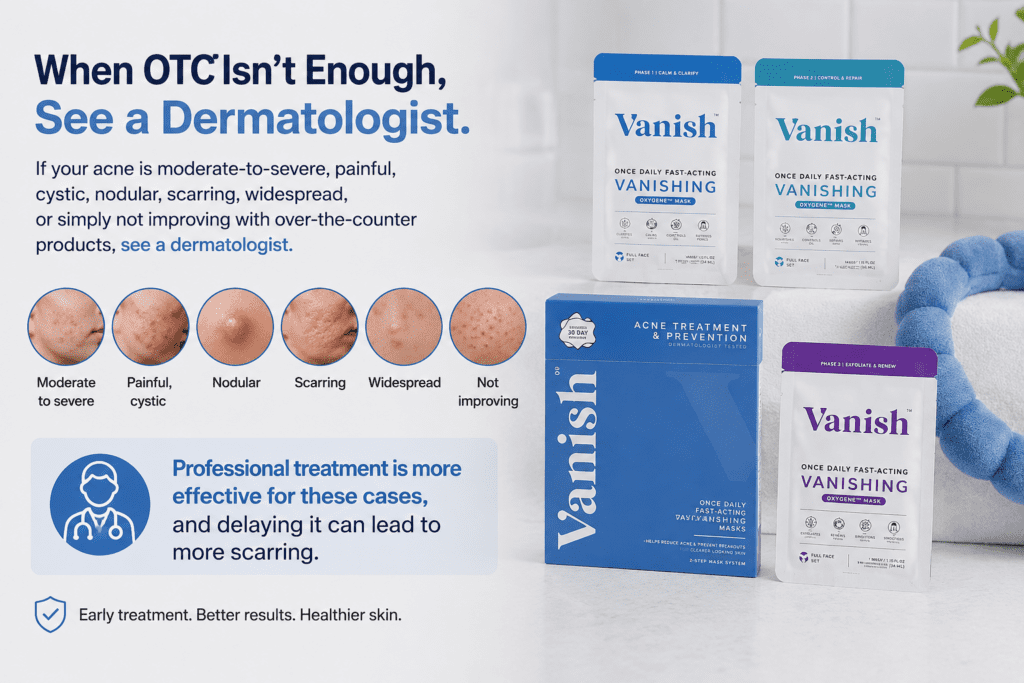
The claims that DrySerum controls cystic breakouts, heals the root cause of acne, and works better than treatments like Accutane are not realistic, and for anyone with serious acne, relying on them could delay effective care. This is the part of the review that matters most for your skin and health.
Acne is not caused by a single “root cause” like a damaged barrier; it is driven by a combination of factors including hormones, genetics, excess oil, bacteria, and inflammation. Mild acne often responds well to topical treatment, including gentle actives like those in DrySerum. But moderate-to-severe acne, and especially painful cystic or nodular acne, frequently needs more than any topical product can offer, often prescription topicals, oral medication, or other dermatologist-directed treatment. Accutane (isotretinoin) is a powerful oral medication reserved for severe, scarring, or treatment-resistant acne, and it is simply not in the same category as a topical mask; comparing the two is misleading. If your acne is painful, deep, scarring, widespread, or not improving, the right move is to see a dermatologist, not to keep trying over-the-counter products. A gentle mask is fine to use, but do not let its marketing convince you to postpone treatment that actually works for serious acne.
The Format: Novel, Possibly Nice, Unproven for Acne
The dissolving nanofiber mask is a genuinely novel and potentially pleasant format. Delivering actives in a dry fiber that dissolves on damp skin, without water or preservatives, is an interesting idea, and the quick, mess-free application could make it easier to stay consistent, which genuinely matters since consistency drives results with any acne treatment. Some people will simply enjoy using it more than a sticky serum, and that is a real, if modest, benefit.
The honest caveats are that the specific advantages claimed for the format (the multiplied penetration figures) are unverified, and the format itself is not independently proven to outperform a well-formulated conventional azelaic acid or niacinamide product. The actives are what do the work; the delivery method is a convenience and novelty feature, not established to be dramatically more effective. So enjoy the format if it appeals to you, but choose the product for its ingredients, not its fibers.
Pros and Cons
Pros
- Legitimate, evidence-based actives. Azelaic acid and niacinamide are genuinely good acne ingredients.
- Gentle and barrier-friendly. A sound approach for sensitive, reactive, or rosacea-prone skin.
- Good for mild acne and post-acne marks. Azelaic acid helps with breakouts and dark spots.
- Novel, easy, mess-free format. May aid consistency.
- 45-day money-back guarantee. Reduces the risk of trying it.
Cons
- Gentler, not stronger. Likely less effective than benzoyl peroxide; comparable to retinoids.
- Unverified clinical claims. The percentages and “clinically proven” language lack published evidence.
- Overpromises on serious acne. Cystic-acne and “better than Accutane” claims are unrealistic and risky.
- Misleading anti-treatment framing. Disparages proven options unfairly.
- Does not replace a routine. You still need cleanser, moisturizer, and sunscreen.
- Inconsistent penetration claims. “4x” versus “8x deeper,” unverified.
- Premium price for cheap actives. The same ingredients are available far more affordably.
Who Should Consider Vanish DrySerum
It is a reasonable choice for people with mild acne or sensitive, easily irritated, or rosacea-prone skin who want a gentle, barrier-friendly product and have not tolerated harsher treatments well. If you like the idea of azelaic acid and niacinamide in a quick, novel format, you understand the results will be gradual and modest rather than dramatic, and you keep realistic expectations, DrySerum can be a pleasant, legitimately formulated addition to your routine. The 45-day guarantee lets this kind of buyer try it with limited risk. Just pair it with a gentle cleanser, a moisturizer, and daily sunscreen, since it does not replace those.
Who Should Skip It
Skip it, and see a dermatologist instead, if you have moderate-to-severe, painful, cystic, nodular, or scarring acne, because a topical mask is not the right treatment and delay can mean more scarring. Skip it if you want the most effective option for inflamed breakouts, where benzoyl peroxide or a prescription retinoid may serve you better. Skip it if value matters most, since you can get the same proven actives more cheaply elsewhere. And do not buy it on the strength of the “better than everything” or “clears cystic acne” claims, because those are exactly the parts that do not hold up.
How DrySerum Compares to Proven Alternatives
You can get DrySerum’s key actives, and other proven acne treatments, in well-established products, often at a fraction of the price.
Versus over-the-counter azelaic acid: Affordable azelaic acid products (for example, widely available 10% formulas, and stronger non-prescription creams) deliver the same star ingredient DrySerum is built around, with transparent concentrations, usually for far less money. If azelaic acid is what appeals to you, these are the value benchmark.
Versus prescription azelaic acid (such as Finacea 15%): A dermatologist can prescribe a higher-strength, regulated azelaic acid that is more potent than any over-the-counter version, often covered by insurance.
Versus benzoyl peroxide and retinoids: For inflamed or more stubborn acne, these proven treatments are typically more effective, and are inexpensive and widely available. They can be drying, but that is manageable, and they remain dermatologists’ mainstays for good reason.
Versus seeing a dermatologist: For anything beyond mild acne, this is the real comparison. Professional care can match the right treatment to your specific acne, something no one-size product can do.
The honest summary: DrySerum’s gentle format and barrier-friendly approach have appeal, but as a way to get effective actives, it is a premium-priced, unverified-claims option in a field full of cheaper, proven alternatives. For another skincare product we have assessed honestly, see our MyoGlow review, and browse our other wellness and skincare reviews.
Tips If You Decide to Try It
- Patch-test first. Despite the “zero irritation” claim, tea tree and azelaic acid can irritate some skin. Test on a small area before regular use.
- Keep the rest of your routine. Use a gentle cleanser and a moisturizer, since the mask does not replace them.
- Wear sunscreen daily. Essential with any acne treatment; SPF 30 or higher.
- Be patient and consistent. Gentle actives work gradually, give it the full guarantee window before judging.
- Set realistic expectations. Expect modest, gradual improvement in mild acne and tone, not a dramatic overnight transformation.
- Escalate if needed. If your acne is painful, deep, scarring, or not improving, see a dermatologist rather than continuing indefinitely.
- Compare the cost. Weigh it against affordable over-the-counter azelaic acid and niacinamide before committing.
Frequently Asked Questions
Does Vanish DrySerum actually work for acne?
Is DrySerum better than benzoyl peroxide or retinoids?
Can DrySerum clear cystic acne?
Are the clinical claims real?
Is DrySerum gentle enough for sensitive skin?
Does it really replace my whole skincare routine?
What is the nanofiber technology, and does it work better?
How much does Vanish DrySerum cost?
Is there a guarantee?
When should I see a dermatologist instead?
Final Verdict
Vanish DrySerum is a genuinely well-formulated, gentle acne product wrapped in marketing that overreaches. The good news is real: azelaic acid is an evidence-based, effective, gentle acne ingredient, niacinamide is a solid supporting active, and the barrier-friendly philosophy is sound dermatological thinking, particularly for people with mild acne or sensitive, easily irritated skin who do badly with harsher treatments. The novel dissolving-fiber format is pleasant and may help consistency. For the right person and the right (mild) acne, this can genuinely be a nice, effective addition to a routine.
The problems are with the claims, not the ingredients. Gentler does not mean stronger, so “works better than benzoyl peroxide, retinoids, and anything else” overstates the evidence, which actually places azelaic acid as comparable to retinoids and likely a bit less potent than benzoyl peroxide. The clinical percentages are unverified brand claims, the penetration figures are inconsistent, the “replaces your whole routine” line contradicts the product’s own steps, and the framing of proven treatments as skin-punishing is misleading. Most importantly, the suggestions that it clears cystic acne, heals the root cause, and rivals prescription treatment are not realistic, and for anyone with serious acne, that overpromise is the kind that can delay genuinely effective care.
So here is our honest recommendation. If you have mild acne or sensitive skin, you want a gentle, barrier-friendly product with legitimate actives, and you keep realistic expectations (and still cleanse, moisturize, and wear sunscreen), DrySerum is a reasonable, if premium-priced, option, and the 45-day guarantee lets you test it. But if you want maximum value, the same proven actives are far cheaper elsewhere, and if your acne is moderate-to-severe or cystic, skip the mask and see a dermatologist, because that is the treatment that actually works. Buy it for its genuine strengths, gentle, legitimate actives, not for the miracle the ads promise.
Ossaward Rating: 3.1 / 5. Legitimate, gentle, evidence-based actives and a sound philosophy, held back by unverified clinical claims, an unrealistic overpromise on serious acne, misleading anti-treatment framing, and cheaper proven alternatives.
If you have mild acne or sensitive skin, you want a gentle product built on legitimate actives like azelaic acid and niacinamide, and you understand the results will be gradual and modest, you can check current Vanish DrySerum pricing here: