






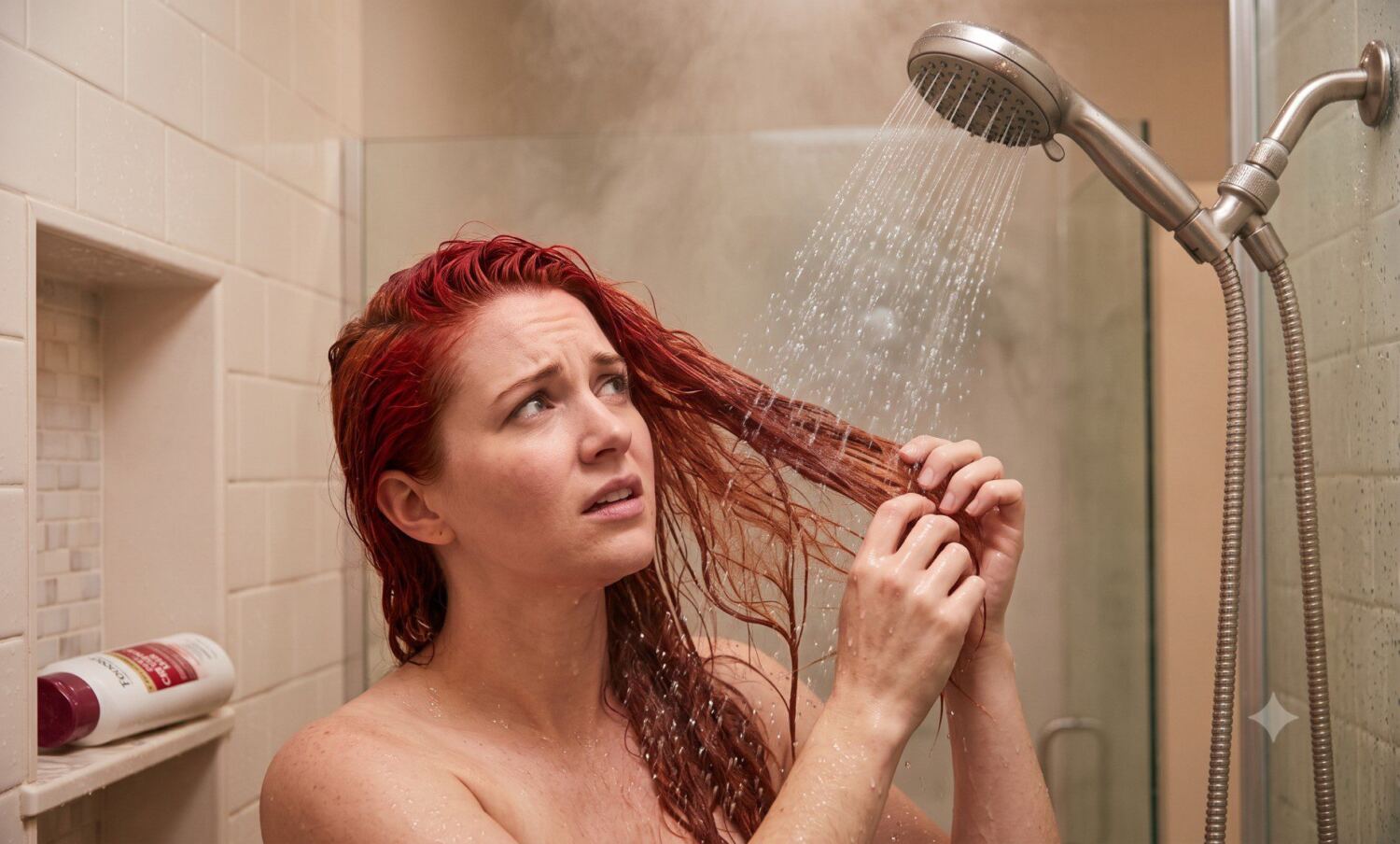
You just spent hours at the salon and a significant amount of money perfecting your hair color. Yet, just a few weeks later, the vibrancy is gone, the tone has shifted, and your strands feel like straw. While you might blame your shampoo or heat styling, the real culprit could be pouring right out of your showerhead: chlorine.
Water treatment facilities rely on chlorine to kill harmful bacteria and keep our municipal water supplies safe. However, this powerful chemical is a known enemy of healthy hair—especially if your hair is color-treated or bleached.
Here is the science behind how the chlorine in your daily shower water damages your hair, strips your color, and what you can do to stop it.
The Science: What Chlorine Does to Hair at a Molecular Level
Chlorine is a strong oxidizing agent. Its primary job is to break down organic matter. When it comes into contact with your hair, it performs three damaging actions:
- Strips Natural Oils: Your scalp produces sebum, a natural lipid barrier that coats and protects the hair shaft. Chlorine aggressively strips these oils away, leaving the hair shaft exposed, dry, and highly prone to breakage within minutes of a shower.
- Breaks Down Proteins: Hair is primarily composed of keratin protein. Chlorine chemically attacks the amino acid bonds that give keratin its strength. Specifically, chlorine reacts with an amino acid called tyrosine to form a new, weaker compound known as chlorotyrosine. This structural breakdown leaves hair feeling rough and weak.
- Lifts the Cuticle: The outermost layer of your hair, the cuticle, resembles overlapping roof shingles. Chlorine causes these cuticles to lift and stand up. This increases friction between strands, leading to severe tangling, frizz, and split ends.
How Chlorine Specifically Ruins Color-Treated Hair
Virgin hair (hair that has never been chemically altered) has a tightly bound cuticle layer that offers some natural resistance. Color-treated hair, however, is already highly porous. The coloring or bleaching process forces the cuticle open to deposit or remove pigment.
When you wash color-treated hair in chlorinated water, the damage is amplified:
Read Also:- NUUD Showerhead Review: What the Triple Filter Actually Does (And Whether It Works)
1. Rapid Color Fading through Oxidation
Because chlorine is an oxidizer, it directly attacks and breaks down artificial dye molecules. Repeated exposure over time degrades these molecules, causing your expensive salon color to fade significantly faster than it should. Furthermore, because the chlorine has lifted the already-fragile cuticle layer, the color molecules can easily slip out and wash down the drain.
2. The Dreaded “Green Tint” Phenomenon
If you have blonde, bleached, or heavily highlighted hair, you may have noticed a brassy or faint green hue developing over time. While people often blame chlorine directly for turning hair green, it is actually a secondary chemical reaction. When chlorine interacts with hard water minerals like copper (often found in older plumbing pipes), it causes oxidation. These oxidized copper compounds enter the porous hair strands and deposit a greenish tint.
3. Complete Loss of Moisture Retention
Chemically treated hair naturally struggles to retain moisture. Because chlorine strips away any remaining protective oils, color-treated hair loses hydration as quickly as it absorbs it. This creates a chronic cycle of dehydration, leaving strands brittle, straw-like, and lifeless.
The Double Threat: Chlorine + Hard Water
In many homes, chlorine is not acting alone. It is often combined with hard water—water containing high concentrations of dissolved calcium and magnesium.
While chlorine chemically breaks down your hair’s structure and fades color, hard water minerals leave a chalky film on the hair shaft. This mineral film acts as a barrier, preventing hydrating conditioners and glosses from penetrating the hair. When combined, the mineral buildup makes the hair look dull and muted, while the chlorine actively destroys the internal pigment and strength.
How to Protect Your Color-Treated Hair
You cannot control how your municipality treats its water, but you can control what hits your hair. Here is how to stop chlorine damage:
1. Install a Filtered Showerhead
The single most effective step you can take is to remove the chlorine before it touches you. Using a high-quality shower filter containing KDF (Kinetic Degradation Fluxion) media or activated carbon can significantly reduce chlorine levels. By neutralizing the chlorine at the source, your hair retains its natural oils, and your hair color stays vibrant for weeks longer.
2. Wash Less Frequently
Every time you shower, you expose your hair to tap water chemicals. By reducing your hair-washing frequency, you limit chlorine exposure and allow your scalp’s natural oils to replenish and protect your strands. On non-wash days, protect your hair from the steam and airborne chlorine vapors by wearing a shower cap.
3. Use Gentle, Sulfate-Free Shampoos
Sulfates are harsh detergents that strip away moisture. When combined with chlorinated water, they create a recipe for severely dehydrated hair. Switch to sulfate-free formulas that cleanse without disrupting the hair’s natural hydration levels.
4. Clarify When Necessary
If you have been showering in highly chlorinated water or notice a green tint from oxidized minerals, use a gentle clarifying shampoo to remove the chemical and mineral buildup. Follow up immediately with a deep-conditioning mask to restore lost moisture and smooth the cuticle layer.

