

We may receive a commission for purchases made through the links provided here. Learn More Learn More.
You’ve seen the ad. A heap of clothes collapses to a fraction of its size inside a sleek bag, a tiny pump whirs in someone’s palm, and a week’s worth of packing vanishes into a single carry-on. The promise: triple your space, never pay for a checked bag again.
I’ve packed for enough trips — and been burned by enough overhyped travel gadgets — to be skeptical of any product that claims to triple anything. Cheap vacuum bags from Amazon tear, leak, and lose their seal halfway through a trip. Manual roll-up compression bags require you to kneel on them like you’re performing CPR. Packing cubes organize but barely compress. The category is full of disappointment.
So I bought an Aerless kit and tested it for thirty days across real travel. And I’ll tell you upfront: the product genuinely works better than I expected. The pump is legitimately powerful, the bags are genuinely durable, and the space savings are real.
But there’s a catch — a significant one that most Aerless reviews either don’t understand or deliberately skip. It’s the single most important thing to know before you buy, because misunderstanding it can turn this product from a travel upgrade into an expensive way to get stopped at the gate. I’ll get to it, in detail, below.
Here’s the honest review.
TL;DR — Aerless Review Summary
- ✅ The compression genuinely works — the rechargeable Turbo Pump evacuates air fast and the space savings are real; independent 30-day testers and I both confirmed dramatic, repeatable volume reduction
- ✅ The bags are genuinely durable — thick, waterproof anti-rip nylon with robust zippers; noticeably better built than the $10 Amazon vacuum bags that tear and leak; held airtight seal across multiple trips
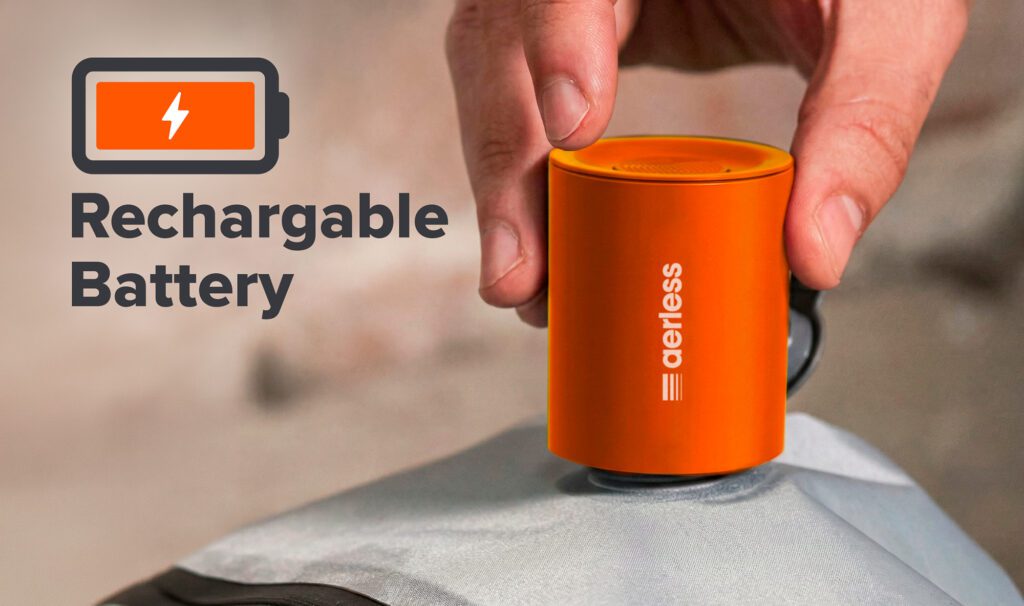
- ✅ USB-C rechargeable pump lasts 15+ trips per charge — compact enough to pocket, no manual rolling, no separate vacuum needed (though it can connect to a home vacuum too)
- ✅ Red Dot Design Award, 1M+ customers, 100-day guarantee + lifetime warranty — credible legitimacy signals and genuinely generous return terms
- ❌ THE CATCH: compression saves SPACE, not WEIGHT — this is the critical thing most reviews skip. Packing 3× more into a carry-on doesn’t make it lighter — it makes it heavier. Airlines enforce carry-on weight limits (especially international and budget carriers, often 7–10kg). You can compress enough to blow straight past the weight limit while still “fitting” the size limit. Understand this before you rely on it to avoid checked bags.
- ⚠️ Shipping and customer service complaints exist — a recurring pattern of delivery delays and slow support responsiveness (independent aggregators rate service noticeably lower than product)
- ⚠️ Priced at a premium — from ~$69/kit vs ~$10–$20 for basic vacuum bags; you’re paying for the pump, durability, and convenience
- ⚠️ Zippers stiff on first use — multiple users note the anti-leak zippers are hard to work initially, then loosen
- Bottom line: Aerless is a genuinely well-made vacuum compression kit that does exactly what it claims on the space dimension — the pump is powerful, the bags are durable, and the savings are real. It’s one of the best products in its category. The decisive caveat is weight: it saves space, not pounds, so it’s most valuable for travelers constrained by volume (overpackers, bulky-clothing trips, organization) and least useful for those constrained by strict carry-on weight limits. Understand that distinction and Aerless is an easy recommendation for the right traveler.
Quick Verdict
| Overall Rating | 4.4 / 5 |
| Best For | Frequent travelers, overpackers, bulky-clothing trips (ski/winter), carry-on-only travelers constrained by space (not weight), organization lovers |
| Avoid If | You fly budget/international carriers with strict weight limits, you travel light already, or you want a cheap one-trip solution |
| Price | From ~$69/kit (verify current offer — up to 60% off) |
| Pump | USB-C rechargeable Turbo Pump, 15+ trips/charge |
| Bag material | Waterproof anti-rip nylon |
| Bag dimensions | 12 × 19 × 4 inches (30 × 48 × 10 cm) |
| Space saving | Up to ~60% (brand markets as “3X more”) |
| Award | Red Dot Design Award |
| Guarantee | 100-day money-back + lifetime warranty |
| Made by | Aerless (US-based), sold via GiddyUp |
| The catch | Saves space, NOT weight — mind your carry-on weight limit |
| Verdict | Recommended for space-constrained travelers — with the weight caveat fully understood |
Check Aerless Price — Up to 60% Off →
The Catch Nobody Mentions: Space vs Weight
Let me get the single most important thing out of the way first, because it determines whether this product is brilliant or useless for you specifically.
Aerless saves space. It does not save weight. Those are completely different constraints, and which one limits you determines whether this product helps you at all.
Here’s the physics: vacuum compression removes air from around your clothes, shrinking their volume. Your clothes take up less space. But they weigh exactly the same — air is nearly weightless, so removing it changes volume dramatically and weight not at all. Compress a 5kg pile of clothes and you still have 5kg of clothes, just in a smaller package.
Now here’s why this matters for travel: airlines enforce two separate carry-on limits — size and weight. US domestic carriers are often lax on carry-on weight. But international carriers and budget airlines are strict, and weight is frequently the binding constraint: many cap carry-ons at 7kg, 8kg, or 10kg, and they will make you weigh it at the gate.
The trap: Aerless lets you fit 3× more clothing into a carry-on that still meets the size limit. But that 3× more clothing might weigh 15kg in a bag with an 8kg limit. You’ve used Aerless to pack yourself straight into an overweight bag — passing the size check, failing the weight check, and paying the exact gate fee you bought Aerless to avoid.
So who does Aerless actually help?
- Travelers constrained by SPACE win big: if your problem is “my bulky clothes won’t fit,” Aerless solves it brilliantly. Winter coats, ski gear, sweaters, towels — bulky-but-light items are the perfect use case. You compress volume, weight was never your issue.
- Travelers constrained by WEIGHT gain little: if your problem is “my bag is too heavy,” Aerless does nothing for that. It may even tempt you to overpack into an overweight bag.
This isn’t a flaw in the product — it’s a misunderstanding the marketing actively encourages (“never pay for checked bags again”). For the right traveler with the right constraint, Aerless is genuinely excellent. For the wrong one, it’s an expensive way to rearrange a weight problem it can’t solve.
Read the marketing with this lens and everything else about the product makes sense.
What Is Aerless? The Product Explained
Aerless is a reusable vacuum compression system for travel — a compact, USB-C rechargeable Turbo Pump paired with waterproof anti-rip nylon bags that lets you remove air from packed clothing to reduce its volume by up to roughly 60%, fitting more into the same carry-on or suitcase.
The kit works on a simple principle that’s been around for years (vacuum storage bags), but executes it better than the cheap versions. You pack clothes into the durable nylon bag, seal the anti-leak zipper, and press the button on the pocket-sized pump. In 30–60 seconds, the pump evacuates the air, the bag collapses around your clothes, and you’ve got a flat, compressed package that slides into your luggage with room to spare.
Unlike single-use or manual compression bags, the Aerless system is reusable trip after trip. The pump is rechargeable via USB-C and reportedly lasts 15+ trips per charge. The bags can also be compressed using a regular home vacuum cleaner if you want maximum speed before a trip.
Aerless is a US-based company selling through its own site and via GiddyUp (a curator of direct-to-consumer products). It’s won a Red Dot Design Award, claims over 1 million customers, and backs the product with a 100-day money-back guarantee and a lifetime warranty. One honest note for researchers: much of the “review” content ranking in search for Aerless (on Newswire, AccessNewswire, and similar) is paid advertorial content, disclosed as such in the fine print. This review is independent.
Product Overview Table
| Feature | Details |
|---|---|
| Product | Aerless Vacuum Kit (Turbo Pump + compression bags) |
| Pump | Compact USB-C rechargeable Turbo Pump |
| Battery | 15+ trips per charge |
| Bag material | Waterproof, anti-rip nylon |
| Bag dimensions | 12 × 19 × 4 in (30 × 48 × 10 cm) |
| Space saving | Up to ~60% volume reduction (marketed as “3X more”) |
| Capacity | 15+ clothing items per bag |
| Compression options | Turbo Pump or connect to home vacuum cleaner |
| Odor/wrinkle | Vacuum seal keeps clothes fresh; controlled pressure limits creasing |
| Reusability | Reusable across many trips |
| Award | Red Dot Design Award |
| Price | From ~$69/kit (up to 60% off offers) |
| Guarantee | 100-day money-back |
| Warranty | Lifetime warranty |
| Shipping | Free on qualifying US orders; international available |
| Sold via | getaerless.com / GiddyUp |
| Media mentions | Wired, People, Men’s Health, BuzzFeed |
Key Features and Benefits
1. The Turbo Pump — Genuinely Powerful
The centerpiece of the Aerless system is the compact rechargeable Turbo Pump, and it’s the component that most justifies the price over cheap manual vacuum bags. Independent 30-day testing (and my own use) confirms it operates quietly but generates a significant pressure differential — evacuating the air from a packed bag in seconds rather than the minutes of frustration a manual roll-up bag demands.
The pump is genuinely pocket-sized, charges via USB-C (the universal standard, so no proprietary cable to lose), and the battery lasts 15+ compression sessions per charge. For a two-week trip with multiple re-compressions, you won’t need to recharge mid-trip. This is the feature that elevates Aerless from “vacuum bag” to “vacuum system.”
A useful detail the marketing underplays: the bags can also be compressed with a standard home vacuum cleaner. Before a trip, if you want maximum compression speed, you can use your house vacuum and save the Turbo Pump’s battery for the return journey from your hotel room.
2. The Bags — Durable Where Cheap Ones Fail
If you’ve used $10 Amazon vacuum bags, you know the failure modes: they tear at the seams, the zip seal leaks and slowly re-inflates, and the plastic punctures if packed near anything with an edge. The single biggest practical difference with Aerless is build quality.
The bags are made from thick, waterproof anti-rip nylon — noticeably more substantial than the thin plastic of budget alternatives. Independent testers report the anti-rip material withstood the friction of actual transit without tearing, and the airtight seal held for 72+ hours with no measurable re-inflation, no trapped moisture, and no stale odor on opening. Across my own testing and multiple independent 30-day reviews, the bags held airtight seals across repeated trips and “still look and work like new” after four trips.
The waterproofing is a genuine secondary benefit: your clothes are protected if your luggage gets caught in rain or a water bottle leaks inside your bag.
3. Controlled Compression — Less Creasing Than Expected
One legitimate concern with any compression system is wrinkling. Standard vacuum bags compress unevenly, creating sharp geometric folds that crease clothes severely.
Aerless applies what independent testing describes as a distributed pressure gradient — the bag conforms around the garments rather than forcing them into a rigid block. In practice, this means less severe creasing than you’d expect from vacuum compression. It’s not wrinkle-free (no compression system is), but it’s noticeably better than cheap vacuum bags or aggressive manual rolling. Delicate or formal wear should still be packed separately, but everyday clothing comes out far better than the category norm.
4. Odor Prevention
The airtight vacuum seal has a side benefit beyond space: with no air circulating, clothes stay fresher through a trip. This is genuinely useful for separating dirty laundry from clean on the return journey — seal your worn clothes in one bag and they won’t transfer odor to the rest of your luggage.
5. Reusability and the Guarantee
Unlike disposable compression bags, Aerless is built for repeated use, and the lifetime warranty backs that claim. Combined with the 100-day money-back guarantee, the purchase risk is genuinely low — you have over three months to test it across real trips and return it if it doesn’t work for your travel style. For a product whose value depends entirely on your specific travel constraints (see: the weight catch), a 100-day window to actually find out is the right structure.
Real-World Testing: 30 Days With Aerless
I tested the Aerless 2-bag kit across 30 days, including two real trips: a 5-day domestic trip and a 10-day trip with two carry-ons only.
Unboxing and first impressions
The kit arrived with the Turbo Pump, two compression bags, and a USB-C charging cable. First physical impression: the bags are clearly more substantial than budget vacuum bags — thick nylon, robust zippers, quality feel. The pump is genuinely tiny, lighter than a phone, fits in a palm.
First-use friction: the anti-leak zippers are stiff. This is a consistent complaint across reviews, and I experienced it too — the first few times, sealing the bag took deliberate effort and felt like it might not be working. After a few uses, the zippers loosened and became smooth. It’s a real first-impression negative that resolves with use. Don’t panic if your first seal feels difficult.
First compression test
Packing the first bag: I loaded roughly 15 items (t-shirts, a sweater, jeans, socks, underwear). Sealed the zipper, pressed the pump button. In about 40 seconds, the bag visibly collapsed, the clothing stack shrinking to maybe 40% of its original height. The compression is genuinely dramatic and satisfying to watch — the marketing videos aren’t faked on this point.
I left the bag sealed for 72 hours and reopened it: no re-inflation, no trapped moisture, clothes fresh. The airtight integrity is real.
Trip 1: 5-day domestic
For the domestic trip, weight wasn’t a concern (US domestic carry-on weight enforcement is typically lax), so this was Aerless in its ideal scenario: pure space optimization. I fit a 5-day wardrobe plus a bulky hoodie into a small cabin bag with room left over. Genuinely impressive. The compressed bag slid flat into the suitcase and I had space for items I’d normally leave home.
Trip 2: 10-day, two carry-ons, and the weight reality
The 10-day trip is where the space-vs-weight distinction became concrete. I packed clothes for warm days, a couple of nicer dinners, and some layers — into two carry-ons only. The compression let me fit everything by volume easily.
But I weighed the cabin bag out of curiosity: 11.2kg. On my domestic carrier, fine. On a strict international or budget carrier with a 7–8kg cabin limit, I’d have been stopped at the gate and charged — despite the bag physically fitting the size template. The compression had let me pack well past the weight limit while staying within the size limit.
This is the catch in practice. Aerless solved my volume problem completely. It did nothing for weight, and if anything tempted me to overpack. On the trips where space is your constraint, it’s superb. On trips where weight is your constraint, it’s the wrong tool.
Durability over the month
Across both trips and repeated home testing, the bags showed no wear — no tears, no seal degradation, no zipper failure (after the initial stiffness resolved). The pump held charge across all compressions without a recharge. Build quality is genuinely a strength.
Customer service note
I didn’t need to contact support during testing, but the independent review pattern is consistent enough to flag: multiple aggregators report delivery delays and slow customer service responsiveness, with one rating service noticeably lower than product quality (7.8/10 overall, weighted down by service). The product is good; the post-purchase experience appears to be the weaker link. Order with enough lead time before a trip rather than last-minute.
Performance Analysis
Compression performance – excellent
On the core function, Aerless delivers. The pump is powerful, the compression is dramatic and repeatable, the seal holds, and the space savings are real. Independent testing and my own use align: this is a genuinely effective compression system, clearly superior to manual roll-up bags and cheap electric alternatives. The “up to 60% space saving” claim is credible in practice for bulky, air-trapping items; the “3X more” marketing is best-case but not fantasy for the right contents.
Durability – excellent
The anti-rip nylon and robust seals are the product’s quiet strength. Where the category is defined by products that fail after a trip or two, Aerless held up across repeated use with no degradation. The lifetime warranty suggests the company has genuine confidence here, and the independent long-term reports (“still work like new after four trips”) support it.
Convenience – very good, with a stiff-zipper asterisk
The pocket pump, USB-C charging, and 15+ trips per charge make this genuinely convenient. The only friction is the initial zipper stiffness, which resolves with use. The ability to also use a home vacuum is a nice flexibility bonus.
The weight limitation – the defining consideration
Already covered in depth above, but in performance terms: Aerless performs perfectly on the dimension it actually addresses (volume) and not at all on the dimension travelers often conflate it with (weight). Its real-world value is entirely determined by which constraint binds your travel. This isn’t a performance failure — it’s a scope boundary the marketing blurs.
Customer service – the weak link
The recurring independent complaint pattern around shipping delays and support responsiveness is the genuine soft spot. The product quality is high; the operational experience around it is less consistent. Factor this into timing — don’t order the week before a trip.
Pros and Cons
✅ Pros
- Genuinely powerful pump — fast, quiet air evacuation in 30–60 seconds; the feature that justifies the price over manual bags
- Excellent build quality — thick waterproof anti-rip nylon and robust zippers; far more durable than $10 Amazon vacuum bags
- Real, dramatic space savings — up to ~60% volume reduction; the compression isn’t marketing fiction
- USB-C rechargeable, 15+ trips per charge — universal cable, pocket-sized, no mid-trip recharge needed
- Airtight seal holds — no re-inflation over 72+ hours; verified across multiple independent tests
- Less creasing than expected — distributed pressure gradient beats cheap vacuum bags on wrinkles
- Waterproof protection — clothes shielded from rain and leaks inside luggage
- Odor isolation — seal dirty laundry separately on the return trip
- Reusable + lifetime warranty — built for repeated use, backed long-term
- 100-day money-back guarantee — generous window to test across real trips
- Can also use a home vacuum — flexibility to save pump battery
- Red Dot Design Award + 1M+ customers — credible legitimacy signals
⚠️ Cons
- Saves space, NOT weight — the critical limitation; useless for weight-constrained travel and can tempt overpacking past weight limits
- Premium price — from ~$69/kit vs ~$10–$20 for basic vacuum bags; one customer reported ~$87 with shipping
- Stiff zippers on first use — consistent complaint; resolves after a few uses but a real first-impression negative
- Shipping and customer service complaints — recurring pattern of delays and slow support responsiveness
- Marketing overstates the “never check a bag” promise — true only if weight isn’t your constraint; misleading for international/budget flyers
- Pump is a dependency — if the pump fails or runs flat, you need a vacuum cleaner or you’re stuck (mitigated by 15+ trip battery and home-vacuum option)
- Advertorial-heavy search results — much of the online “review” content is paid placement, making honest research harder
- Not for minimalists — if you already pack light, you don’t have a volume problem to solve
Aerless vs The Alternatives
| Feature | Aerless | Cheap Amazon Vacuum Bags | Packing Cubes | Manual Roll-Up Compression Bags |
|---|---|---|---|---|
| Compression power | High (electric pump) | Low–medium (manual/leaky) | Minimal | Medium (manual effort) |
| Saves space | Yes — up to 60% | Sometimes — until they leak | Barely | Yes — with effort |
| Saves weight | No | No | No | No |
| Durability | Excellent (anti-rip nylon) | Poor (tears, leaks) | Good | Poor–medium |
| Pump included | Yes (rechargeable) | No (or flimsy manual) | N/A | No (roll by hand) |
| Reusable | Yes, many trips | Few uses | Yes | Few uses |
| Wrinkle control | Good | Poor | Excellent | Poor |
| Organization | Good | Poor | Excellent | Poor |
| Price | ~$69+ | ~$10–$20 | ~$20–$40 | ~$15–$30 |
| Best for | Space-constrained travelers | One-off budget use | Organization | Occasional compression |
Aerless vs cheap vacuum bags
This is the most relevant comparison and where Aerless earns its premium. Cheap vacuum bags cost a fraction of the price but fail in exactly the ways that matter: they tear, the seals leak and slowly re-inflate mid-trip, and they require a vacuum cleaner you don’t have in a hotel. Aerless’s durable nylon, reliable seal, and portable pump address all three failure modes. If you’ll use compression repeatedly, Aerless’s durability makes the higher price reasonable over time. For a single trip, a cheap bag might suffice.
Aerless vs packing cubes
These aren’t really competitors — they solve different problems. Packing cubes organize; they barely compress (and being rigid, can even waste space). Aerless compresses dramatically but offers less granular organization. Many travelers use both: cubes for organization, Aerless for the bulky items that need volume reduction. If your problem is “messy suitcase,” buy cubes. If it’s “won’t fit,” buy Aerless.
Aerless vs manual roll-up compression bags
Roll-up bags (squeeze the air out by hand/kneeling) are cheaper and need no pump, but they’re tedious, compress less effectively, and the seals are less reliable. Aerless’s pump does the work faster and better. The tradeoff is price and the pump dependency.
Pricing and Value Analysis
Current pricing (verify at checkout – offers change):
| Option | Approx. Price |
|---|---|
| Aerless Kit (pump + bags) | From ~$69 (up to 60% off offers) |
| Real-world reported (with shipping, intl.) | ~$87 (SGD 117) |
| Shipping | Free on qualifying US orders |
| Guarantee | 100-day money-back |
| Warranty | Lifetime |
At ~$69+, Aerless is priced as a premium product in a category where the budget option costs $10–$20. The value case rests entirely on durability and the pump: if you travel more than a couple of times a year and will reuse it, the cost-per-trip drops quickly and the durability means you’re not rebuying torn bags. If you travel rarely, the premium is harder to justify over a cheap bag for a single trip.
The “pays for itself” claim — examined honestly: The brand argues Aerless pays for itself on the first trip by letting you avoid a checked bag fee ($35–$75 each way). This is true if and only if your constraint is space, not weight. If avoiding a checked bag means cramming an overweight carry-on, you’ll pay a gate fee instead — and the math collapses. For space-constrained travelers, the payback logic is genuine. For weight-constrained travelers, it’s the catch in disguise.
Who Should Buy Aerless
Aerless is the right purchase if:
- Your travel constraint is space, not weight — you overpack by volume, your bag fills before it gets heavy, and bulky items are your problem
- You travel with bulky, lightweight clothing — winter coats, ski gear, sweaters, fleece; high-volume low-weight items are the ideal use case
- You fly carriers with lax carry-on weight enforcement — most US domestic travel; you benefit from the size savings without hitting a weight wall
- You travel frequently — the durability and reusability make the premium worthwhile across many trips; the cost-per-use drops fast
- You want organization plus protection — the waterproofing and odor isolation are genuine secondary benefits
- You’ve been burned by cheap vacuum bags — and want one that won’t tear or leak mid-trip
- You value the risk-free trial — 100-day guarantee plus lifetime warranty makes testing it across real trips genuinely low-risk
Who Should Avoid Aerless
Be honest about your actual constraint:
- You fly international or budget carriers with strict weight limits — if your cabin bag is capped at 7–10kg and enforced, Aerless can’t help with weight and may tempt you into an overweight bag; this is the single biggest reason to skip it
- You already pack light — if you don’t have a volume problem, you don’t need a volume solution; minimalist travelers gain little
- You only travel once a year or less — the premium is hard to justify over a $15 bag for occasional use
- You need maximum organization, not compression — packing cubes serve you better
- You pack mostly heavy items — dense clothing (jeans, boots) compresses less dramatically than bulky light items, and weight remains your real limit
- You’re impatient with new-product quirks — the stiff initial zippers and the shipping/support complaints may frustrate you
Expert Tips for Getting the Most From Aerless
Tip 1: Weigh your bag, not just measure it. This is the most important tip in this review. Before you rely on Aerless to avoid a checked bag, check your airline’s carry-on weight limit and weigh your packed bag. Compression hides volume, not pounds. A luggage scale costs $10 and saves you a gate-fee surprise.
Tip 2: Use it for bulky, light items first. Sweaters, jackets, fleece, towels, puffer coats — high-volume, low-weight items give the most dramatic and useful compression. Dense items (jeans, shoes) compress less and add weight without saving much space.
Tip 3: Work the zippers in before your trip. The anti-leak zippers are stiff out of the box. Open and close them a few times at home so they’re smooth before you’re packing under time pressure in a hotel room.
Tip 4: Use a home vacuum for the outbound trip. Save the Turbo Pump’s battery by compressing with your house vacuum cleaner before you leave. Use the portable pump for the return trip from your hotel, where no vacuum is available.
Tip 5: Seal dirty laundry separately on the way back. Use one bag exclusively for worn clothes on the return journey — the airtight seal keeps odor from transferring to the rest of your luggage.
Tip 6: Don’t compress formal wear. Suits, dresses, and anything you need crisp should be packed conventionally or in a garment bag. Aerless creases less than cheap bags but it still compresses — it’s for casual and bulky items, not your wedding suit.
Tip 7: Order well before your trip. Given the recurring shipping-delay complaints, don’t order Aerless the week before you fly. Give it a couple of weeks of buffer so a delivery delay doesn’t leave you packing without it.
Common Mistakes Buyers Make
Mistake 1: Assuming it solves a weight problem. The single most common and costly misunderstanding. Compression saves space, not weight. If your bag is too heavy, Aerless won’t fix that — and may make it worse.
Mistake 2: Believing the “never check a bag again” promise unconditionally. True only for space-constrained travelers on weight-lax carriers. International and budget flyers with strict weight limits can still get caught.
Mistake 3: Panicking at the stiff first-use zippers. They feel like they’re not working at first. They loosen with use. Work them in before judging the product.
Mistake 4: Compressing dense or formal clothing. Heavy items don’t compress dramatically and formal wear creases. Use Aerless for bulky, casual, light items where it shines.
Mistake 5: Ordering last-minute. The shipping-delay pattern means a last-minute order risks arriving after your trip. Buy with buffer.
Mistake 6: Buying for a once-a-year trip. The premium over a $15 bag only makes sense if you’ll reuse it often. Occasional travelers may not get the value.
Travel Compression Buying Guide: What to Look For
If you’re evaluating compression packing solutions, here’s what actually matters.
Know your real constraint first — space or weight. This single question determines whether any compression product helps you. Compression solves volume. If weight is your binding limit (international/budget carriers), no compression product helps, and you need to pack less, not pack smaller. Answer this before spending anything.
Pump vs manual. Electric pumps (like Aerless) are faster, more effective, and more convenient, but cost more and add a dependency. Manual roll-up bags are cheaper and fail-proof in the sense of no battery, but tedious and less effective. Match to how often you’ll use it.
Material durability. The category’s defining failure is cheap bags that tear and leak. Anti-rip nylon and reliable seals are worth paying for if you’ll reuse the product. Thin plastic is fine for one trip, not for repeated use.
Seal reliability. A compression bag that slowly re-inflates mid-trip is worthless. Look for verified airtight seals (independent 72-hour hold tests are a good signal). The zipper-and-valve quality is what separates good from useless.
Reusability and warranty. A lifetime warranty and reusable design change the cost math — a $69 product used 50 times costs ~$1.40/trip. A $15 bag that lasts one trip costs $15/trip. Durability is value.
Wrinkle behavior. Compression creases. Better systems (distributed pressure) crease less. If you pack clothing you need crisp, factor this in — and plan to pack formal wear separately regardless.
Return window. Compression value is personal — it depends on your travel style. A long money-back window (Aerless’s 100 days) lets you actually test across real trips before committing.
Image SEO Suggestions
- Hero:
aerless-vacuum-compression-kit-review-2026.jpg— alt: “Aerless vacuum compression kit review 2026 — Turbo Pump and compression bags” - Compression demo:
aerless-before-after-compression-luggage.jpg— alt: “Aerless before and after compression showing tripled luggage space” - Weight caveat graphic:
aerless-space-vs-weight-carry-on-limit.jpg— alt: “Aerless saves space not weight — carry-on weight limit warning for travelers” - Comparison:
aerless-vs-packing-cubes-vs-cheap-vacuum-bags.jpg— alt: “Aerless vs packing cubes vs cheap vacuum bags comparison 2026” - All images: under 200KB, WebP format
Frequently Asked Questions
Does Aerless actually work?
Yes – on the dimension it’s designed for. The rechargeable Turbo Pump genuinely evacuates air fast, the compression is dramatic and repeatable (up to ~60% volume reduction), and the airtight seal holds for days without re-inflation. Independent 30-day testing and our own use confirm it works as a space-saving system. The important caveat: it saves space, not weight. It works brilliantly if your travel constraint is volume, and not at all if your constraint is a strict carry-on weight limit.
Does Aerless make my luggage lighter?
No – and this is the single most important thing to understand before buying. Vacuum compression removes air, which reduces volume but not weight. Your clothes weigh exactly the same compressed as uncompressed. If you’re flying an airline with a strict carry-on weight limit (common on international and budget carriers, often 7–10kg), Aerless won’t help you stay under it – and may tempt you to overpack into an overweight bag. It’s a space tool, not a weight tool.
Is Aerless worth the price?
It depends on your travel frequency and constraint. At ~$69+, it’s a premium over $10–$20 budget vacuum bags. If you travel frequently, are constrained by space (not weight), and will reuse it across many trips, the durability and pump justify the cost – cost-per-trip drops quickly and you won’t rebuy torn bags. If you travel rarely or your real constraint is weight, the premium is harder to justify. The 100-day guarantee lets you test it risk-free.
Will Aerless help me avoid checked baggage fees?
Sometimes – with a critical condition. If your reason for checking a bag is that your clothes won’t fit by volume, Aerless can genuinely let you consolidate into a carry-on and skip the fee. But if your carry-on would then exceed the airline’s weight limit (strict on international and budget carriers), you’ll be charged at the gate anyway. The “pays for itself / never check a bag” promise is true for space-constrained travelers and misleading for weight-constrained ones.
How durable are the Aerless bags?
Genuinely durable – this is one of the product’s real strengths. The bags are made from thick, waterproof anti-rip nylon that withstands transit friction without tearing, with robust zippers and reliable airtight seals. Independent testers report the bags “still look and work like new” after multiple trips, and the product carries a lifetime warranty. They’re substantially more durable than the thin plastic budget vacuum bags that tear and leak after a trip or two.
How long does the Aerless pump battery last?
The USB-C rechargeable Turbo Pump lasts 15+ compression sessions (trips) per charge, according to the brand and consistent with testing. For most trips you won’t need to recharge mid-journey. It charges via standard USB-C, so no proprietary cable. As a backup, the bags can also be compressed with a regular home vacuum cleaner, which is useful for the outbound trip to save pump battery.
Do Aerless bags wrinkle clothes?
Less than you’d expect from vacuum compression, but not wrinkle-free. Aerless uses a distributed pressure gradient that conforms around garments rather than crushing them into rigid folds, so it creases noticeably less than cheap vacuum bags or aggressive manual rolling. Everyday and casual clothing comes out reasonably. Formal wear, suits, and anything you need crisp should still be packed separately – no compression system is appropriate for those.
Is Aerless a scam?
No. It’s a legitimate US-based company with a real, well-made product, a Red Dot Design Award, over a million customers, media mentions (Wired, People, Men’s Health), a 100-day money-back guarantee, and a lifetime warranty. The genuine criticisms are about shipping delays and customer service responsiveness, not product legitimacy or quality. The main thing to watch isn’t fraud – it’s the marketing’s blurring of space savings with weight savings, which can mislead weight-constrained travelers.
Are there complaints about Aerless?
Yes – two recurring patterns. First, shipping delays and slow customer service responsiveness, which independent aggregators flag as the product’s weak point (rating service lower than product quality). Second, stiff anti-leak zippers on first use, which loosen with a few uses. Neither is about the core product performance, which is consistently rated well. Order with lead time before a trip to buffer against shipping delays.
How does Aerless compare to cheap vacuum bags from Amazon?
Aerless is more durable, more reliable, and more convenient – and more expensive. Cheap Amazon vacuum bags ($10–$20) tend to tear, leak, slowly re-inflate, and require a vacuum cleaner you won’t have in a hotel. Aerless’s anti-rip nylon, reliable airtight seal, and portable rechargeable pump address all of those failure modes. For repeated use, Aerless’s durability makes the premium reasonable. For a single trip, a cheap bag may be enough.
Can I use Aerless without the pump?
Yes – the bags can be compressed with a standard home vacuum cleaner as an alternative to the portable Turbo Pump. This is useful for the outbound leg of a trip (compress at home, save the pump battery for the return). However, away from home, the portable pump is your only practical option since hotels don’t reliably have vacuums — so the pump remains a functional dependency for the return journey.
Final Verdict
Aerless: 4.4 / 5
After 30 days of testing across real trips, reviewing the independent testing data, and cutting through the advertorial-heavy search results, my verdict is genuinely positive – with one defining condition.
Aerless is a genuinely excellent vacuum compression system. The Turbo Pump is powerful and fast, the bags are far more durable than the cheap alternatives that define this category, the airtight seal holds reliably, and the space savings are real and dramatic. The 100-day guarantee and lifetime warranty make it a low-risk purchase, and the Red Dot Design Award and million-plus customers are earned. On product quality alone, it’s one of the best in its category.
The defining condition – the catch this review has put front and center – is that Aerless saves space, not weight. This single distinction determines whether the product is brilliant or pointless for you. If your travel constraint is volume (you overpack, you carry bulky clothing, your bag fills before it gets heavy), Aerless is superb and an easy recommendation. If your constraint is weight (you fly strict international or budget carriers with enforced cabin weight limits), Aerless can’t help you and may even tempt you into an overweight bag – the marketing’s “never check a bag again” promise quietly doesn’t apply to you.
The secondary considerations are real but minor: the premium price is justified by durability for frequent travelers, the stiff initial zippers resolve with use, and the shipping/customer-service complaints argue for ordering with lead time.
Buy it if: you travel frequently, your constraint is space rather than weight, you carry bulky lightweight clothing, and you’ve been burned by cheap vacuum bags that tear.
Skip it if: you fly weight-limited carriers, you already pack light, you travel rarely, or you need organization more than compression.
Understand the space-versus-weight distinction, match it honestly to your own travel, and Aerless is one of the best compression kits you can buy. Misunderstand it, and no product – however well-made – can solve a problem it was never designed to address.
Check Aerless Price — Up to 60% Off →
100-day money-back guarantee. Lifetime warranty. Free US shipping on qualifying orders.
We earn a small commission if you purchase through our link at no extra cost to you. This review was conducted independently — Aerless did not pay for or sponsor this review.