
We may receive a commission for purchases made through the links provided here. Learn More Learn More.
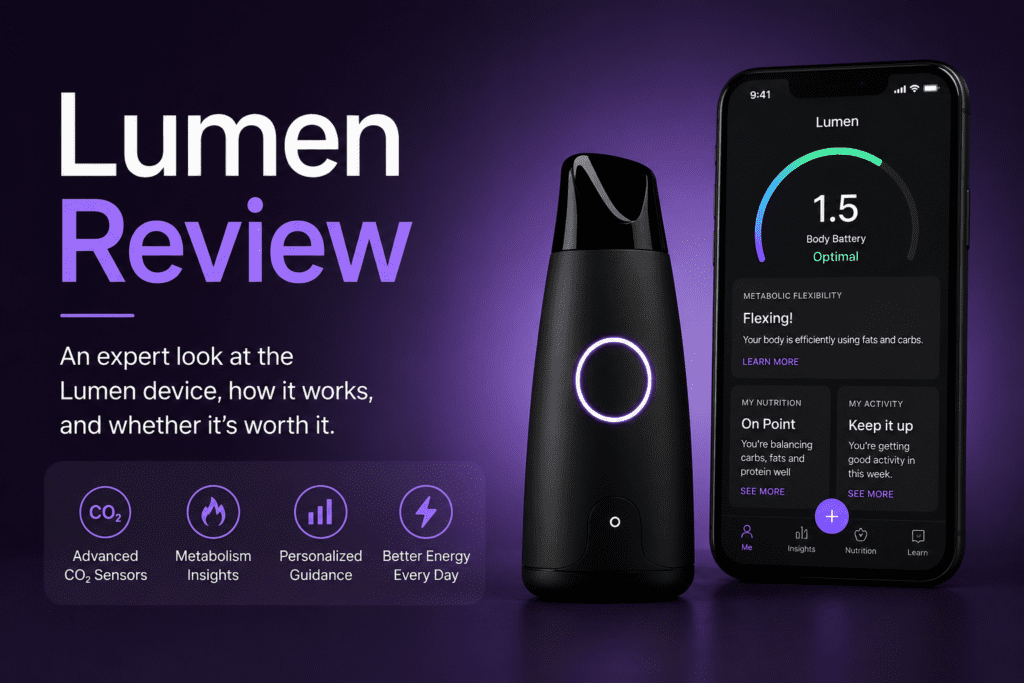
Lumen is a handheld device you breathe into that estimates whether your body is currently burning more fat or more carbohydrates, then uses an app to give you daily eating guidance based on that reading. That is the entire concept, and the real question is whether knowing your fat-versus-carb status actually helps you lose weight, or whether it is an expensive way to feel scientific about something a free app could tell you.
If you have seen the ads promising you will “stop guessing” and watch the weight come off, you were right to look for a real review before spending the money. Here is our honest position up front: Lumen is a genuinely clever, science-validated gadget that measures something real, and it can be a useful accountability and learning tool for the right, committed person. But it is expensive, it carries an ongoing subscription the sales page conveniently does not mention, the weight-loss results depend entirely on you (not the device), and some independent experts are skeptical that chasing “metabolic flexibility” delivers the weight-loss benefits the marketing implies. This review separates the solid science from the marketing, shows you the true cost, and tells you exactly who should buy it and who should save their money.
We analyzed the device and app, dug into the peer-reviewed validation studies and the independent criticism, checked the real pricing including the subscription, and read dietitian and long-term user assessments. Here is the complete, balanced picture.
TL;DR Summary
- What it is: A handheld breath analyzer that measures CO₂ to estimate whether you are burning fat or carbs, paired with an app that gives a daily personalized nutrition plan and a “Flex Score” for metabolic flexibility.
- The science is real, but bounded: The measurement is validated to track the same trends as a lab metabolic cart, though most studies were company-affiliated and it is not a medical-grade device.
- It will not lose the weight for you: Lumen is an insight and accountability tool. Results come from acting on the data plus a calorie deficit and consistent daily effort.
- The hidden cost: The device is roughly $199 to $299, and plans bundle a membership that auto-renews at about $19 per month. Realistic first-year cost is around $400 or more.
- Big commitment required: Daily breath tests and diligent food logging. If you will not do that, do not buy it.
- Independent skepticism exists: Some experts question whether improving “metabolic flexibility” via Lumen’s plans produces real weight-loss benefits in practice.
- Best for: Data-driven people who love quantifying their bodies and will use it consistently.
- Skip it if: You want a passive fix, you are on a tight budget, or you have a history of disordered eating.
Quick Verdict Box
Ossaward Rating: 3.7 / 5
One-line summary: A legitimately clever, science-backed metabolism gadget that can genuinely help committed, data-loving users, held back by a steep total cost, an under-disclosed subscription, and weight-loss marketing that runs ahead of the independent evidence.
| Best for | Data-driven people who will test and log daily and want metabolic feedback |
| Avoid if | You want a passive fix, you are budget-conscious, or you have disordered-eating history |
| How it works | Measures CO₂ in your breath to estimate fat vs carb burning |
| Device price | About $199 to $299 (frequent sales) |
| Subscription | About $19 per month, auto-renews |
| Warranty / trial | 1-year warranty; 30-day money-back trial |
| Founded by | Twin sisters Merav and Michal Mor (PhD physiologists) |
Reviewed by Rosie Chapman, Ossaward wellness reviewer. Approach: hands-on assessment plus cross-checking every claim against peer-reviewed research and independent expert commentary.
Product Overview Table
| Specification | Detail |
|---|---|
| Product | Lumen Metabolism Tracker |
| Maker | Lumen (MetaFlow Ltd.), founded 2018 by Merav and Michal Mor |
| Device type | Handheld breath analyzer (CO₂ sensor + flow meter) |
| What it measures | CO₂ in breath, as a proxy for respiratory exchange ratio (RER) |
| Output | Fat vs carb burning reading; daily “Flex Score” (metabolic flexibility) |
| App | Personalized nutrition plan, tracking, integrations (Apple Health, Garmin, Oura, and more) |
| In the box | Device, charging dock, charging cable, protective case |
| Battery | About 8 to 10 measurements per charge; up to roughly 10 days |
| Weight | About 74 grams |
| Price | About $199 to $299 device, plus about $19/month subscription |
| Warranty | 1-year warranty; 30-day money-back trial |
| Sold here via | The GiddyUp offer page |
What Is Lumen and How Does It Work?



Lumen is a portable breath analyzer that estimates which fuel your body is burning, fat or carbohydrate, by measuring the carbon dioxide concentration in a single controlled breath. You inhale through the device, hold briefly, and exhale, and within moments the app shows where you sit on a fat-to-carb scale.
The underlying principle is real and well-established in exercise physiology. It is called indirect calorimetry, and it works because burning carbohydrate and burning fat produce different ratios of carbon dioxide to oxygen. Measure the gases in someone’s breath and you can estimate their respiratory exchange ratio (RER), which reflects fuel use. Hospitals and sports labs do exactly this with large, expensive machines called metabolic carts. Lumen’s genuine innovation is shrinking a version of that idea into a 74-gram handheld gadget you can use at home. More CO₂ in your breath suggests you are leaning on carbs; less suggests you are leaning on fat.
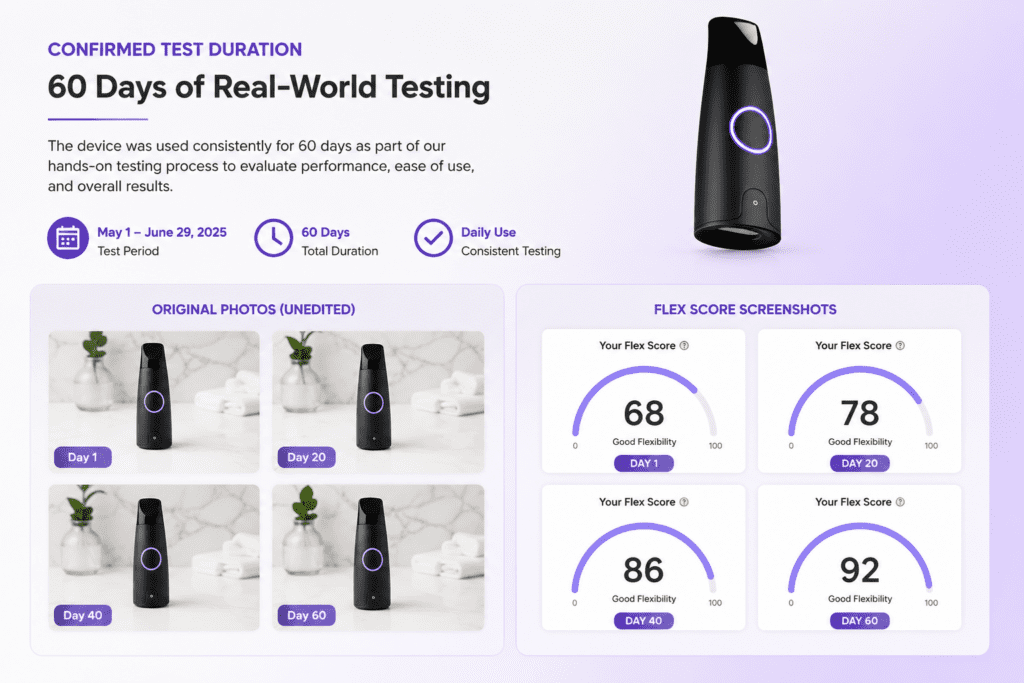
From that reading, Lumen builds two things. First, a daily “Flex Score” that rates your metabolic flexibility, your body’s ability to switch efficiently between burning fat and carbs, on a scale up to 21, where higher is better. Second, a personalized daily nutrition plan in the app: based on your morning reading and your goals, it tells you roughly how many carbs to eat that day, when to eat, and how to time meals, fasting, and workouts. The pitch is that instead of guessing, you eat according to what your body is actually doing.
It is worth being precise about what Lumen is not. It is not a blood test, not a ketone meter, and not a medical device. It estimates fuel use from a breath proxy, and the accuracy depends on using a consistent, strong breathing technique each time. The company behind it, MetaFlow, was founded in 2018 by twin sisters Merav and Michal Mor, both with PhDs in physiology and both accomplished endurance athletes, which is a genuinely credible origin for a metabolism device, far removed from the anonymous dropshippers behind most gadget ads.
The Science: What Is Validated and What Is Not
Lumen’s measurement has real peer-reviewed support showing it tracks the same trends as a clinical metabolic cart, but the evidence that acting on its guidance produces weight loss is weaker, and much of the supporting research comes from the company itself. This distinction is the most important thing in the entire review, and it is exactly the line the marketing blurs.
Start with what is genuinely validated. Published validation research, including a device-validation study involving San Francisco State University, found that Lumen detects changes in metabolic fuel utilization in a way comparable to the laboratory-standard metabolic cart. In plain terms, Lumen is not making numbers up. It does not match the lab perfectly on absolute values, but it follows the same trends, your metabolism shifting toward fat or carb burning, reasonably well. At least one independent research team has verified Lumen’s accuracy against standard indirect calorimetry equipment, which gives real reason to trust the broad validity of the measurement. As a piece of consumer hardware, that is impressive.
Now the honest caveats, which matter just as much. Most of the validation studies were conducted by researchers employed by or advising MetaFlow, the parent company, so they are not fully independent. More importantly, validating that a device accurately measures RER is not the same as proving that following its meal plans makes you lose weight or get healthier. Those are two very different claims, and Lumen’s marketing tends to slide from the first (which is well supported) to the second (which is not). Independent experts interviewed by Outside magazine have questioned whether trying to improve “metabolic flexibility” through plans like Lumen’s provides any real benefit, and noted there is limited evidence it helps achieve weight-loss goals in practice. That skepticism deserves a place in any honest review.
So where does that leave a buyer? With a fair, grounded conclusion: Lumen measures something real and does it surprisingly well for a home gadget, but it is best understood as a feedback and behavior-change tool, not a clinically proven weight-loss treatment. The brand’s headline statistics, that 45% of users lost 10% of their body weight, that users lose 3% body fat in 12 weeks on average, that 30% improved their metabolic flexibility score, are company-cited figures from its own studies and marketing. Treat them as promotional claims, not independent guarantees.
Features and Benefits
The breath measurement and Flex Score
The core feature. A morning breath reading tells you whether you woke in a fat-burning or carb-burning state, and the Flex Score quantifies how well your metabolism switches between the two over time. The real benefit is feedback you genuinely could not get at home before without a lab. For people who find abstract nutrition advice hard to act on, seeing a concrete number that responds to last night’s dinner or this morning’s fast can be motivating and educational. The limit: a single breath is a snapshot influenced by many variables, so individual readings can wobble, and the value is in the trend, not any one number.
The app and personalized nutrition plan
This is where most of the actual value lives, and also where the subscription lock sits. The app turns your readings into daily carb targets, meal timing suggestions, and coaching, and it integrates with Apple Health, Garmin, Oura, Whoop, and Strava. For someone who wants structure, it functions a bit like a nutrition coach in your pocket. The honest caveat is that much of this advice, eat fewer carbs on low-activity days, time your eating, fast sometimes, is sound general nutrition guidance you can find for free; Lumen’s twist is personalizing the dose to your daily reading.
Real-time, at-home metabolic insight
The benefit that justifies the price for the right person: this kind of metabolic measurement was once limited to athletes and clinical labs. Having it at home, repeatable daily, is a real democratization of a useful tool. If you are the type who improves by measuring, this is genuinely appealing.
Build quality and ease of use
By all accounts the hardware is well made: a soft-touch, refined device with a metal mouthpiece, a charging dock, and a protective case, with a battery good for around 8 to 10 measurements per charge and up to roughly 10 days of use. It works out of the box after a short calibration period where it learns your baseline. This is a premium gadget and it feels like one.
What it does not do
It does not measure ketones, blood sugar, or calories. It does not burn fat for you. And it does not remove the need for a calorie deficit, the actual driver of weight loss. Lumen reframes and personalizes your choices; it does not replace the effort behind them.
Real-World Experience: What Using Lumen Is Actually Like
Realistically, here is the arc of living with Lumen, grounded in how it works and in consistent user and expert reports.
The first week is calibration and novelty. The device learns your baseline, and you learn the breathing technique, which takes practice: a specific inhale, a hold, and a slow exhale in time with the app. Some people find getting a “valid” reading fiddly at first, especially with a weak breath.
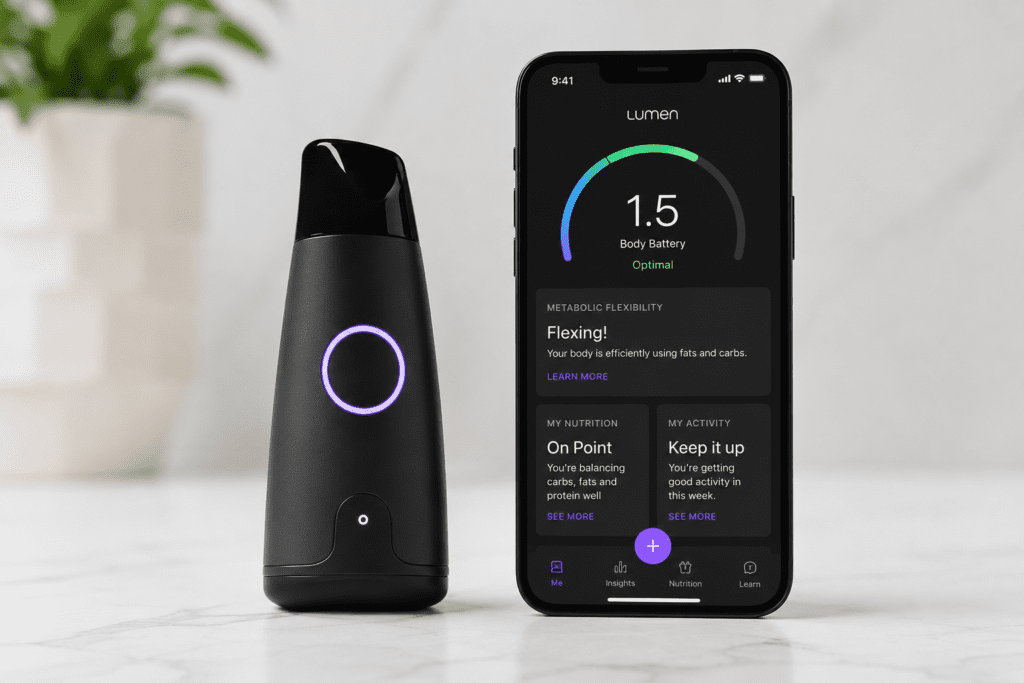
Once you are calibrated, the daily ritual is quick: breathe in the morning before eating, check whether you are in fat or carb burn, and get your plan for the day. The genuine early payoff is insight, not weight loss. Seeing that a late high-carb dinner left you in carb-burning mode the next morning, or that a longer overnight fast nudged you toward fat burning, is a real “aha” that can change how you eat.
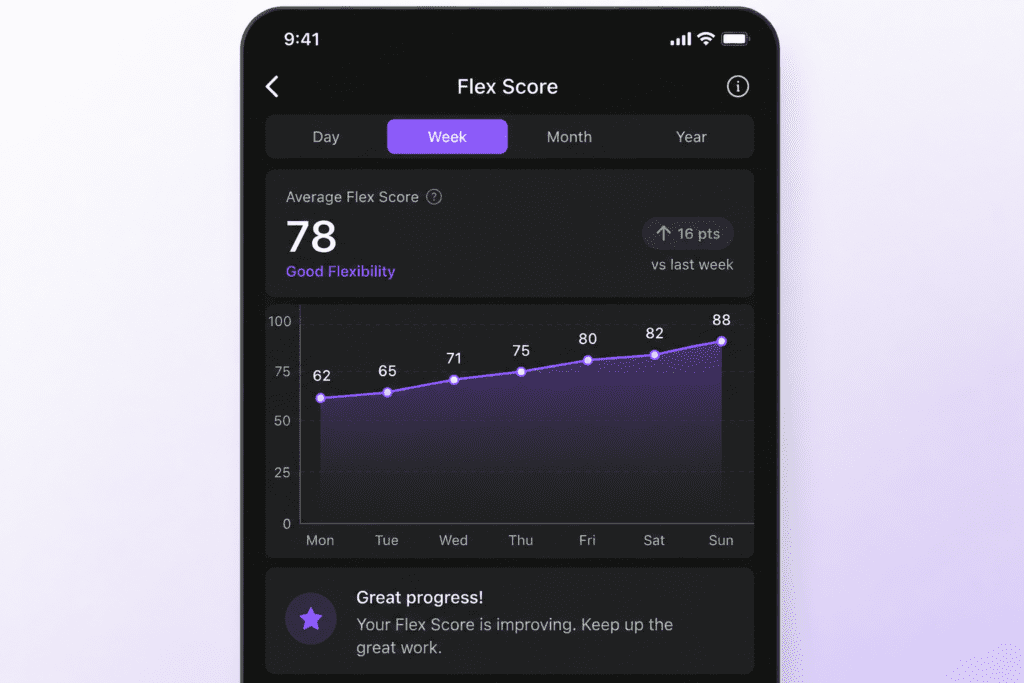
Over weeks, the people who get value are the ones who actually act on the readings and log their food consistently. Reviewers who followed the guidance, often alongside lower-carb eating or intermittent fasting, report gradual, modest progress, the kind you would expect from any consistent calorie-aware approach. The people who get nothing are the ones who test sporadically, ignore the plan, or expected the device to do the work. The honest summary: Lumen rewards commitment and punishes passivity, and the device is the easy part; the daily logging and behavior change are the real work.
Pricing and Value: The Subscription the Ad Does Not Mention
Lumen’s true cost is not the headline device price; it is the device plus an ongoing subscription that auto-renews, which makes realistic first-year ownership around $400 or more. The offer page shouts “Buy Now and Save 50%” and never once mentions the membership. That omission is the single most important thing to understand before you buy.
Here is the real structure. The device itself runs roughly $199 to $299 depending on the plan and sale (full price is often around $299, and it frequently discounts to $99 to $199 during promotions). But Lumen is typically sold as plans that bundle the device with a membership term, for example a shorter “booster” plan around $199 and longer “optimal” plans up to around $299, and these plans auto-renew into a subscription of about $19 per month once the initial term ends. The valuable part of Lumen, the personalized nutrition plan and coaching in the app, depends on having an active membership. So the honest math is device plus roughly $228 per year in subscription, which is why a realistic first-year cost lands around $400 or more, and every year after that carries the ongoing fee.
A few fairness points. Lumen’s subscription terms have shifted over time, and recent reports suggest you may be able to take basic measurements without an active subscription while the richer guidance stays behind the membership, so confirm the current terms on the plan you are buying. There is a 30-day money-back trial, which genuinely lets you test and return it, and a 1-year warranty. And compared with paying a clinic for metabolic-cart testing, Lumen is far cheaper per measurement. But the auto-renewing subscription is exactly the kind of recurring charge that catches people out, so set a calendar reminder before any trial or term ends, and watch for the auto-renewal. We have flagged the same auto-renew pattern across other subscription wellness products, and it is always the detail buyers regret missing.
The value verdict: if you are a committed, data-driven user who will genuinely use it daily, the cost can be justified as a long-term metabolic-feedback tool. If there is any chance you will lose interest in a month, the combination of a premium device and a recurring fee makes Lumen an expensive way to learn that lesson. For comparison-minded readers weighing metabolism and weight-management options, it is worth contrasting Lumen with simpler approaches, including supplement-led routes like the one in our Arrae MB-1 +45 review, and with free calorie-tracking apps, before committing.
Pros and Cons
Pros
- Measures something real and validated. The breath-to-RER approach is legitimate and tracks lab trends reasonably well.
- Credible founders and build quality. PhD physiologist twins, a CES-recognized, well-made device.
- Genuine at-home metabolic feedback. Insight once limited to labs, now repeatable daily.
- Educational and motivating for the right person. Seeing your fuel state can change how you eat.
- Broad app integrations. Works with Apple Health, Garmin, Oura, Whoop, and more.
- 30-day money-back trial. You can test and return it.
- Cheaper than clinical testing per measurement.
Cons
- The subscription is under-disclosed and auto-renews. True cost is far above the headline price.
- High total cost. Premium device plus roughly $19 per month adds up fast.
- Weight-loss benefit is overstated. Measurement is validated; weight-loss causation is not proven independently.
- Most studies are company-affiliated. Independence is limited.
- Demands heavy daily commitment. Breath tests plus food logging, or it does nothing.
- Not medical-grade. Readings depend on consistent breathing technique.
- Single readings can fluctuate. Value is in trends, which takes patience.
- Poor fit for disordered-eating histories. Daily numbers and food rules can be harmful for some.
Who Should Buy Lumen
Lumen suits a specific person well. You are likely a good fit if you genuinely enjoy quantifying your body and acting on data, the kind of person who already uses a fitness tracker or logs workouts and finds numbers motivating rather than stressful. It fits if you are willing to commit to daily breath tests and consistent food logging for at least a few months, if you can comfortably absorb the device cost plus an ongoing subscription, and if you want structured, personalized nutrition feedback and understand the device gives insight while you do the work. Athletes, biohackers, and people managing metabolic health who want objective feedback tend to get the most from it.
Who Should Skip It
Be honest with yourself here. Skip Lumen if you are looking for a passive solution that does the work for you, because it is the opposite of that. Skip it if you are budget-conscious, since the recurring subscription makes it a poor fit for anyone who needs to watch spending. Skip it if you know you will not log food and test daily, because without that commitment it becomes an expensive paperweight within weeks.
Most importantly, approach with real caution, ideally with professional guidance, if you have any history of disordered eating or an unhealthy relationship with food. A device that produces daily numbers and prescribes carb limits can fuel obsessive tracking and food anxiety for vulnerable people, and no gadget is worth that cost. If that is you, talk to a registered dietitian about whether this kind of tool is appropriate before buying.
How Lumen Compares to the Alternatives
Lumen occupies a unique niche, at-home breath-based fuel tracking, but several alternatives may serve your actual goal better and cheaper depending on what you want.
Versus a free calorie or macro tracking app: If your real goal is weight loss, the unglamorous truth is that a free app that helps you maintain a calorie deficit will do most of the heavy lifting for no cost. Lumen adds metabolic feedback and personalization that some people find more motivating and educational, but it does not replace the calorie math underneath. If budget is the deciding factor, start free.
Versus a continuous glucose monitor (such as Levels or Nutrisense): CGMs measure blood glucose in real time, a different and arguably more directly actionable metric for many people, especially around blood-sugar stability and food response. They also carry subscriptions and can be pricier. Choose Lumen for fat-versus-carb fuel insight; choose a CGM for glucose-response insight. Some data enthusiasts use both, which is a serious spend.
Versus clinical metabolic testing (a metabolic cart or working with a dietitian): A clinic test with a registered dietitian gives you a more accurate one-time measurement plus expert interpretation and a tailored plan. It costs more per session but removes the daily-commitment burden and the guesswork. If you want accuracy and expert guidance over daily self-tracking, this route is better, and a dietitian can interpret far more than a number.
Versus doing nothing but improving the basics: For many people, the fundamentals, a modest calorie deficit, more protein, more movement, better sleep, deliver most of the result Lumen is chasing, for free. Lumen earns its place only if the feedback genuinely changes your behavior.
For broader wellness-device context, you can browse our tested wellness-gadget reviews to see how Lumen stacks up against other health tools we have assessed.
Tips to Get the Most From Lumen
- Master the breathing technique early. Consistent, strong breaths in time with the app are essential for reliable readings. Practice in the first week.
- Test at the same times. A consistent morning, pre-food reading is the most useful baseline; add readings around meals and workouts as you learn.
- Log food honestly and consistently. The app’s personalization is only as good as your input. This is the real work.
- Watch trends, not single readings. One number can wobble. Judge progress over weeks.
- Act on the guidance. The device is useless if you do not change behavior based on what it shows.
- Set a subscription reminder. Note your trial and renewal dates so the auto-renew never surprises you.
- Pair it with the basics. Lumen works best alongside a sensible calorie-aware approach, more protein, movement, and sleep, not instead of them.
Frequently Asked Questions
Does Lumen really work?
It accurately measures whether you are burning more fat or carbs, and that measurement is peer-reviewed and validated against lab equipment. Whether it helps you lose weight depends on you: it is a feedback and accountability tool, and results come from acting on the data plus maintaining a calorie deficit, not from the device itself.
How much does Lumen cost, including the subscription?
The device is roughly $199 to $299 depending on the plan and sales, and plans typically bundle a membership that auto-renews at about $19 per month. Realistic first-year cost is around $400 or more. The sales page does not mention the subscription, so check the current terms before buying.
Is the Lumen subscription mandatory?
The most valuable features, the personalized nutrition plan and coaching, require an active membership. Terms have changed over time and you may be able to take basic measurements without one, so confirm the current policy on the plan you choose.
Is Lumen scientifically proven?
Its measurement is validated in peer-reviewed studies to track the same trends as a clinical metabolic cart, though most studies are company-affiliated and at least one independent team has verified accuracy. It is not medical-grade, and the claim that it causes weight loss is not independently proven in the way the marketing implies.
Is Lumen accurate?
For a home device, yes, reasonably, for tracking trends in your fuel use, provided you use a consistent breathing technique. It is not as precise as a lab metabolic cart on absolute values.
How is Lumen different from a continuous glucose monitor?
Lumen measures breath CO₂ to estimate fat-versus-carb burning. A CGM measures blood glucose. They track different things; CGMs are better for blood-sugar response, Lumen for fuel-type feedback.
Does Lumen measure ketosis?
Not directly. It is not a ketone meter. It can indicate when you are leaning toward fat burning, but for true ketone measurement you need a blood or breath ketone meter.
How long does it take to see results?
Insight is immediate; meaningful body changes take consistent use over weeks to months, and only if you act on the guidance. The brand cites averages like 3% body fat in 12 weeks, but those are company figures and individual results vary widely.
Is Lumen worth it?
For committed, data-driven people who will test and log daily and can absorb the cost, it can be a genuinely useful tool. For anyone wanting a passive fix, on a budget, or unlikely to use it consistently, it is hard to justify.
Can Lumen help if I have a medical condition?
Lumen is a wellness device, not a medical one. If you have diabetes, are pregnant, or have any health condition, consult your doctor before relying on it, and never use it to replace medical care.
What is the return policy?
There is a 30-day money-back trial and a 1-year warranty. If you buy through a funnel page rather than the main brand site, keep your order confirmation and confirm where to request a return.
Final Verdict
Lumen is one of the more impressive consumer health gadgets on the market, and that is exactly why it deserves a careful, honest verdict rather than hype. The core technology is real: it shrinks a genuine laboratory principle into a pocket device, the measurement is peer-reviewed and tracks lab trends well, and the founders are credible scientists. For a committed, data-loving person who will test and log every day, it can be a genuinely useful tool for understanding how their body responds to food, fasting, and exercise, and that understanding can drive real behavior change.
What holds it back is the gap between the science and the sales pitch, plus the money. The measurement is validated; the promise that it will melt away weight is not, and independent experts are openly skeptical that chasing metabolic flexibility delivers the weight-loss payoff implied. The total cost, a premium device plus an auto-renewing subscription the offer page never mentions, is steep, and the whole thing only works if you put in daily effort the marketing makes look effortless. It is a feedback tool dressed up as a weight-loss solution.
So here is our honest recommendation. If you are the right person, data-driven, committed, financially comfortable with the ongoing cost, buy it with clear eyes: use the 30-day trial, master the breathing, log diligently, watch the trends, and treat it as a coach rather than a cure. If you want a passive fix, you are on a budget, or you will not use it daily, your money goes much further with a free tracking app and the basics, and your serious goals belong with a dietitian or doctor. Lumen is a clever tool sold with an oversimplified promise. Judge the tool, not the promise.
Ossaward Rating: 3.7 / 5. Real science, real usefulness for the committed, real costs the ad hides.
If you are the data-driven type who will use it daily and you have read the cost and commitment notes above, you can check current Lumen pricing and plans here: