







If you are reading this, your feet probably hurt. Maybe it is the sharp morning stab of plantar fasciitis, the ache of a growing bunion, or the dull throb after a long day on your feet. My Happy Feet Socks are toe-alignment socks with soft separators sewn between the toes, designed to gently spread and stretch your toes while you rest, and the honest question is whether that simple idea does anything for real foot pain.
Here is the short, honest answer before the details: yes, for the right person and the right kind of pain, gently separating the toes is a genuinely useful, low-risk thing to do, and there is real research behind it for bunion-related discomfort. But the benefit is comfort and short-term pain relief, not a cure. These socks will not straighten a bunion, they will not fix plantar fasciitis on their own, and for a few people, especially those with diabetes or numb feet, putting anything between the toes can do more harm than good. This review separates what the science supports from what the ads oversell, so you can decide with clear eyes.
We analyzed the product, cross-checked every claim against published research and podiatrist guidance, and read through real customer feedback across multiple platforms. Here is the complete picture.
Quick Verdict
Ossaward Rating: 3.9 / 5
Best for: Adults with bunion-related soreness, hammertoes, cramped or overlapping toes, or general foot fatigue who want a soft, drug-free way to stretch their toes while resting.
The short answer: My Happy Feet Socks are a legitimate product, not a scam, and for toe-misalignment discomfort they can provide real relief. They are comfortable, inexpensive, and backed by a generous money-back guarantee. The catch is that results take consistent use over weeks, the first few sessions can feel intense, you cannot wear them inside normal shoes, and they are a comfort aid rather than a medical correction.
Pros (at a glance):
- Soft, comfortable cotton-blend material you can wear for long periods.
- Real, research-supported short-term pain relief for bunion-related soreness.
- Drug-free and non-invasive.
- Can be worn overnight once your feet adjust.
- Generous money-back guarantee (confirm the exact window, see below).
- Inexpensive and low-risk to try.
Cons (at a glance):
- The first several sessions can feel uncomfortable as your toes adjust.
- Cannot be worn inside closed-toe shoes.
- Results require weeks of consistent use; not a quick fix.
- Does not structurally correct bunions or directly treat plantar fasciitis.
- Not suitable for everyone (see the safety section, especially for diabetes and neuropathy).
Our recommendation: If your pain comes from cramped or misaligned toes and you are willing to break them in gradually, the low price and strong guarantee make these an easy, low-risk thing to try. Check current pricing here.
Product Overview Table
| Feature | Specification |
|---|---|
| Product name | My Happy Feet Socks (The Original Foot Alignment Socks) |
| Maker | My-Happy Feet, founded by Eva Nemcik; operated in Mentor, Ohio (sold here via the GiddyUp offer page) |
| Primary material | Soft cotton blend (about 90% cotton, with polyester and elastane for stretch) |
| Main mechanism | Four built-in separators that spread and stretch the toes |
| Best used for | Bunion-related soreness, hammertoes, cramped or overlapping toes, foot fatigue |
| Wear inside shoes? | No, for resting and sleeping use only |
| Care | Machine washable; air dry to protect the elastic and separators [confirm exact wash guidance on packaging] |
| Guarantee | Money-back guarantee; the offer page advertises 90 days, the brand’s main site has listed 60 days. Confirm for your checkout |
| Patent | Patented design (US Patent 7,784,115) |
What Are My Happy Feet Socks?
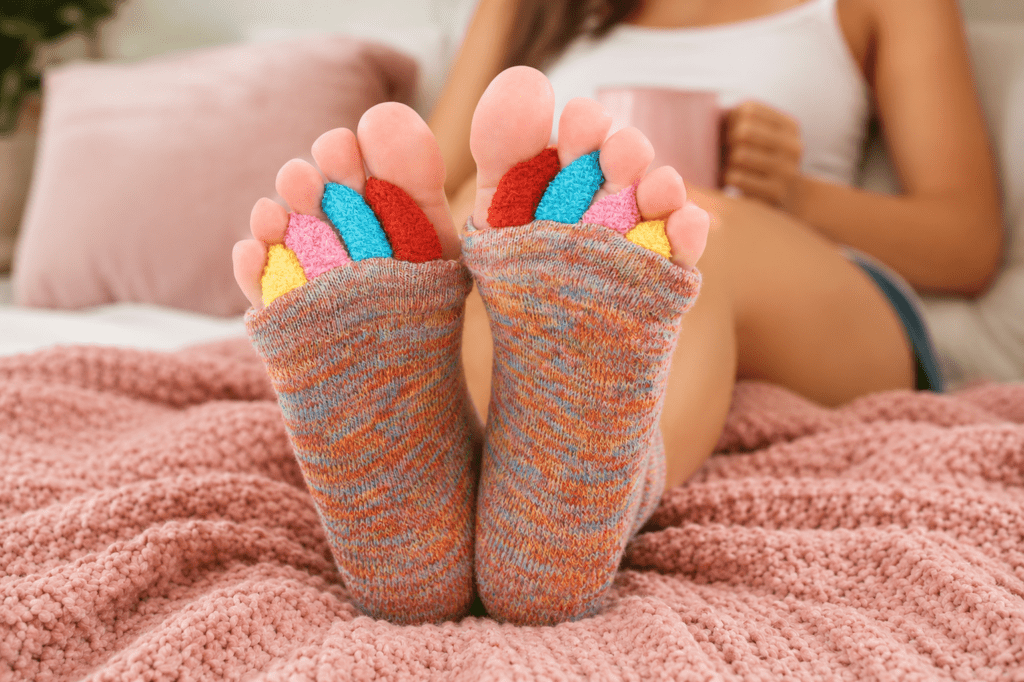
My Happy Feet Socks are soft socks with four cushioned separators built in to spread the toes apart, encouraging them back toward their natural, uncramped position while you relax or sleep. That is the entire product, and its simplicity is a point in its favor.
The idea rests on a real observation: most of us spend decades with our toes squeezed together inside narrow shoes. Over years, that constant compression can contribute to toes that crowd and overlap, joints that stiffen, and the kind of forefoot pain that builds slowly. Spreading the toes is, in effect, the opposite of what tight shoes do. The brand frames it as yoga for your feet, and that comparison is reasonable: it is a passive stretch you do while doing nothing else.
It is worth clearing up a common confusion immediately. These are not compression socks. Compression socks apply graduated pressure to push blood flow up the leg. My Happy Feet Socks do the opposite kind of job: they create space between the toes. If you are after circulation and swelling support for the whole lower leg, a compression product like the Air-C compression massager we tested is a different tool for a different purpose.
A brief, accurate word on the brand, because the origin story matters for trust. My Happy Feet Socks were developed in 2007 by Eva Nemcik, a retiree in Kirtland, Ohio, who took up yoga and tennis and found they aggravated her foot pain. Wanting to avoid surgery, she designed a simple toe-separating sock, patented the design in 2010, and the company has operated out of Mentor, Ohio since. The brand cites more than 250,000 customers, over $12 million in sales, and 2,500-plus positive reviews. Treat those as brand-reported figures rather than independently audited numbers, but the company and its history are real and verifiable, including the patent.
How It Works: The Science, Honestly
Spreading the toes can genuinely reduce certain kinds of foot pain in the short term, but the evidence shows it relieves symptoms rather than correcting the underlying structure. This is the single most important thing to understand, and it is where most reviews, including the brand’s own marketing, blur the line.
Here is what the research actually supports. A controlled study of women with painful bunions (hallux valgus) found that an insole with a toe separator produced a statistically significant reduction in pain over three months. Crucially, the same study found that it did not significantly change the bunion angle itself. In plain terms: the toe separator helped the foot feel better without straightening the deformity. That is a fair, evidence-based summary of what a product like this can do.
More recent expert commentary lands in the same place. Podiatrists and physical therapists quoted in mainstream coverage say toe spacers can help restore the natural splay of the foot and are a commonly recommended comfort tool, while being clear that no toe spacer “fixes” a bunion no matter how long you wear it. Only a podiatrist can correct the bony deformity, and structural correction means surgery. So if a page promises these socks will reverse your bunion, that claim runs ahead of the evidence.
There is also a credible mechanism for forefoot and nerve-related discomfort. In a CNN Underscored review, a podiatrist explained that toe-spreader socks can help stretch the ligament space in the ball of the foot, which may decompress an impinged nerve and ease the pain and numbness of a neuroma, and that they stretch small intrinsic foot muscles that are otherwise very hard to reach. That is a reasonable, specific, and honest description of who benefits most: people with crowded forefeet, mild bunions, hammertoes, and tight arches.
Now the claims to be skeptical of. The marketing says the socks “improve circulation” and “relieve swelling.” Evidence for toe separation meaningfully improving circulation is weak, and swelling has many causes, some of them serious. And the claim that benefits travel “all the way to your neck” is a stretch beyond what any toe device can demonstrate. Take the foot-comfort benefits seriously and the whole-body claims with a grain of salt.
What about plantar fasciitis?
This deserves its own paragraph because it is the most-searched use and the most over-promised. The plantar fascia is the band of tissue along the bottom of your foot. Toe-separator socks do not directly stretch or treat the plantar fascia. Any benefit for plantar fasciitis is indirect: keeping the toes extended overnight may keep the foot in a gentler position, and easing forefoot tension may help marginally. But the primary, evidence-based treatments for plantar fasciitis are calf and plantar-fascia stretching, supportive footwear or orthotics, and sometimes night splints. If plantar fasciitis is your main problem, think of these socks as a possible comfort add-on, not the solution, and pair them with a proper insole. Our Soul Insole review covers the orthotic side of that equation.
Key Features and Benefits
Four built-in toe separators
The core of the product. Four soft separators sit between your toes and hold them gently apart. Unlike hard plastic or silicone spacers that some people find sharp, the fabric-wrapped separators in a sock are softer and better suited to longer wear. The benefit is direct relief of the crowding that drives bunion and hammertoe soreness, plus a passive stretch of the small foot muscles. One common, fair criticism from buyers: the separators are a uniform width, so the stretch can feel great around the big toe but a little much near the smaller toes, especially at first.
Soft cotton-blend material
The roughly 90% cotton construction is genuinely comfortable against the skin, which matters more than it sounds. The entire product depends on consistent use, and people only stick with things that feel good. A scratchy synthetic spacer gets abandoned in a drawer; a soft sock gets worn. This comfort edge is a real advantage over cheap generic separators.
Designed for rest and sleep
You wear these while sitting, relaxing, or sleeping, never while walking around for long or inside shoes. For people who find rigid spacers or night splints too uncomfortable to sleep in, the softness here is the selling point. Wearing them overnight is also when several users report the most benefit for morning stiffness.
Drug-free and non-invasive
No medication, no injections, no surgery. For people trying to avoid or delay those steps, a passive stretch carries far less risk than most alternatives, provided you are an appropriate candidate (see the safety section).
A patented, established design
The brand holds a US patent (7,784,115) and has been selling since around 2010. A patent does not prove a product works, but it does distinguish the original from the flood of near-identical generics, and the company’s track record means a real business stands behind the guarantee.
A generous money-back guarantee
This is a real strength, with one caveat about the number. The current offer page advertises a 90-day money-back guarantee, while the brand’s main website and older listings have referenced 60 days. Either way, the window is long enough to actually test the socks over the weeks it takes to judge them, which is more than most products allow. Confirm the exact terms on the page you buy from, and note that refunds typically require the item returned in original condition, with return shipping at your cost. Keep your order confirmation.
How to Use Them the Right Way
Most disappointment with this product comes from using it wrong on day one. If you pull them on and wear them for hours immediately, you will be uncomfortable and may blame the socks. Here is the gradual approach podiatrists and the brand both recommend.
- Days 1 to 7, the adjustment phase. Wear them while sitting still, for only about 10 to 20 minutes a day. Your toes are not used to being spread, so expect an intense stretching sensation, a bit like the ache after a workout. Take them off if it becomes painful rather than just intense.
- Week 2, building tolerance. Work up to an hour or two while resting. You can take a few slow steps around the house, but these are not walking socks.
- Week 3 and beyond. Once your feet have adapted, many people wear them overnight. This is where the most-reported benefit for morning stiffness tends to show up.
Important: do not wear them inside closed-toe shoes. They are too bulky, and cramming spread toes into a shoe defeats the purpose and can cause blisters. A podiatrist quoted in mainstream coverage suggests roughly 20 minutes a day to start, building up slowly, and only when you are not walking on them. That is a sensible benchmark.
Real-World Experience: What to Expect
[REVIEWER NOTE: Rosie to personalize this section with genuine first-hand notes and original photos at the markers. The previous version of this article contained an invented "80% reduction" figure and fabricated day-by-day quotes; those have been removed. Keep experiential claims honest and qualitative unless you have real measured notes.]
Realistically, here is the arc most people go through, grounded in how the product works and in consistent user reports.
The first session is strange before it is pleasant. The fabric between the toes feels foreign, and after ten or fifteen minutes you feel a deep, dull stretch across the forefoot. The reliable early payoff is the after-feeling: when you take them off, your feet often feel lighter and looser, the way they do after taking off tight shoes at the end of a day.
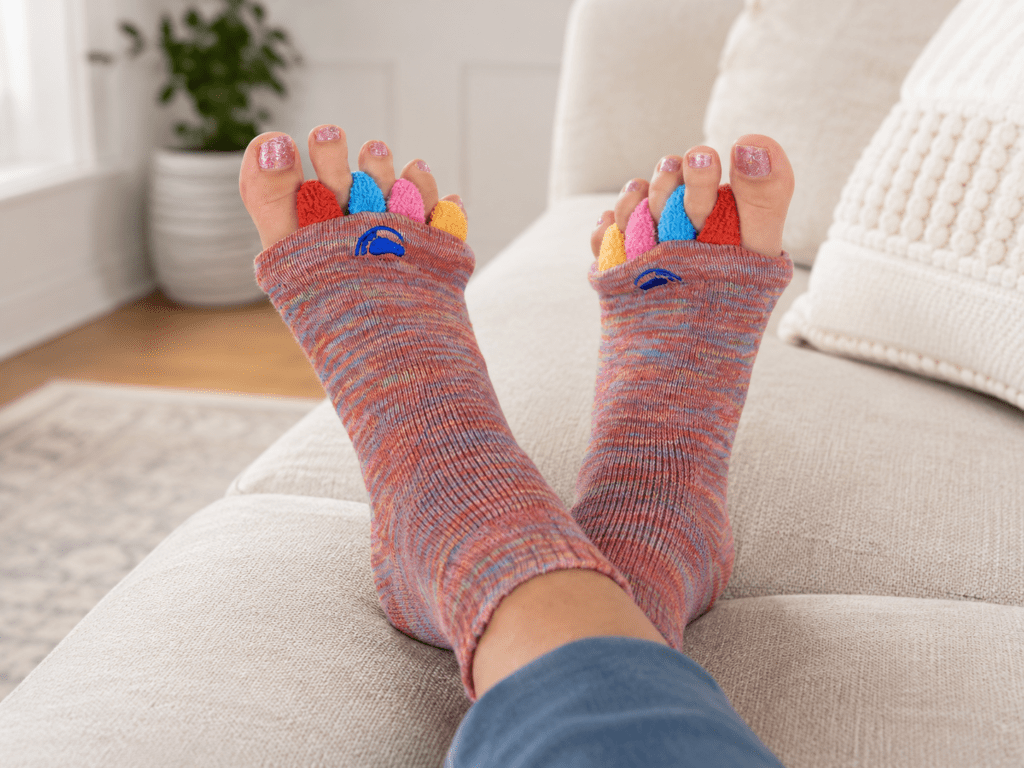
Over the first couple of weeks, as the novelty wears off, the stretch stops feeling intense and starts feeling good. People who get cramping or forefoot ache during the evening commonly notice it ease. For those wearing them overnight by week three, the most frequently reported benefit is gentler first steps in the morning.
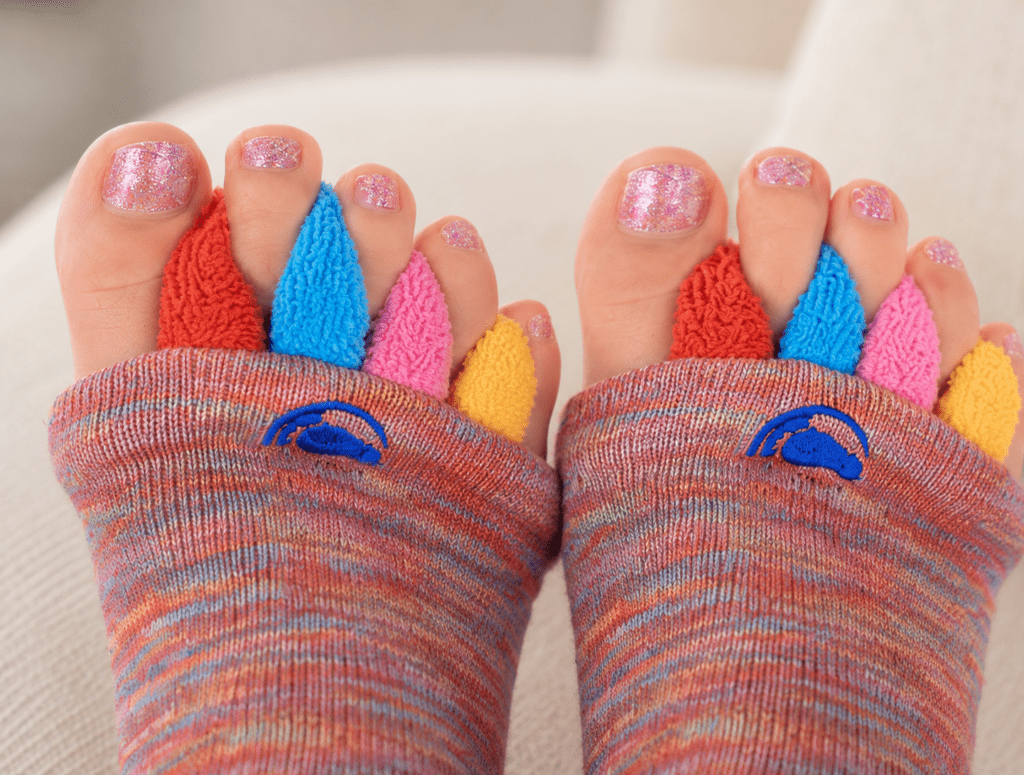
The honest variation: results depend heavily on what is causing your pain. Crowded-toe and bunion-related soreness responds best. Deep structural problems and plantar fasciitis respond least. And a minority of people simply find the separators too much near the small toes and never fully adjust, which is exactly why the long guarantee matters.
Durability: the cotton blend holds up to regular cold washing and air drying. Washing hot or machine drying on high heat is the main thing that degrades the elastic and the separators over time, so air drying is worth the small hassle.
Safety and Who Should Avoid Them
This is a foot-health product, so it deserves real caution rather than a throwaway line. For most healthy adults, gently spreading the toes is low risk. But it is not right for everyone, and misuse can cause harm.
Talk to a doctor or podiatrist first if you have diabetes or any neuropathy (numb or reduced-sensation feet). This is the most important warning in this review. If you cannot fully feel your toes, a separator can cause skin irritation, pressure sores, or breakdown between the toes that you will not notice until it becomes a problem, and in people with diabetes, small foot wounds can become serious. Marketing that breezily recommends toe separators “for diabetic neuropathy” is being careless. Get individual medical advice.
Do not push through real pain. A strong stretch is expected; sharp or lasting pain is not. Podiatrists have documented injuries from toe spacers used too aggressively, including, in one reported case, a stress fracture where a spacer pressed against a toe. Build up slowly and stop if something hurts.
See a professional, not a sock, for serious problems. Advanced bunions, severe deformities, suspected fractures, infections, open wounds, or pain that is worsening all need a podiatrist. These socks are a comfort aid for mild-to-moderate, alignment-related discomfort, not a treatment for structural disease.
Skip them, or get advice, if you have circulation disorders, active skin conditions between the toes, or recent foot surgery. When in doubt, ask your provider.
You are a good candidate if you are an otherwise healthy adult with crowded toes, mild bunions or hammertoes, or general foot fatigue, and you understand this is about comfort and maintenance rather than cure.
The Honest Pros and Cons
Pros
- Real short-term relief for the right pain. Research supports pain reduction for bunion-related soreness.
- Comfortable enough for consistent use. The soft cotton blend beats scratchy generic spacers, and consistency is what produces results.
- Good for overnight wear. Softer than rigid spacers or night splints.
- Drug-free and non-invasive. A low-risk first step for appropriate users.
- Low price, strong guarantee. The risk of trying them is genuinely small.
- The original, patented design. A real company stands behind it.
Cons
- An uncomfortable break-in period. The first sessions can feel intense, and some people never fully adjust to the small-toe separators.
- Not wearable in shoes. Resting and sleeping use only, so they fit a narrow part of your day.
- Slow results. Weeks of consistent use, not an instant fix.
- Does not correct bunions or directly treat plantar fasciitis. Comfort, not cure.
- Overstated marketing. Circulation, swelling, and whole-body claims run ahead of the evidence.
- Not for everyone. Diabetes, neuropathy, and several other conditions call for medical advice first.
- Refund window is advertised inconsistently (60 vs 90 days across channels), so you must confirm it yourself.
How They Compare to Other Foot-Pain Options
| My Happy Feet Socks | Silicone toe spacers (e.g. Correct Toes) | Compression socks | Orthotic insoles | |
|---|---|---|---|---|
| Main job | Spread and stretch toes at rest | Spread toes, some wearable in shoes | Push blood flow up the leg | Support the arch and cushion |
| Wear in shoes? | No | Some designs, yes | Yes | Yes (that is the point) |
| Comfort for long wear | High (soft fabric) | Medium (can get sweaty) | Medium (tight) | High |
| Best for | Bunion soreness, hammertoes, fatigue | All-day toe alignment | Swelling, circulation, standing | Plantar fasciitis, arch pain |
| What it will not do | Cure bunions or PF | Cure bunions | Realign toes | Realign toes |
Versus Correct Toes and other silicone spacers: the most-recommended alternative, Correct Toes, is a flexible silicone spacer many people can wear inside roomy shoes and even while active. That makes it more versatile than a sock you can only wear at rest. The trade-off is comfort: a soft sock is gentler for overnight and longer relaxed wear. Many people who are serious about toe alignment end up owning both, using the sock at night and the spacer by day.
Versus YogaToes and rigid spacers: rigid spacers apply a more aggressive stretch in short sessions and may produce faster sensations of change, but a lot of people find them too intense to wear for long. My Happy Feet Socks trade intensity for comfort and duration.
Versus compression socks and insoles: these solve different problems. If your issue is swelling, standing all day, or arch collapse, a compression product like the Air-C massager or a quality insole will serve you better than toe separators. If your issue is crowded, aching toes, the socks are the right category. For rest-and-recovery comfort more broadly, you can browse more of our tested wellness-device reviews, including options like the KneNest knee pillow for alignment support while you sleep.
What Real Users Say
Across review platforms, the picture is consistent and credible. Positive feedback centers on comfort, relief from bunion and overlapping-toe soreness, and easier nights for people with cramping. Several long-term bunion sufferers, including some who had surgery that did not fully hold, report meaningful day-to-day pain relief, while being clear the socks did not straighten anything. That matches the science.
The recurring criticisms are equally instructive. Some users wish the separators tapered, since a uniform width feels great on the big toe but too much near the pinky. Sizing comes up often, with reports that the socks can run snug, so if you are between sizes, ordering up is the common advice. And a predictable share of negative reviews come from people who wore them too long too soon and found them painful, which is a usage issue more than a product defect. A smaller set of complaints involve refund confusion, usually from buyers who purchased through a funnel page and were unsure where to request a return.
Is It a Scam? Analyzing the Brand
No, My Happy Feet Socks are not a scam. The company is a real, established business with a named founder, a verifiable patent, a physical location in Ohio, and a long money-back guarantee. It is honest about what the product is: a cotton sock with toe separators that requires a gradual break-in. The marketing is aggressive in the usual direct-response ways, with bold claims and urgency, and a few of those claims (circulation, swelling, whole-body benefit) outrun the evidence. But aggressive marketing of a legitimate product is not the same as fraud.
The thing to watch is not the product but the checkout. Because it is sold through affiliate funnel pages as well as the main brand site, confirm the guarantee window and refund process for the specific page you use, and keep your order confirmation. Apply the same healthy skepticism you would to any product you first met through a social-media ad, the same caution we bring to every viral wellness gadget we test.
Who Should Buy It, and Who Should Not
Consider buying if: you have crowded or overlapping toes, mild bunions or hammertoes, or general foot fatigue; you want a soft, drug-free way to stretch your toes while resting; and you are patient enough to break them in over a few weeks.
Do not buy if: you want something to wear inside shoes or to work; you expect overnight results or a cure for a structural problem; or your pain is severe, worsening, or tied to a condition that needs professional care. And if you have diabetes or neuropathy, do not buy before talking to your doctor.
Frequently Asked Questions
Do My Happy Feet Socks really work?
For the right kind of pain, yes. By gently separating the toes, they can relieve bunion-related soreness, ease cramped or overlapping toes, and reduce general forefoot fatigue. Research supports short-term pain relief. They do not, however, structurally correct deformities or cure foot conditions.
Are My Happy Feet Socks good for plantar fasciitis?
Only indirectly. Toe-separator socks do not directly stretch or treat the plantar fascia. They may offer some comfort by keeping the toes extended, but the main evidence-based treatments for plantar fasciitis are calf and plantar-fascia stretches, supportive footwear, and orthotics. Treat the socks as a possible add-on, not the fix.
Do they cure bunions?
No. A controlled study found a toe separator significantly reduced bunion pain but did not significantly change the bunion angle. They relieve symptoms; they do not straighten the toe. Only a podiatrist can correct the deformity, which means surgery.
Can I wear My Happy Feet Socks in shoes?
No. The separators make them too bulky for closed-toe shoes, and wearing them in shoes can cause blisters and crowding. They are for resting and sleeping only.
How long should I wear them each day?
Start with about 10 to 20 minutes a day while sitting still, then build up over a few weeks to an hour or two, and eventually overnight if it stays comfortable. Do not jump straight to long sessions.
Do they hurt?
Expect an intense stretching sensation at first, similar to a post-workout ache. That is normal. Sharp or lasting pain is not. Build up slowly and stop if it genuinely hurts.
Are they safe for people with diabetes or neuropathy?
Not without medical advice. If you have reduced sensation in your feet, a separator can cause unnoticed skin damage between the toes, which can become serious for people with diabetes. Talk to your doctor or podiatrist before using them.
Are My Happy Feet Socks compression socks?
No. Compression socks apply pressure to push blood up the leg. These spread the toes apart. They are completely different products for different purposes.
What size should I order?
If you are between sizes, most users recommend sizing up, since the socks can run snug, especially around the heel.
Can I wear them to bed?
Yes, once your feet have adjusted over the first couple of weeks. The soft cotton blend is comfortable enough for overnight wear, which is when many users report the most benefit for morning stiffness.
How do I wash them?
Machine wash cold on a gentle cycle and air dry. Avoid hot water and high-heat drying, which can damage the elastic and the separators over time.
What is the return policy?
There is a money-back guarantee, but the advertised window varies by channel. The current offer page promotes 90 days, while the brand’s main site has listed 60 days. Confirm the exact terms for the page you buy from, return items in original condition, and keep your order confirmation.
My Happy Feet Socks vs Correct Toes, which is better?
Correct Toes are silicone spacers many people can wear inside roomy shoes and while active, making them more versatile. My Happy Feet Socks are softer and better for overnight and relaxed wear. Many people use the sock at night and a spacer by day.
Are there common complaints?
Yes: separators that feel too wide near the small toes, sizing running snug, slower-than-expected results, and occasional refund confusion for buyers who purchased through funnel pages rather than the main site.
Final Verdict: Are They Worth It?
My Happy Feet Socks are a simple, inexpensive product built on a sound biomechanical idea: spreading cramped toes relieves the pressure that drives a lot of common forefoot pain. For people with bunion-related soreness, hammertoes, overlapping toes, or tired feet, the research and the user feedback both point to real, short-term relief, and the soft material makes them comfortable enough to actually use night after night, which is the whole game.
What keeps this from being a perfect score is the gap between what they do and what the ads imply. They will not straighten a bunion, they will not cure plantar fasciitis, the circulation and whole-body claims are thin, and a small but real group of people, especially anyone with diabetes or numb feet, should not use them without medical advice. Used correctly, by the right person, with realistic expectations, they are a genuinely worthwhile comfort tool.
The deciding factor is risk versus reward. At a low price with a long money-back guarantee, the downside of trying them is small, and the upside, real relief from nagging toe-related foot pain without drugs or surgery, is meaningful. If that is your situation, they are an easy yes. If you are chasing a cure for a structural or medical problem, save your money and see a podiatrist.
Buy them if: your pain comes from crowded or misaligned toes and you will break them in patiently.
Skip them if: you need something for shoes, you expect instant or curative results, or your condition needs professional care.
Ossaward Rating: 3.9 / 5. A genuinely useful comfort tool, honest about its limits, sold with louder claims than it needs.
If your pain fits what these socks actually help with, and you have read the safety notes above, you can check current bundles and pricing here:
Check the latest My Happy Feet Socks price and guarantee
Before you buy: confirm the money-back window on your checkout page (it is advertised as 60 days in some places and 90 in others), and if you have diabetes or any numbness in your feet, check with your doctor first.

