
We may receive a commission for purchases made through the links provided here. Learn More Learn More.
If you’ve been down the “fluoride-free toothpaste” rabbit hole recently, you’ve almost certainly encountered nano-hydroxyapatite — the mineral compound that dental researchers are increasingly excited about as an alternative to fluoride.
The science is real. Multiple peer-reviewed studies support it. Japan has used nHAP in dental products since the 1990s. And an increasing number of dentists recommend it for patients seeking fluoride alternatives or dealing with enamel sensitivity.
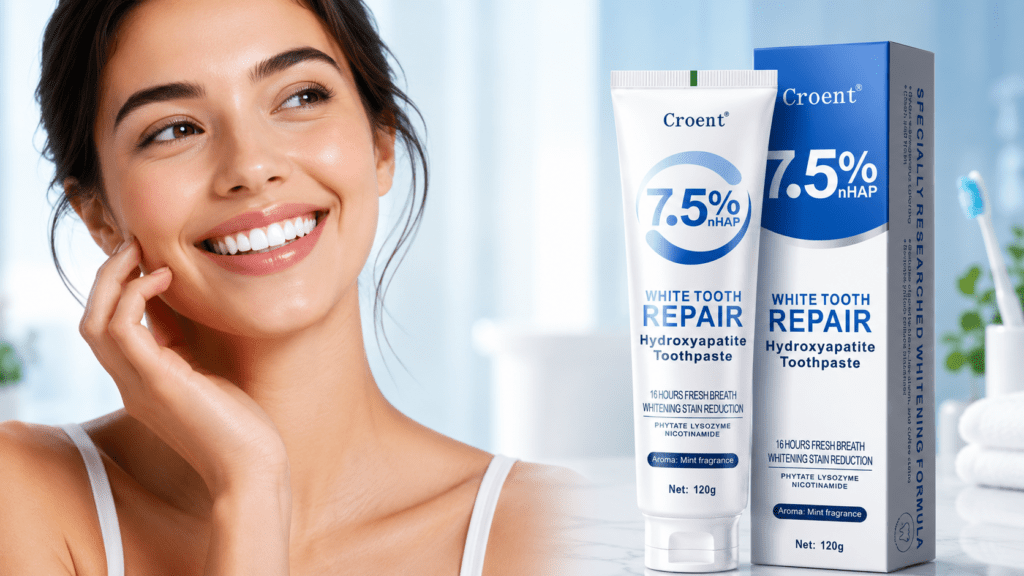
nHAP EnamelShield+ is one of the products trying to capitalize on this momentum. It uses nano-hydroxyapatite as its core active ingredient, positions itself as fluoride-free, and targets people concerned about enamel health, tooth sensitivity, and whitening.
But here’s where it gets complicated: nHAP EnamelShield+ is sold through a direct-to-consumer affiliate network (neotechix.com) without the transparent pricing, verified independent reviews, or the brand track record of established nHAP toothpaste brands like Boka, Risewell, Davids, and the Japanese pioneer Apagard.
The question isn’t whether nano-hydroxyapatite works — the research says it does. The question is whether nHAP EnamelShield+ specifically is the right way to buy it.
Here’s the honest, complete picture.
TL;DR — nHAP EnamelShield+ at a Glance
- What it is: A nano-hydroxyapatite (nHAP) toothpaste in gentle mint flavor, distributed through the neotechix.com affiliate network
- Active ingredient: Nano-hydroxyapatite — genuinely well-researched for enamel remineralization
- Fluoride: Fluoride-free
- Best for: People seeking fluoride-free enamel support, those with tooth sensitivity, post-whitening care
- Honest limitation: Pricing not shown before checkout; no Amazon listing; alternatives with better independent review coverage exist
- Rating: 7 / 10
- Verdict: The ingredient is real and science-backed. The brand transparency is limited. Comparable options with better buyer verification exist.
👉 Check Today’s Price on the Official Website
Quick Verdict Box
| ✅ Nano-hydroxyapatite is genuinely well-researched | ❌ Pricing not shown before checkout |
| ✅ Fluoride-free — valid for those avoiding fluoride | ❌ No Amazon listing or independent verified reviews |
| ✅ Clinically supported for sensitivity reduction | ❌ Distributed via affiliate network with limited brand accountability |
| ✅ Biocompatible — safe for long-term use | ❌ nHAP not universally superior to fluoride for cavity prevention |
| ✅ Japan has used nHAP in dental products since the 1990s | ❌ Established brands (Boka, Risewell) offer comparable nHAP with better transparency |
| ✅ Works for: enamel support, sensitivity, natural brightening | ❌ Not a substitute for dental visits or treatment of active cavities |
Best for: Adults wanting fluoride-free enamel support or sensitivity relief who are comfortable with a direct-to-consumer purchase model.
Product Overview Table
| Feature | Details |
|---|---|
| Product Name | nHAP EnamelShield+ |
| Type | Nano-hydroxyapatite toothpaste |
| Active Ingredient | Nano-hydroxyapatite (nHAP) |
| Flavor | Gentle mint |
| Fluoride | Fluoride-free |
| Primary claims | Enamel remineralization, sensitivity relief, natural whitening, bad breath support |
| Safe for | Adults; consult dentist for children and pregnancy |
| Distributor | neotechix.com affiliate network |
| Pricing | Not displayed before checkout (verify on official site) |
| Where to buy | Official website only |
| Independent reviews | Not available on Amazon or Trustpilot |
What Is Nano-Hydroxyapatite? The Science Explained Simply
Before reviewing the product, let’s establish what the science actually shows — because buyers deserve to understand what they’re getting before spending money on it.
Hydroxyapatite is the mineral that forms your teeth.
Specifically, dental enamel is composed of approximately 97% hydroxyapatite — a crystalline calcium phosphate mineral. When your enamel is exposed to acid (from food, drinks, or bacterial activity), hydroxyapatite crystals partially dissolve. If that demineralization is greater than remineralization over time, enamel weakens.
What “nano” adds:
The “nano” in nano-hydroxyapatite refers to particle size. At nanoscale (measured in nanometers — billionths of a meter), hydroxyapatite particles are small enough to physically integrate into the enamel microstructure. They can enter tiny surface cracks, fill micropores, and interact with the enamel matrix at a structural level.
What the research shows:
Multiple clinical studies support nHAP’s ability to:
- Remineralize early enamel lesions (white spots and micro-erosions) — comparable to fluoride in several trials
- Occlude dentinal tubules — the tiny channels that connect tooth surface to the nerve. When these are exposed (from enamel wear or gum recession), heat, cold, and sweet stimuli trigger pain. nHAP physically blocks these channels, reducing sensitivity
- Create a smoother enamel surface — a smoother surface reflects light more uniformly, creating a natural brightening effect without bleaching
- Resist bacterial adhesion — some studies show hydroxyapatite-treated enamel has reduced bacterial adhesion compared to untreated surfaces
What the research doesn’t show:
nHAP is not uniformly superior to fluoride. For cavity prevention in high-caries-risk populations, fluoride still has the most robust evidence base. The fluoride vs. nHAP debate is genuinely nuanced — both have supporting evidence; neither is categorically “better” for all people in all contexts.
The appropriate scientific summary: nHAP is a legitimate, evidence-backed oral care ingredient. For people seeking fluoride-free options or targeting enamel sensitivity specifically, it’s a well-supported choice.
What Is nHAP EnamelShield+?
nHAP EnamelShield+ is a daily-use hydroxyapatite toothpaste formulated to support enamel health, reduce tooth sensitivity, and provide mild whitening effects — without fluoride.
It is distributed through the neotechix.com affiliate network, which also distributes the HandyVacuum, AirFlops, and other products reviewed on this site. This is a direct-to-consumer model — not sold through Amazon, Walmart, or traditional dental retailers.
The toothpaste itself uses nano-hydroxyapatite as its primary active ingredient, in a gentle mint flavor designed for daily use. Based on the product metadata, it is positioned across multiple use cases: sensitive teeth, enamel repair, whitening, fresh breath, and daily oral care.
The core appeal: a scientifically supported fluoride alternative that you can use daily as a complete toothpaste replacement.
How Does nHAP EnamelShield+ Work? (Step by Step)
Understanding the mechanism is important because it shapes realistic expectations.
Remineralization — The Core Mechanism
When you brush with an nHAP toothpaste:
- The nano-hydroxyapatite particles suspend in the toothpaste and contact your enamel surface
- At the sites of micro-lesions, surface cracks, and pores, the particles can physically deposit and integrate into the enamel structure
- Over repeated brushing sessions, this deposition can fill micro-damage that would otherwise worsen over time
- The result: gradual improvement in enamel integrity at the microscale
This is not instantaneous repair — it’s the same cumulative remineralization that happens naturally when saliva deposits minerals back onto enamel after acid exposure. nHAP supplements this natural process by providing additional mineral supply.
Sensitivity Relief — Dentinal Tubule Occlusion
For sensitivity specifically:
- Tooth sensitivity usually occurs when dentin — the layer beneath enamel — is exposed, either from enamel wear or gum recession
- Dentin contains microscopic channels (tubules) that connect to the tooth’s nerve
- When hot, cold, or sweet stimuli enter these tubules, pain signals fire
- nHAP particles are small enough to enter and partially block these tubules
- With consistent use, this blockage reduces the sensitivity response
This is similar to how Sensodyne’s active ingredients (potassium nitrate or stannous fluoride) work — though through a different chemical mechanism. nHAP’s approach is physical occlusion; Sensodyne’s primary approach is nerve desensitization.
Whitening – Surface Smoothing
nHAP-based whitening is not bleaching. It works differently:
- Stains adhere more easily to rough, porous enamel surfaces
- nHAP fills micropores and creates a smoother enamel surface
- A smoother surface holds fewer stains and reflects light more uniformly
- The result: a brighter, more uniform appearance — not a peroxide-driven color change
If you’re expecting dramatic whitening comparable to a bleaching treatment, nHAP isn’t the right expectation. If you’re expecting gradual, natural-looking improvement in enamel appearance — that’s well-supported.
Key Features and Benefits
1. Fluoride-Free Formulation
The growing interest in fluoride-free dental products reflects several converging trends:
- Concerns about cumulative fluoride exposure from multiple sources (water, food, toothpaste) — particularly for young children who may swallow toothpaste
- Parent preference for products without fluoride for children below age 6
- Personal choice for those who prefer natural mineral alternatives
- Fluoride hypersensitivity or intolerance in some individuals
nHAP provides scientifically supported enamel protection without fluoride. For the target demographic, this is the product’s defining value proposition.
Honest caveat: People with high cavity risk (particularly children, those with dry mouth, or people with poor dietary habits) should discuss fluoride-free alternatives with their dentist before making the switch. Fluoride has a more established evidence base for cavity prevention in high-risk populations.
2. Enamel Remineralization Support
The core clinical benefit. Consistent daily use provides a continuous mineral supply to enamel surfaces. For users who:
- Consume acidic food or drinks regularly
- Experience enamel wear from teeth grinding (bruxism)
- Have undergone whitening treatments that temporarily increase enamel porosity
- Notice early sensitivity or white spot lesions
nHAP provides targeted mineral replenishment at the enamel surface.
3. Sensitivity Reduction
One of the most immediate benefits users report from nHAP toothpastes is reduced sensitivity — often within 2–4 weeks of consistent use. The dentinal tubule occlusion mechanism works progressively, so benefit typically builds over time rather than appearing immediately.
This makes nHAP particularly appropriate as an alternative to dedicated sensitivity toothpastes like Sensodyne, especially for users who want fluoride-free sensitivity management.
4. Natural Whitening Effect
The surface-smoothing mechanism produces a genuine, if gradual, whitening effect. Users who switch from standard toothpaste to nHAP toothpastes frequently report that their teeth look cleaner and more reflective without any bleaching treatment.
The limitation: this won’t match professional whitening or peroxide-based whitening strips for users with significant surface staining. It’s maintenance and enhancement, not dramatic color change.
5. Biocompatibility — Safe for Long-Term Use
Hydroxyapatite is the mineral your teeth are made of. Using it topically is inherently biocompatible — your body recognizes it and it doesn’t introduce a foreign substance. This is one of nHAP’s strongest safety arguments over some other active ingredients.
This is particularly relevant for:
- Pregnant women (though always consult a doctor)
- Children (though supervision and appropriate formulation matter)
- People with sensitivities to conventional dental ingredients
How to Use nHAP EnamelShield+ Effectively
Daily Routine
Morning use: Brush for 2 minutes with a pea-sized amount. Spit but don’t rinse immediately — leaving a thin residue on teeth for 30–60 seconds before rinsing gives nHAP particles more contact time with enamel.
Evening use: Evening brushing is particularly important for nHAP benefit. Saliva flow decreases during sleep, reducing natural remineralization. An nHAP toothpaste leaves mineral deposits that can work throughout the night.
After whitening or acidic exposure: This is an ideal time for nHAP. Post-whitening enamel is temporarily more porous and benefits from mineral replenishment. After acidic meals or drinks, wait 30 minutes before brushing (to let saliva neutralize mouth pH first), then use nHAP toothpaste.
Tips for Maximum Benefit
- Don’t rinse immediately — the “spit, don’t rinse” technique maximizes contact time. This is especially important for nHAP and fluoride products alike.
- Use a soft-bristle brush — mechanical enamel wear counteracts remineralization benefits
- Reduce acidic food and drink — constant acid exposure outpaces what any remineralizing product can compensate for
- Be consistent — nHAP builds benefit gradually; sporadic use limits results
- Continue dental visits — nHAP supports enamel health but doesn’t replace professional cleanings, diagnosis, or treatment
Real-World Performance Analysis
Who Gets the Most Benefit
Based on the mechanism and clinical evidence, these users are best positioned to see meaningful results:
Sensitivity sufferers: The dentinal tubule occlusion effect is well-documented. If sensitivity is your primary issue and you haven’t responded well to traditional sensitivity toothpastes, nHAP is a credible alternative worth trying.
Post-whitening users: After bleaching treatments, enamel is temporarily more porous. nHAP provides targeted mineral support during this vulnerable window. Many dentists now recommend nHAP toothpaste following whitening procedures.
People with mild enamel wear: Early-stage enamel softening from acid erosion is where nHAP intervention is most effective. It cannot rebuild significantly damaged enamel, but it can slow and partially reverse early damage.
Fluoride-avoiders: For users committed to fluoride-free dental care, nHAP is the best-supported alternative. The research is genuinely encouraging for this demographic.
Who May Not See Dramatic Results
Users with advanced enamel damage: If enamel has significantly thinned, nHAP cannot rebuild it to original thickness. Restorative dental treatment is needed.
High-caries-risk individuals: If you have a history of frequent cavities, fluoride’s anti-cavity evidence remains stronger than nHAP’s for this specific risk profile. Discuss with your dentist before switching.
Expectation mismatches: If you’re expecting dramatic whitening, nHAP will disappoint. If you’re expecting a “cure” for dental problems, it won’t deliver. It’s a supportive daily care tool, not a treatment.
Honest Pros and Cons
Pros
- Scientifically supported active ingredient — nano-hydroxyapatite has real clinical evidence behind it
- Fluoride-free — a genuine option for users avoiding fluoride
- Biocompatible — made of the same mineral as tooth enamel; inherently safe for long-term use
- Dual sensitivity mechanism — blocks dentinal tubules while supporting enamel strength
- Natural whitening effect — gradual, non-bleaching surface improvement
- Globally established ingredient — used in Japan since the 1990s; standard in European dental products
- Progressive benefit — consistent use compounds results over time
Cons
- Pricing not shown before checkout — opaque pricing model
- No independent review database — no Amazon or Trustpilot reviews available for this specific product
- Distributor limitations — neotechix.com affiliate network has limited brand accountability compared to retail brands
- Not superior to fluoride for cavity prevention in all contexts — nuanced comparison often overstated in marketing
- Requires consistent use — sporadic brushing limits results
- Not a standalone dental care solution — must be combined with regular dental visits
- Established alternatives with better transparency exist — Boka, Risewell, and Apagard all have thousands of verified reviews
Competitor Comparison Table
| Product | nHAP? | Fluoride | Price | Amazon? | Reviews | Best For |
|---|---|---|---|---|---|---|
| nHAP EnamelShield+ | ✅ Yes | ❌ None | Not shown | ❌ No | Affiliate only | nHAP, fluoride-free |
| Boka Ela Mint | ✅ Yes | ❌ None | ~$14–16 | ✅ Yes | 4,000+ Amazon | Sensitivity, natural |
| Risewell Mineral | ✅ Yes | ❌ None | ~$13 | ✅ Yes | 1,000+ Amazon | Enamel repair |
| Davids nHAP Formula | ✅ Yes | ❌ None | ~$15 | ✅ Yes | 2,000+ Amazon | Premium, whitening |
| Apagard Premio | ✅ Yes | ❌ None | ~$20+ | ✅ Yes | 3,000+ Amazon | Pioneer brand, Japan |
| Sensodyne Pronamel | ❌ No | ✅ Yes | ~$8–12 | ✅ Yes | 20,000+ Amazon | Sensitivity, cavity protection |
Key insights:
- nHAP EnamelShield+ enters a competitive field where established brands (Boka, Risewell, Apagard) offer the same active ingredient with thousands of verified independent buyer reviews and Amazon buyer protection
- Sensodyne Pronamel, while fluoride-based, has an overwhelming evidence base for sensitivity — if fluoride isn’t a concern, it remains a credible competitor
- nHAP EnamelShield+’s differentiation through the neotechix channel is unclear — the ingredient advantage over Boka or Risewell is not established
Pricing and Value Analysis
Pricing is not displayed on the nHAP EnamelShield+ offer page before checkout. This is a recurring pattern with neotechix network products and creates comparison friction.
Market context:
- Premium nHAP toothpastes (Boka, Risewell, Davids, Apagard) retail at $13–20 per tube on Amazon
- Standard fluoride-based sensitivity toothpaste (Sensodyne): $8–12
- Budget fluoride toothpaste: $3–7
Is nHAP EnamelShield+ worth it?
The ingredient is worth the premium over standard fluoride toothpaste if fluoride-free nHAP is your priority. The comparison with Boka or Risewell is where it gets more difficult to answer: without independent reviews or transparent pricing, there’s limited basis to recommend nHAP EnamelShield+ over established nHAP brands that offer more buyer verification.
The practical recommendation: If you want to try nano-hydroxyapatite toothpaste:
- For transparent pricing and verified reviews: consider Boka, Risewell, or Davids on Amazon
- If you specifically want to purchase nHAP EnamelShield+: use the 30-day return window (verify current policy before purchasing)
Who Should Consider nHAP EnamelShield+?
Ideal Candidates ✅
- Adults with tooth sensitivity who haven’t found relief with standard sensitivity toothpastes and want a fluoride-free option
- People who have undergone or plan whitening treatments — nHAP is frequently recommended by dentists for post-whitening enamel support
- Fluoride avoiders with a genuine commitment to fluoride-free dental care and an understanding of the trade-offs
- Users with mild early enamel erosion — proactive mineral support before damage progresses
- People interested in Japanese/European dental standards — nHAP is an established standard in these markets
- Anyone wanting natural whitening without bleaching agents
Who Should Approach with Caution ❌
- High-caries-risk individuals — talk to your dentist before switching from fluoride; cavity prevention evidence is weaker for nHAP in high-risk groups
- Children under 6 — consult a pediatric dentist for appropriate toothpaste choice
- People with active dental problems (cavities, gum disease, significant erosion) — professional treatment first, supportive products second
- Buyers who require independent verified reviews before purchase — Boka or Risewell will serve this need better
- Anyone expecting dramatic results quickly — nHAP builds benefit over weeks and months, not days


The Fluoride vs. Nano-Hydroxyapatite Debate – What You Actually Need to Know
This is the most important educational section in this review, because the marketing often overstates the comparison.
What Both Do Well
Both fluoride and nHAP remineralize enamel. Both work by providing minerals to the tooth surface that can incorporate into demineralized areas. Both reduce sensitivity through different mechanisms.
Where Fluoride Has the Edge
Fluoride’s anti-cavity mechanism goes beyond remineralization. Fluoride ions that become incorporated into enamel as fluorapatite are more acid-resistant than hydroxyapatite — meaning they’re harder for bacteria to dissolve. Multiple large-scale studies over decades confirm fluoride’s cavity prevention in high-caries-risk populations.
This is why most dental associations — American Dental Association, British Dental Association — still recommend fluoride toothpaste as the primary choice for cavity prevention.
Where nHAP Has the Edge
For users whose concern is enamel integrity and sensitivity rather than active cavity prevention, nHAP’s mechanism is arguably more targeted. The structural integration of nHAP into enamel has been documented in multiple trials, and its biocompatibility profile is excellent.
For users with fluoride intolerance or strong personal preference for fluoride-free products, nHAP is the best-supported scientifically credible alternative.
The Honest Summary
Neither is universally “better.” The right choice depends on your specific oral health profile, risk factors, and preferences. This is exactly why a dentist consultation is valuable before switching.
Expert Tips for Getting the Most from nHAP EnamelShield+
1. The spit-don’t-rinse technique matters. After brushing, spit the toothpaste but wait 30–60 seconds before rinsing. This extends nHAP contact time with enamel surfaces, allowing more mineral deposition. This is one of the most evidence-backed tips for maximizing any remineralizing toothpaste.
2. Time your brushing after meals correctly. After acidic food or drink, your enamel is temporarily softened from acid exposure. Wait at least 30 minutes before brushing — brushing too soon mechanically removes softened enamel. Then use nHAP toothpaste to support remineralization.
3. Pair with a low-abrasion routine. Electric toothbrushes on sensitive mode or a soft-bristle manual brush work well. High-abrasion brushing counteracts remineralization by mechanically wearing the very enamel you’re trying to rebuild.
4. Evaluate at 4–6 weeks. The sensitivity-reduction effect is typically noticeable within 4–6 weeks of consistent twice-daily use. Whitening effects take longer — 8–12 weeks for noticeable surface improvement.
5. Don’t abandon your dentist. nHAP supports enamel health but cannot diagnose problems, fill cavities, or treat gum disease. Regular check-ups remain essential regardless of how good your toothpaste is.
Common Mistakes Users Make with nHAP Toothpaste
Mistake 1: Expecting immediate results. nHAP remineralization is progressive. Users who try it for one week and declare “it doesn’t work” haven’t given the mechanism sufficient time.
Mistake 2: Immediately rinsing after brushing. Rinsing immediately removes the mineral reservoir from your teeth. The spit-don’t-rinse approach significantly improves nHAP effectiveness.
Mistake 3: Using it to replace dental treatment. nHAP supports healthy enamel. It cannot fill cavities, treat gum disease, or repair significant existing damage.
Mistake 4: Comparing it to bleaching for whitening. nHAP whitening is surface smoothing, not color change. The two mechanisms are fundamentally different.
Mistake 5: Assuming fluoride-free means “superior.” For some users, the fluoride-free choice is the right one. For others (especially those at higher cavity risk), it may compromise protection. The choice should be informed, not reflexive.
Is nHAP EnamelShield+ Legit?
The ingredient is legitimate. The brand accountability is limited.
What’s credible:
- Nano-hydroxyapatite is a real, well-researched ingredient with peer-reviewed clinical support
- The scientific mechanism described in the product marketing is broadly accurate
- Japan and Europe have used nHAP dental products for decades
- The PMC4252862 study cited in the ossaward article is real and relevant to nHAP efficacy
What’s limited:
- nHAP EnamelShield+ is sold through the neotechix.com affiliate network — the same distribution system as HandyVacuum, AirFlops, etc.
- No independent review database (no Amazon, no Trustpilot) exists for this specific product
- Pricing is opaque before checkout
- No company information beyond a third-party email address (support@g63com.com)
- Comparable nHAP products from established brands (Boka, Risewell, Apagard) offer the same active ingredient with better buyer verification
Our verdict: The science behind nHAP EnamelShield+ is real. The brand and product transparency are limited. Buyers who specifically want nHAP toothpaste have better-verified alternatives available from established brands. If the price point works and you prefer this purchasing experience, the ingredient itself delivers genuine benefit with consistent use.
Safety Profile and Who Should Consult a Dentist First
General Safety
Hydroxyapatite is inherently biocompatible — it’s the mineral your teeth are made of. It’s non-toxic, has no documented systemic concerns, and is generally recognized as safe for long-term daily use in adults.
Who Should Consult a Dentist Before Starting
- Anyone with active dental conditions: Cavities, gum disease, or significant erosion require professional treatment first
- Children under 6: Consult a pediatric dentist for appropriate formulations and fluoride recommendations
- Pregnant and breastfeeding individuals: While nHAP is generally considered safe, always confirm with your healthcare provider
- People on medications that affect oral health (bisphosphonates, chemotherapy): Dental clearance is important
- Anyone unsure about their cavity risk profile: A dentist can clarify whether fluoride-free is appropriate for your specific situation
Potential Limitations
- No documented side effects from nHAP in clinical literature at standard dental use concentrations
- Allergy to hydroxyapatite is extremely rare
- Not effective as a standalone treatment for any dental condition
Final Verdict
The nano-hydroxyapatite in nHAP EnamelShield+ is a real, science-backed ingredient. The peer-reviewed evidence on nHAP is genuine, the mechanism is well-understood, and the benefits for enamel support and sensitivity reduction are clinically documented. If you’re looking for a fluoride-free toothpaste with real science behind it, you’re in the right product category.
The honest concern is brand transparency. nHAP EnamelShield+ enters a competitive space where established brands — Boka, Risewell, Davids, and the Japanese pioneer Apagard — offer the same active ingredient with thousands of independent verified reviews, Amazon buyer protection, and established brand histories. The neotechix.com distribution model provides less transparency on pricing and less buyer verification than these alternatives.
If you want nHAP toothpaste and prioritize verified reviews: Boka, Risewell, or Davids on Amazon are the safer starting point.
If you’ve already chosen nHAP EnamelShield+ or prefer this purchasing experience: The ingredient genuinely delivers benefit with consistent use. Follow the usage guidelines, be realistic about the timeline (4–8 weeks for sensitivity improvement, 8–12 for whitening effect), and continue regular dental visits.
Final Rating: 7 / 10
| Category | Score |
|---|---|
| Ingredient Quality (nHAP science) | 9/10 |
| Scientific Credibility | 9/10 |
| Brand Transparency | 5/10 |
| Independent Verification | 4/10 |
| Value vs Alternatives | 6/10 |
| Ease of Use | 9/10 |
| Overall | 7/10 |
Frequently Asked Questions
What is nano-hydroxyapatite and why does it matter for teeth?
Nano-hydroxyapatite (nHAP) is a calcium phosphate mineral structurally identical to the mineral that makes up dental enamel. At nanoscale particle size, it can integrate into enamel’s microstructure, filling micro-lesions and supporting remineralization – the natural repair process for early enamel damage.
How is nHAP EnamelShield+ different from regular toothpaste?
Standard toothpastes typically contain fluoride as the active remineralizing ingredient. nHAP EnamelShield+ uses nano-hydroxyapatite instead – a fluoride-free mineral that supports remineralization through physical integration into the enamel structure rather than chemical fluorapatite formation.
Is nHAP EnamelShield+ better than fluoride toothpaste?
Not categorically. For enamel remineralization and sensitivity relief, nHAP and fluoride show comparable results in multiple studies. For cavity prevention in high-caries-risk populations, fluoride has a stronger established evidence base. The better choice depends on your specific oral health profile and risk factors.
Does nHAP EnamelShield+ really work?
Yes – nano-hydroxyapatite is a genuinely well-researched ingredient with clinical evidence supporting its remineralization and sensitivity-reduction effects. Results build over consistent use (4–12 weeks for typical benefits). It is not an instant fix or a replacement for dental treatment.
How long before I see results from nHAP EnamelShield+?
Sensitivity reduction is typically noticeable within 4–6 weeks of twice-daily use. Whitening or enamel texture improvements may take 8–12 weeks of consistent use to become noticeable.
Is nHAP EnamelShield+ safe?
Hydroxyapatite is biocompatible – it’s the same mineral as your tooth enamel. No systemic toxicity concerns are documented at dental product use concentrations. Always consult your dentist if you have active dental conditions before changing your oral care routine.
Can children use nHAP EnamelShield+?
Nano-hydroxyapatite is considered biocompatible for children, but consult a pediatric dentist before use. Different age groups have different fluoride recommendations, and the decision to use fluoride-free products for children should be made with professional guidance.
Is nHAP EnamelShield+ safe during pregnancy?
Hydroxyapatite is generally considered safe; however, always consult your obstetrician or dentist before changing your oral care routine during pregnancy.
Can nHAP EnamelShield+ help with tooth sensitivity?
Yes – sensitivity reduction is one of the best-documented benefits of nHAP. The nano particles occlude (partially block) dentinal tubules – the tiny channels in dentin that trigger pain signals when exposed to temperature or sweet stimuli. This occlusion builds with consistent use.
Will nHAP EnamelShield+ whiten my teeth?
Yes, but gradually and through a different mechanism than bleaching. nHAP smooths the enamel surface by filling micropores, creating a more uniform, light-reflective surface. This produces natural-looking brightening – not the dramatic color change of peroxide-based whitening.
Can nHAP EnamelShield+ repair cavities?
No. nHAP can remineralize early enamel lesions (pre-cavities) but cannot repair established cavities. Actual cavities require professional dental treatment. nHAP is preventive and supportive, not restorative.
How does nHAP EnamelShield+ compare to Boka toothpaste?
Both use nano-hydroxyapatite as the active ingredient. Boka has thousands of verified Amazon reviews and a well-established brand presence. nHAP EnamelShield+ is sold through a direct-to-consumer affiliate channel with less independent review verification. The active ingredient is the same; the brand transparency differs.
How does nHAP EnamelShield+ compare to Sensodyne?
Sensodyne uses fluoride (stannous fluoride or potassium nitrate) for sensitivity relief; nHAP EnamelShield+ uses nano-hydroxyapatite. Both reduce sensitivity through different mechanisms. Sensodyne has extensive clinical trial data; nHAP has strong but less established evidence for sensitivity specifically. Sensodyne remains cavity-protective; nHAP EnamelShield+ does not claim to prevent cavities.
Is nHAP EnamelShield+ fluoride-free?
Yes. The active ingredient is nano-hydroxyapatite, not fluoride. This is one of its primary selling points for users seeking fluoride-free oral care.
How do I use nHAP EnamelShield+ correctly?
Brush twice daily for 2 minutes with a pea-sized amount. After brushing, spit but don’t rinse immediately – leaving a thin residue on teeth for 30–60 seconds improves nHAP contact time and mineral deposition. Follow manufacturer’s instructions on the package.
Is nHAP EnamelShield+ available on Amazon?
As of this review, nHAP EnamelShield+ is sold through the neotechix.com affiliate network only. It does not appear to have an Amazon listing. Comparable nHAP toothpastes with thousands of Amazon reviews include Boka, Risewell, and Davids.
Does Japan really use nano-hydroxyapatite in dental products?
Yes. Japan approved nano-hydroxyapatite for use in dental products in the 1990s. The Japanese brand Apagard Premio is one of the most established nHAP toothpastes globally, with decades of commercial use.
What is the return policy for nHAP EnamelShield+?
Verify the current return policy on the official website before purchasing. The neotechix.com network typically offers return windows consistent with other products in the network – verify current terms directly.
Is nHAP EnamelShield+ worth the price?
If you’re committed to nHAP toothpaste, the ingredient is genuinely worth a premium over standard toothpaste. Whether nHAP EnamelShield+ specifically offers better value than Boka, Risewell, or Davids – which offer the same active ingredient with verified reviews at comparable pricing – is harder to determine without transparent pricing and independent reviews.
Do I still need to see a dentist if I use nHAP EnamelShield+?
Yes, absolutely. nHAP EnamelShield+ supports enamel health and provides daily mineral protection. It does not replace professional cleanings, diagnoses, or dental treatments. Regular dental visits remain essential regardless of your toothpaste choice.
What happens if I stop using nHAP EnamelShield+?
The beneficial effects — reduced sensitivity, smoother enamel – may gradually diminish if you stop using a remineralising toothpaste and return to standard toothpaste or dietary habits that cause demineralisation. Consistent daily use is what maintains the benefit.
Can nHAP EnamelShield+ fix enamel loss?
It can support remineralization of early, microscale enamel damage — surface softening, micropores, white spot lesions. It cannot restore macroscale enamel loss (significant thinning visible to a dentist). For advanced enamel loss, restorative dental treatment is needed alongside supportive care.
If nano-hydroxyapatite toothpaste is on your radar — whether for sensitivity, enamel support, or fluoride-free daily care — nHAP EnamelShield+ uses the right active ingredient.
Go in with realistic expectations: benefit builds over 4–12 weeks of consistent use, and it works best as part of a comprehensive oral care routine that includes regular dental visits.
👉 Order nHAP EnamelShield+ from the Official Website →
If you want to compare with independently reviewed alternatives: Boka Ela Mint and Risewell Mineral Toothpaste are both available on Amazon with thousands of verified reviews and similar nHAP formulations.