






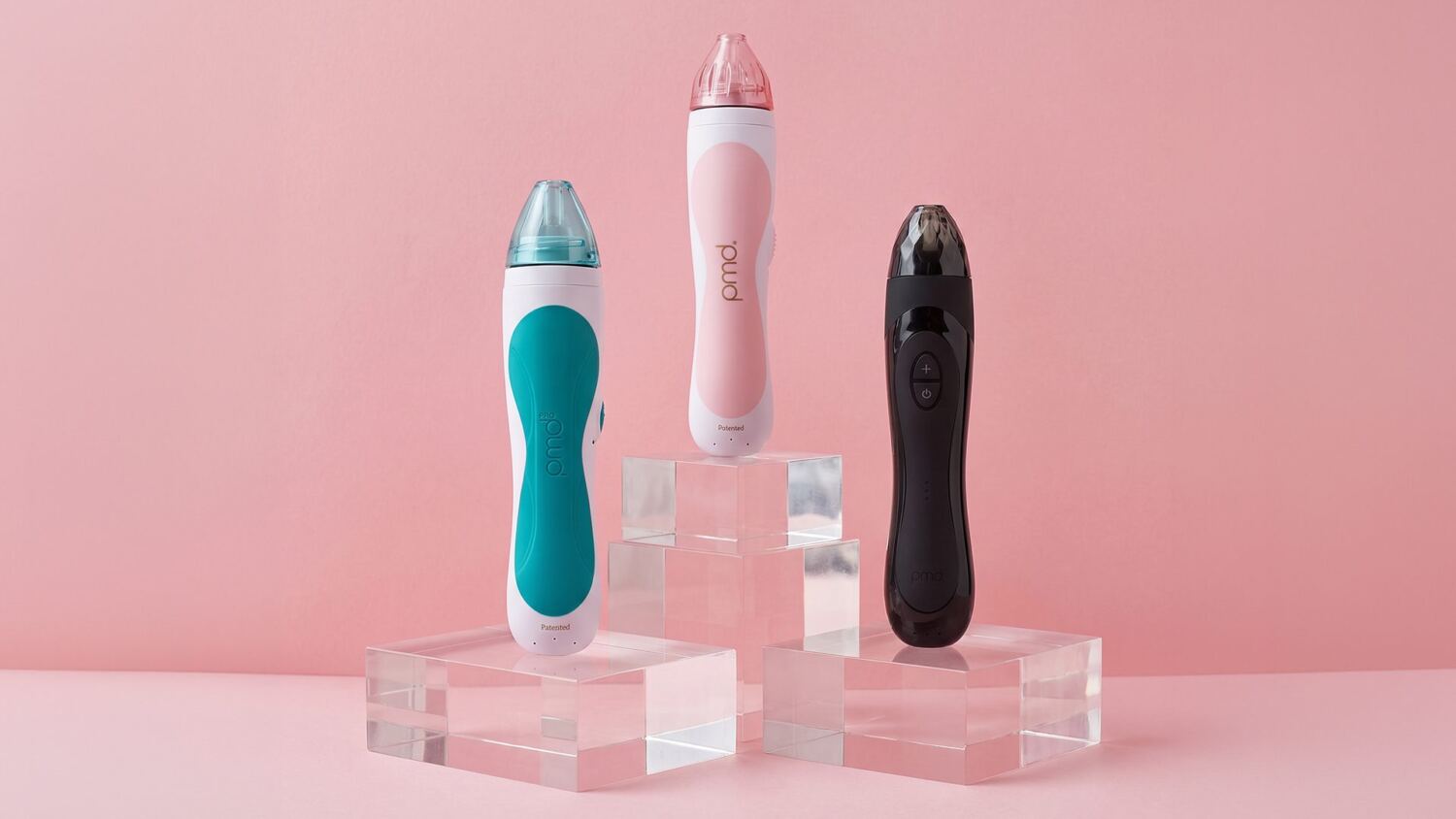
I have a bathroom mirror that does not lie. It is the magnifying kind, the one that turns a regular face into a topographic map of every clogged pore, dull patch, and fine line you have been politely ignoring. For about a year I had been staring into it and doing the math on professional microdermabrasion: roughly $100 to $200 a session, six to eight sessions recommended, all to chase that smooth, lit-from-within glow that fades in a couple of weeks anyway.
So when the PMD Personal Microderm kept showing up in my feed, promising the same treatment at home for a one-time price, I was equal parts hopeful and suspicious. This PMD Microderm review is the result of six weeks of weekly use, a lot of careful gliding, one minor mistake that left a faint red stripe on my jaw, and a genuinely surprised “oh, that actually works” after the first session. Below you will get the real results, the honest downsides nobody mentions in the ads, who this personal microdermabrasion device is right for, and who should walk away. My short take: it works, the smoothness is immediate and real, but it rewards patience and punishes impatience.
TL;DR: PMD Microderm Review at a Glance
- ✅ Skin felt noticeably smoother and softer immediately after the very first treatment. This was the most consistent result across my testing and dozens of other user reviews.
- ✅ After about four weeks, makeup went on more evenly and my complexion looked brighter and more even-toned.
- ✅ One-time cost (roughly $159 to $199 depending on model) pays for itself in about two skipped spa sessions.
- ✅ Backed by a 20-year warranty on manufacturer defects, which is almost unheard of in beauty tech.
- ⚠️ Real learning curve. Press too hard or linger on one spot and you can get redness, tightness, or light scabbing.
- ⚠️ Ongoing cost for replacement discs and filters (discs run about $3 each and last only a few treatments).
- ❌ Not suitable for rosacea, eczema, psoriasis, active acne, or very sensitive, reactive skin.
- Bottom line: A legitimately effective home microdermabrasion machine for most healthy skin types, as long as you respect the technique and the once-a-week limit. Score: 4.2 / 5.
Check the current PMD Microderm price – →
Quick Verdict
| Overall Rating | 4.2 / 5 |
| Best For | Healthy, resilient skin chasing smoother texture, brightness, and better product absorption |
| Avoid If | You have rosacea, eczema, active acne, or very sensitive skin |
| Price | ~$159 (Classic) to ~$199 (Elite Pro), frequently discounted |
| Warranty | 20-year limited (manufacturer defects) |
| Verdict | Effective and well-built, with a learning curve worth the payoff |
PMD is a genuine, doctor-developed facial exfoliation device that delivers real, visible smoothness. It is not a gimmick, but it is also not foolproof. Treat it with respect and it earns its place in your routine.
See today’s price and which model is in stock →
What Is the PMD Personal Microderm?
The PMD Personal Microderm is an at-home microdermabrasion device that pairs a spinning disc coated in aluminum oxide crystals with calibrated vacuum suction. The disc buffs away the top layer of dead skin while the suction lifts the skin and pulls blood flow to the surface, mimicking a professional treatment.
Microdermabrasion is mechanical exfoliation. In a dermatologist’s or esthetician’s office, a machine sprays fine crystals (or uses a diamond tip) to sand off the outermost layer of dead skin cells, the stratum corneum, then vacuums the debris away. PMD shrinks that same two-part process into a handheld gadget you use once a week.
The science behind why people like it is straightforward. That dead-cell layer acts as a barrier. It dulls your complexion, makes fine lines and texture more obvious, and blocks your serums and moisturizers from absorbing properly. Remove it on a regular schedule and three things tend to happen: your skin looks brighter right away, your products sink in better (PMD claims up to 20 times deeper absorption), and over several weeks the suction encourages collagen and elastin production for firmer-looking skin.
PMD Beauty has been making these since the early 2010s and says more than four million customers have bought one. The brand was developed alongside dermatologist Dr. Mark Taylor and a team of estheticians, and the devices show up in luxury spas, which lends real credibility. Just keep in mind that the most eye-popping statistics (100 percent reported softer skin, 91 percent saw more brightness) come from PMD’s own clinical panels, so treat them as supportive evidence rather than independent proof.
How the PMD Microderm Works (and Why It Actually Does)
How does the PMD Microderm work? It combines two technologies in one pass. A patented spinning disc embedded with aluminum oxide crystals exfoliates the dead surface layer, while perfectly calibrated vacuum suction lifts the skin, boosts circulation, and triggers the body’s natural collagen response. Together they reveal fresher skin and let products absorb far better.
Here is the part the marketing glosses over: the suction is doing more work than you expect, and it is the reason technique matters so much. You are not supposed to press the device into your face like a scrub. You glide it lightly and let the vacuum pull your skin up to the disc. The first time I used it, the sucking sensation was genuinely strange, almost ticklish, and weirdly satisfying. On my second pass near my under-eye area, the suction grabbed the delicate skin far more aggressively than I anticipated, which was my first lesson in keeping it moving and staying away from thin, fragile zones.
The discs come in graduated intensities, usually color-coded from a white or blue training and ultra-sensitive disc up through medium and coarse options. You are meant to start with the gentlest disc, work over each area exactly once, and only graduate to a stronger disc after a few weeks once your skin proves it can handle the gentler one. Crystals on the disc are antibacterial aluminum oxide, the same material used in many clinics, so there is no spreading bacteria around the way a reused physical scrub can.
The whole treatment takes about three minutes, once a week. That cadence is not a marketing choice, it is a biological limit. Your skin needs a full week to regenerate the layer you just removed. Go more often and you thin your barrier, invite irritation, and undo the benefit.
What’s in the Box and First Setup
What comes with the PMD Microderm? Every kit includes the device itself, a set of graduated exfoliating discs (from a white training disc through sensitive and medium intensities), a face cap and a body cap, replaceable filters, and the power cord (or charging base on the cordless Elite Pro), plus an instruction guide and access to a video walkthrough.
Unboxing is genuinely pleasant. The device feels solid and well-balanced in the hand, not the flimsy hollow plastic you get with cheaper gadgets, and the colorways are attractive enough that you will not want to hide it in a drawer. The discs sit in a small organizer, color-coded by intensity so you never have to guess which one you are holding.
Setup took me under five minutes. You insert a disc, twist on the appropriate cap, and either plug in (Classic and Pro) or seat the device on its charging base until the lights show a full charge (Elite Pro). One detail worth repeating, because it confuses new owners: the corded models are not battery devices charging up, they run on continuous mains power like a hair dryer, so the cord has to stay connected the entire time you use it. This is deliberate, ensuring steady suction power, but it does mean you are tethered to an outlet unless you spring for the Elite Pro.
Before your first real treatment, do two things. Watch the official walkthrough end to end, and practice a few passes on your forearm. Both take minutes and save you from the most common first-timer mistakes. The single best habit you can build on day one is learning how little pressure the device actually needs.
Features and Benefits
A spec sheet only matters if it changes your experience. Here is what each feature actually does for you in practice.
Patented Spinning Disc with Aluminum Oxide Crystals
The disc is the engine of the exfoliation. Each one is hand-dipped in aluminum oxide crystals, the same abrasive used in professional clinics. What this means for you: you get clinic-grade physical exfoliation that is antibacterial and consistent, without the bacteria risk of a reusable facial scrubber or brush. The crystals stay effective for several treatments before the disc needs swapping.
Calibrated Vacuum Suction
The suction is not just for show. It lifts the skin to meet the disc and pulls fresh blood flow to the surface, which is what triggers the firming, collagen-stimulating response over time. What this means for you: results that go beyond surface smoothness into longer-term texture and firmness, if you stick with it. It is also why pressing hard is unnecessary and counterproductive.
Graduated Intensity Discs (Ultra-Sensitive to Coarse)
Most kits ship with a range of discs from a white training disc through sensitive and medium options. What this means for you: you can match the intensity to your skin and your experience level, easing in gently and dialing up only when ready. This is the single biggest safety feature on the device, and ignoring it is how people end up with redness.
Face and Body Caps
Every model includes caps for both face and body. What this means for you: one device handles your face plus rough patches on elbows, knees, hands, and heels. Several long-term users specifically rave about using a coarser disc on the backs of their hands followed by a glycolic hand cream.
Tri-Speed and Tri-Suction (Elite Pro only)
The top-tier Elite Pro adds TruTier technology: three speed settings and three adjustable suction levels, plus a cordless rechargeable design and a dedicated blackhead cap. What this means for you: far more control to customize intensity, and the freedom to use it without being tethered to an outlet. The Classic and Pro must stay plugged in, like a hair dryer, because the cord delivers steady power rather than charging a battery.
20-Year Warranty
PMD backs the device against manufacturer defects for 20 years (normal use only, not drops or wrong-voltage damage). What this means for you: a genuine signal of build confidence. Most beauty gadgets give you one year if you are lucky. This is the kind of trust signal that makes the higher upfront price easier to swallow.
Better Skincare Absorption
By clearing the dead-cell barrier, PMD lets the serums and moisturizers you already own penetrate dramatically deeper. What this means for you: the expensive products sitting on your shelf finally start earning their price, because they are no longer blocked by a layer of dead skin.
My Real-World Testing Experience
I tested the PMD Personal Microderm over six weeks, using it once every Sunday night after a double cleanse, on combination skin that leans dry on the cheeks and congested around the nose and chin. I took before photos in the same unforgiving magnifying mirror, in the same lighting, every week.
Week one was equal parts nerves and curiosity. I watched the instructional walkthrough, practiced on my forearm first, then started on my face with the gentlest disc, one slow pass per section. The suction felt bizarre in the best way. When I finished and looked at the inside of the cap, there was a visible dusting of dead skin, which was oddly motivating. Immediately afterward my skin was faintly pink for about fifteen minutes and felt tight, the way it does after a strong cleanser. The tightness vanished the second I applied moisturizer, and the next morning my face was genuinely, touch-it-to-believe-it soft. That immediate softness is the single most reliable thing about this device, and it is exactly what nearly every other reviewer reports too.
Week two is where I made my one real mistake. Feeling confident, I went over my jawline twice in the same spot. The result was a faint red stripe that took a day and a half to calm down. Lesson learned, permanently: one pass per area, no exceptions, and let the suction do the work. I also had a small cluster of tiny bumps surface on my chin around this point, a mild purge as congestion under the surface got cleared out. They faded within four days.
Weeks three and four were the turning point. The purging stopped, and the cumulative effect started to show. My skin tone looked more even, the dry flaky patches that used to wreck my foundation application were basically gone, and makeup started sitting beautifully instead of clinging to texture. My partner, who notices nothing, noticed.
Weeks five and six I graduated to the medium disc on my cheeks and forehead only, keeping the sensitive disc for everywhere else. The deeper exfoliation was noticeable but never harsh, as long as I respected the one-pass rule. By the end, the overall verdict was clear: brighter, smoother, more even skin, with the kind of glow I used to pay a clinic for. Not flawless, not a face transplant, but a real, visible, repeatable improvement.
Performance Analysis
Does the PMD Microderm really work? Yes, with realistic expectations. The immediate smoothness and brightness are reliable and show up after the first use. The longer-term benefits (more even tone, better texture, improved absorption) build over four to eight weeks of consistent weekly use. It will not erase deep wrinkles or scars, but it visibly improves surface quality.
Breaking performance down by dimension:
Exfoliation quality: Excellent. This is the device’s core strength. The aluminum oxide discs deliver genuine, clinic-style mechanical exfoliation, and the proof is visible in the cap after every session.
Brightness and glow: Strong and immediate. The dull top layer comes off and the skin underneath catches light better right away.
Blackhead removal: Overstated. This was the most consistent disappointment in my testing and across other reviews. Without pressing harder than is safe, PMD only nudged a few blackheads loose. Dedicated chemical exfoliants (a good BHA) outperformed it here. Treat blackhead clearing as a minor side benefit, not a headline feature.
Suction strength: Appropriate and, on delicate areas, surprisingly strong. Keep it moving and avoid the under-eye and any thin skin.
Setup and ease of use: Simple once you accept the learning curve. One button, plug in (or charge the Elite Pro), attach a disc and cap, glide. The intimidation is front-loaded into the first two sessions.
Here is how it stacks up against the two devices people cross-shop most:
| Metric | PMD Personal Microderm | Trophy Skin MicrodermMD | Microderm GLO |
|---|---|---|---|
| Exfoliation method | Spinning disc + aluminum oxide crystals | Diamond tip + suction | Diamond tip + pulsing 3D suction |
| Form factor | Sleek handheld | Bulky desktop unit (~2.3 lbs) | Compact cordless wand |
| Guidance screen | No | Yes (LCD, auto/manual/sensitive) | No |
| Cordless option | Elite Pro only | No | Yes |
| Suction levels | 1 to 3 (by model) | 8 levels | Pulsing (gentle) |
| Ongoing cost | Discs ~$3, last 3 to 4 uses | Diamond tip + filters | Felt pads ~$0.15, frequent |
| Warranty | 20 years | Shorter | Shorter |
| Approx. price | ~$159 to $199 | ~$199 to $300 | ~$200 to $289 |
| Best for | Most users wanting premium feel | Nervous beginners wanting guidance | Sensitive skin, gentle pulsing |
Ongoing Maintenance: Discs, Filters, and Cleaning
How much does it cost to maintain the PMD Microderm? Budget for replacement discs at around $3 each, which last three to four treatments, plus filters that need swapping regularly. Over a year of weekly use that is a modest running cost, far less than even a single professional session, but it is not zero and worth planning for.
The discs are the one consumable people forget about when they do the value math. As the aluminum oxide crystals wear down, the disc loses bite and your results quietly fade, which leads some users to wrongly conclude the device stopped working. It did not, the disc just needs replacing. PMD sells multipacks, and enrolling in a subscription for discs and skincare also extends the device warranty coverage, which is a nice incentive if you know you will keep using it.
Filters matter more than they look. The little filter sits between the disc and the device’s vacuum mechanism, and a clogged or old filter weakens suction and can trap bacteria. Use a fresh filter every single treatment. This is the cheapest part of the system and the worst place to economize.
Cleaning is simple. After each use, the cap and disc should be wiped down, and the visible dead skin inside the cap (oddly satisfying proof the device worked) cleared out. The device body is not waterproof, so never rinse it under a tap or use it on wet skin. Stored properly with a clean filter ready to go, the device stays hygienic and performs consistently for years, which is exactly what that 20-year warranty is betting on.
✅ PROS
- Immediate, reliable smoothness and softness after the very first treatment, the most consistent result reported by users.
- Visible brightness and a more even tone within a few weeks of weekly use.
- Genuine clinic-style exfoliation using the same aluminum oxide crystals professionals use.
- Better absorption means your existing serums and moisturizers finally perform.
- One-time cost pays for itself versus two professional microdermabrasion sessions.
- Outstanding 20-year warranty signals real build confidence.
- Sleek, lightweight, and comfortable to hold, with discs that swap in seconds.
- Works on both face and body, so rough elbows, knees, and hands benefit too.
- Antibacterial discs avoid the bacteria buildup of reusable scrubs and brushes.
- Responsive customer support, according to multiple long-term owners.
⚠️ CONS
- Real learning curve. Pressing too hard or going over one spot twice causes redness or light scabbing.
- Blackhead removal underdelivers compared to the marketing claims.
- Ongoing cost for replacement discs (~$3 each, last only a few treatments) and filters.
- Classic and Pro models are corded and must stay plugged in during use.
- Temporary redness, tightness, and a possible short purge in the first few sessions.
- Strict once-a-week limit, so it is not for people who want fast, aggressive results.
- Not safe for rosacea, eczema, psoriasis, active acne, or very sensitive skin.
- Requires pausing retinoids and acids for 48 hours before and after each use.
- The under-eye and other thin areas must be avoided due to strong suction.
- Tiny treatment discs make it easy to miss spots and leave uneven patches if you rush.
PMD Microderm vs Trophy Skin MicrodermMD: Which Should You Choose?
Should you pick PMD or the Trophy Skin MicrodermMD? Choose PMD if you want a sleek, premium-feeling handheld you can travel with and a 20-year warranty. Choose the Trophy Skin MicrodermMD if you are nervous about technique and want an LCD screen that guides each treatment zone and times you automatically so you cannot overdo it.
The MicrodermMD is the closest thing to a professional machine you can put on your bathroom counter. It is built almost like a small laptop, uses a diamond tip rather than crystal discs, and offers up to eight suction levels with auto, manual, and sensitive modes. The interactive screen is its headline feature and a real advantage for total beginners, because the auto mode times each facial zone and removes the guesswork that makes microdermabrasion intimidating.
The trade-offs are size, price, and portability. At roughly 2.3 pounds with a corded desktop footprint, it needs dedicated counter space and is impractical for travel. It also sits at the higher end of the price range, often $199 to $300.
PMD wins on ergonomics, portability, premium feel, and warranty. Trophy Skin wins on guidance and customization. Pick PMD if you are reasonably confident and value design and a long warranty. Pick the MicrodermMD if the idea of doing this freehand makes you anxious and you want training wheels that genuinely deliver.
PMD Microderm vs Microderm GLO: Which Should You Choose?
Should you pick PMD or the Microderm GLO? Choose the Microderm GLO if you have sensitive or reactive skin and want the gentlest option, thanks to its pulsing 3D suction that lifts and releases rather than applying constant pull. Choose PMD if you want stronger, more thorough exfoliation and a more premium build.
The Microderm GLO uses a diamond tip and a patented pulsing suction designed specifically to avoid the bruising and broken capillaries that stronger constant-suction machines can cause. It is cordless, compact, and frequently recommended for cautious or sensitive users, with a treatment taking about four minutes. Its felt pads are cheap (around 15 cents each) but need replacing every couple of treatments.
PMD’s spinning-disc-plus-suction approach feels more aggressive and, in my experience, exfoliates more thoroughly, which is a plus for resilient skin and a minus for delicate skin. The GLO’s gentleness is its whole selling point.
Pick the Microderm GLO if your skin runs sensitive or you have had reactions to physical exfoliation before. Pick PMD if your skin is healthy and resilient and you want a deeper, more satisfying treatment with a longer warranty.
PMD Microderm vs a Professional Spa Facial: Is It Worth Skipping the Derm?
Is the PMD Microderm as good as a professional treatment? It gets you most of the way there. In-office microdermabrasion is more powerful and gives faster results, but a single device pays for itself after about two professional sessions, and weekly home use keeps you glowing between any pro visits you still want.
A clinical session runs $100 to $200, and practitioners usually recommend a series of six to eight. That is potentially over $1,000 for a course. PMD’s one-time cost of roughly $159 to $199 covers unlimited weekly treatments for years. Many long-term users describe results that are around 80 percent as good as a clinic visit, with the bonus of controlling the pressure and pace yourself.
The honest caveat: professional treatments reach deeper and are supervised, which matters if you are treating significant scarring or pigmentation. For maintenance, glow, and texture, PMD is a remarkably good value. A sensible middle path is what I landed on: PMD weekly at home, with an occasional professional facial a couple of times a year.
Pricing and Value Analysis
The PMD lineup splits into three main models. Pricing shifts often with sales and bundles, so always confirm the live price, but the ballpark is consistent: the Classic sits around $159, the Pro around $179, and the cordless Elite Pro around $199. The Classic and Pro are corded and differ mainly in speed options and cap design. The Elite Pro adds three speeds, three suction levels, cordless charging, and a blackhead cap.
For most people, the Classic does the core job perfectly well. You step up to the Pro or Elite Pro for finer control and the convenience of going cordless. If you are brand new to microdermabrasion and want maximum gentleness and control as you learn, the Elite Pro’s adjustable suction is genuinely useful and arguably worth the premium.
Factor in the real total cost of ownership. Replacement discs run about $3 each and last three to four treatments, plus filters need regular swapping. Over a year of weekly use, budget a modest amount for consumables. Even with that, the math beats professional sessions decisively.
Value verdict: high. The combination of effective results, a sleek build, and a 20-year warranty justifies the upfront price for anyone who will actually use it weekly. If you suspect it will live in a drawer after a month, the value collapses, as it would with any device. If you also want a cheaper at-home cosmetic upgrade in the same spirit, our review of this at-home teeth whitening kit walks through the same buy-versus-clinic math for your smile.
Check the current PMD Microderm price and active discounts →
Who the PMD Microderm Is Best For
The PMD Personal Microderm is best for:
- People with healthy, resilient skin who want smoother texture and a brighter complexion.
- Anyone tired of paying $100 to $200 per professional microdermabrasion session.
- Skincare fans whose serums never seem to “do anything” (better absorption is a real win here).
- Those bothered by dull skin, uneven tone, rough patches, mild congestion, and early fine lines.
- People who want one device for both face and body, including rough elbows, knees, and hands.
- Patient users who can commit to a calm, once-a-week routine and follow the technique.
Who Should Avoid the PMD Microderm
The PMD Microderm is NOT right for you if:
- You have rosacea, eczema, or psoriasis. Mechanical exfoliation plus suction can flare and worsen these conditions.
- You have active acne or breakouts. Dragging the device over inflamed skin can spread bacteria and irritate further. Work around active spots or wait.
- You have very sensitive or reactive skin. The constant suction and crystal abrasion may be too much, even on the gentlest disc. A pulsing-suction device is a gentler alternative.
- You use prescription retinoids or strong acids and cannot pause them. You must stop actives for 48 hours before and after, and a complex active routine makes scheduling difficult.
- You want fast, dramatic results. The once-a-week limit is non-negotiable. This is a slow, cumulative tool, not an overnight fix.
- You are not willing to learn the technique. If you know you will press hard and rush, you will get redness and uneven patches, and you will blame the device.
If any of these describe you, your skin will thank you for choosing a gentler route or consulting a dermatologist first.
Expert Tips for Getting the Best Results
- Practice on your arm or leg first. One or two passes on your forearm builds the muscle memory for speed and pressure before you ever touch your face.
- Cleanse twice and dry completely. The suction works on skin, not on makeup or oil, and damp skin reduces suction and causes dragging. Wait about 60 seconds after cleansing.
- Glide, never press. Let the vacuum pull your skin to the disc. Pressing hard is the number one cause of redness and micro-scratches.
- One pass per section, full stop. Going over the same patch twice is how you get red stripes. Break large areas like cheeks and forehead into short, controlled passes.
- Use a fresh filter every single time. Old filters weaken the vacuum and harbor bacteria. This is not the place to economize.
- Move up slowly. Stay on the training and sensitive discs for several weeks before graduating, and step up speed or suction before stepping up to a coarser disc.
- Baby your skin afterward. Apply a soothing toner and a barrier-supporting moisturizer, and treat the rest of the day as a no-acids, no-retinol zone. Turning your bathroom into a calming ritual helps, and a few users pair treatment night with something like an essential oil diffuser to turn your bathroom into a spa.
Common Mistakes Users Make
Pressing down hard. People assume more pressure equals better exfoliation. It is the opposite. Pressure pushes past the dead layer into living skin, causing redness and scabbing. Fix: glide lightly and trust the suction.
Going over the same area multiple times. This is the most common cause of the dreaded red stripes and uneven, scabbed patches. Fix: strictly one pass per section, every time.
Using it too often. Excited by the first result, some people use it two or three times a week. This thins the barrier, causes sensitivity, and can break capillaries. Fix: once every six to seven days, no more.
Treating active acne or sensitive zones. Running the device over inflamed pimples or thin under-eye skin invites irritation and aggressive suction marks. Fix: circle around active spots and avoid delicate areas entirely.
Skipping the disc progression. Jumping straight to a coarse disc because you want faster results is a fast track to irritation. Fix: start gentle, graduate only when your skin proves it can handle it.
Ignoring the actives rule. Using retinol or acids around treatment time leaves skin over-sensitized. Fix: pause all actives for 48 hours on either side of a session.
Buying Guide: What to Look for in a Home Microdermabrasion Machine
If you are shopping the broader category and not just PMD, here is what actually matters when choosing a facial exfoliation device.
Exfoliation method. The two main approaches are crystal discs (like PMD’s aluminum oxide discs) and diamond tips (Trophy Skin, Microderm GLO). Both work. Crystal discs feel thorough and are swapped whole. Diamond tips last longer but the device usually relies on disposable filters or pads.
Suction type and adjustability. Constant suction is effective but less forgiving. Pulsing suction (lift and release) is gentler and better for sensitive skin. Adjustable levels are worth paying for if you are new or have variable skin.
Corded vs cordless. Corded devices deliver steady, consistent power and never die mid-treatment, but they tether you to an outlet. Cordless models (PMD Elite Pro, Microderm GLO) offer freedom and travel convenience. Decide which you value more.
Ongoing consumable cost. This is the hidden number. Calculate disc, tip, or pad costs over a year of weekly use. A cheaper device with expensive consumables can cost more long-term than a pricier one with cheap parts.
Warranty and brand track record. Beauty tech is full of fly-by-night gadgets. A long warranty (PMD’s 20 years stands out) and a brand with years of reviews behind it dramatically lower your risk.
Guidance features. If technique anxiety is your main barrier, a guided LCD screen (Trophy Skin) is worth the bulk and cost. If you are comfortable learning, a simple one-button handheld like PMD is faster and more pleasant to use.
What to ignore. Discount the most extreme marketing claims, especially around blackhead removal and “instant wrinkle erasing.” Microdermabrasion improves surface quality and texture over time. It is not a substitute for in-office procedures on deep concerns.
Frequently Asked Questions
Is the PMD Microderm worth buying in 2026?
Yes, for most people with healthy skin. It delivers reliable, immediate smoothness and builds brighter, more even skin over a few weeks. The one-time cost beats repeated professional sessions, and the 20-year warranty lowers your risk. Just budget for replacement discs and commit to the once-a-week routine and proper technique.
Does the PMD Microderm really work?
It genuinely works for exfoliation, brightness, and product absorption. The smoothness after the first use is real and consistent across thousands of reviews. It is less effective at blackhead removal than advertised, and it will not erase deep wrinkles or scars. Think meaningful surface improvement over weeks, not an overnight transformation.
How often should you use the PMD Microderm?
Once every six to seven days, maximum. Your skin needs a full week to regenerate the layer you remove. Using it more often thins your skin barrier, causes sensitivity and redness, and can break tiny capillaries. Weekly use is the sweet spot for results without irritation.
Does the PMD Microderm hurt?
No, when used correctly it should not hurt. You will feel a strange suction sensation and possibly mild warmth. Some temporary pinkness or tightness afterward is normal and fades quickly with moisturizer. Pain, stinging, or scabbing means you pressed too hard or went over an area too many times.
Can the PMD Microderm remove blackheads?
Only modestly. Despite the marketing, it loosens some blackheads but is not a dedicated extraction tool, and pressing hard enough to clear stubborn ones risks damaging your skin. For blackheads specifically, a salicylic acid (BHA) product usually outperforms it. Steaming first and using the blackhead cap (on the Elite Pro) helps a little.
Which PMD Microderm model should I buy?
The Classic suits most people and handles the core job well. Step up to the Pro for an extra speed setting, or the Elite Pro for three speeds, three adjustable suction levels, cordless charging, and a blackhead cap. Beginners who want maximum control while learning often find the Elite Pro’s adjustable suction worth the premium.
Is the PMD Microderm good for sensitive skin?
Cautiously, and only the gentlest disc. People with truly sensitive, reactive skin, or with rosacea, eczema, or active acne, should avoid it or consult a dermatologist first. A device with gentle pulsing suction is a safer alternative for delicate skin. If sensitivity comes from over-exfoliation rather than a condition, easing in slowly can work.
How long until I see results from the PMD Microderm?
Smoothness and softness are immediate, right after the first treatment. Brightness and a more even tone typically show within two to four weeks. The firming, texture-refining benefits from collagen stimulation build over roughly eight to twelve weeks of consistent weekly use. Patience and consistency matter more than intensity.
Do I need to buy replacement discs for the PMD Microderm?
Yes. The aluminum oxide discs wear down and lose effectiveness after three to four treatments, and filters need regular replacement too. Discs cost roughly $3 each. Factor this ongoing cost into your decision. It is still far cheaper than professional sessions, but it is not zero.
Can I use the PMD Microderm with retinol or acids?
Not at the same time. Stop retinoids, AHAs, BHAs, and similar actives for at least 48 hours before and after each treatment, because they leave skin sensitized and microdermabrasion compounds that effect. If you use prescription actives daily, schedule carefully or reconsider whether this device fits your routine.
What should I do if my skin gets red or irritated after using it?
Mild redness for 15 to 30 minutes is normal. Apply a soothing toner and a gentle, barrier-supporting moisturizer, skip all actives, and protect the area from sun. If redness, scabbing, or stinging persists, you likely pressed too hard or over-treated, so go gentler next time. For ongoing eye irritation from screens or dryness, separate products designed to calm tired, irritated eyes are a better fix than anything microdermabrasion-related.
Is the PMD Microderm safe to use on your body?
Yes. Every model includes a body cap, and the device works well on rough patches on elbows, knees, hands, and heels. Many users pair a coarser disc on the hands with a glycolic hand cream afterward for noticeably smoother results. The same rules apply: glide lightly, one pass, and avoid broken or irritated skin.
Final Verdict: Is the PMD Microderm Worth It?
After six weeks, the PMD Personal Microderm earned a permanent spot in my Sunday routine, and that is the most honest endorsement I can give. This is a real, doctor-developed facial exfoliation device that delivers exactly what it promises for most people: immediate smoothness, a brighter complexion within weeks, and skincare that finally absorbs the way it should.
The top three reasons to buy: the results are real and reliable, a single purchase replaces a small fortune in professional sessions, and the 20-year warranty is almost unheard of in this category. The two main reasons to hold off: there is a genuine learning curve that punishes impatience with redness, and it is simply not suitable for sensitive, reactive, or condition-affected skin.
My score is 4.2 out of 5. It loses points for the overstated blackhead claims, the ongoing disc cost, and a first-week experience that can rattle the unprepared. It earns its high marks on effectiveness, build quality, and value.
Buy it if you have healthy skin, want that lit-from-within glow without clinic prices, and can commit to a calm, weekly, light-handed routine. Skip it if your skin runs sensitive or reactive, you have rosacea, eczema, or active acne, or you want fast, aggressive results. If you have decided it is right for you, you can check the current price and available models below.
Ready to Try the PMD Microderm?
Get smoother, brighter skin at home
If this PMD Microderm review helped you decide, you can check the latest price and which models are in stock through the button below. We earn a small commission at no extra cost to you, which helps us keep buying and testing products like this one.

