
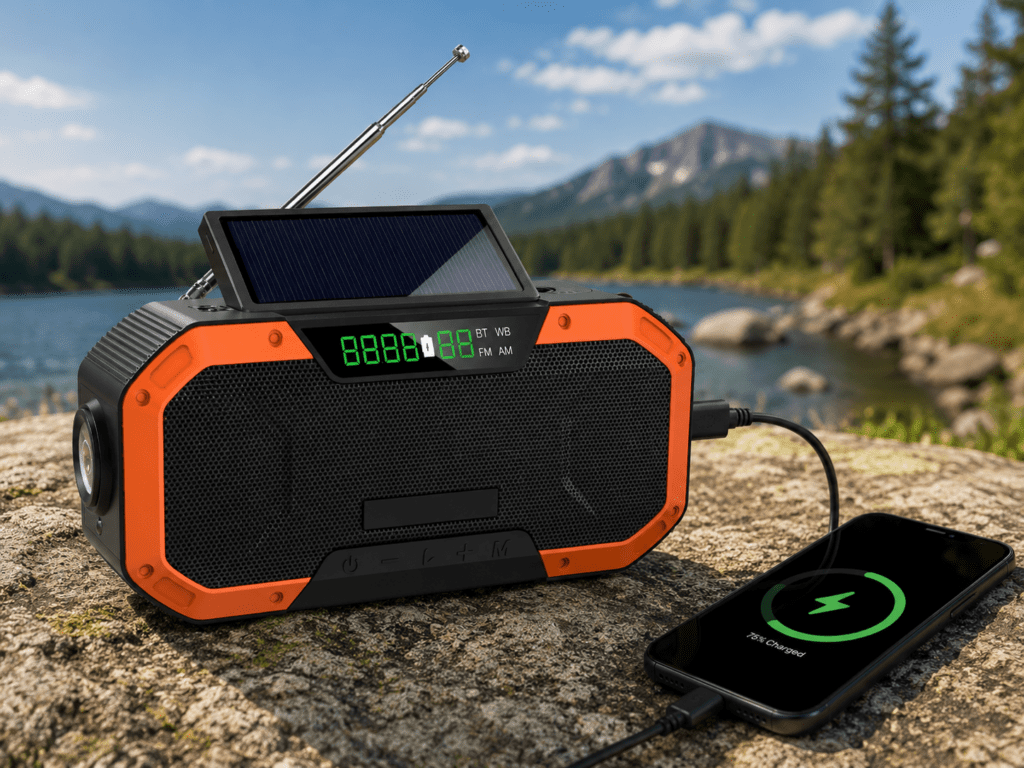

If you are putting together a bug out bag or prepping your home for hurricane season and winter power outages, you have likely seen ads for the Qinux Brick Pro.
Marketed as the ultimate 6-in-1 survival tool, it promises to keep your devices charged and your family connected using solar power and a hand-crank generator. The commercials make it look like a military-grade powerhouse. But in the world of survival gear, exaggerated marketing can leave you stranded in the dark.
Is the Qinux Brick Pro a reliable piece of emergency equipment, or is it just an overpriced, dropshipped novelty?
Led by our senior gear analyst, Jai Sharma, our testing team dug into the specs, crunched the battery numbers, and analyzed real-world performance. In this comprehensive Qinux Brick Pro review, we cut through the hype. We look at realistic solar charging times, true battery capacity, and whether you should trust this device in a real emergency.
Quick Verdict: Should You Buy the Qinux Brick Pro?
Best For: Casual campers, keeping in the glovebox for road trips, and basic home emergency kits.
The Bottom Line:
The Qinux Brick Pro is a highly convenient “jack-of-all-trades” emergency gadget. Having a flashlight, AM/FM radio, and power bank in one rugged unit is undeniably useful during a blackout. However, its 5000mAh battery is relatively small by modern standards—it will fully charge an iPhone 15 only once. Furthermore, the solar panel and hand crank are strictly for desperate emergencies, not for daily charging. If you understand its limitations and view it as a backup communication tool rather than a primary power station, it is a solid, space-saving purchase.
Pros
- All-in-One Convenience: Replaces a separate radio, flashlight, and battery pack.
- Three Charging Methods: Can be charged via USB, solar panel, or hand-crank dynamo.
- Built-in Entertainment: Features a Bluetooth speaker for camping trips.
- Emergency Ready: Includes a loud SOS alarm and a compass.
Cons
- Small Battery Capacity: 5000mAh is easily drained by modern smartphones.
- Slow Solar Charging: The tiny solar panel takes days to fully charge the battery.
- Exhausting Hand Crank: Requires serious physical effort for minimal battery return.
- Marketing Hype: Heavily over-promises its capabilities as an “endless” power supply.
Product Overview & Specifications
| Feature | Qinux Brick Pro Details |
| Product Type | Emergency Radio / Solar Power Bank |
| Battery Capacity | 5000mAh Lithium-ion |
| Charging Methods | USB Type-C, Solar Panel, Hand Crank |
| Radio Bands | AM / FM |
| Audio | Built-in speaker + Bluetooth connectivity |
| Lighting | Double LED flashlight (variable wattage) |
| Weight | ~450 grams (approx. 1 lb) |
| Extras | SOS button, magnetic compass |
What Is The Qinux Brick Pro?
The Qinux Brick Pro is a multi-functional emergency weather radio and portable power bank. It is distributed globally by Qinux Tactical, an e-commerce brand specializing in consumer-grade outdoor gadgets.
What it does: It provides off-grid illumination, access to news via radio broadcasts, and just enough backup electricity to keep a smartphone alive during a power outage or camping trip.
Who it’s for: It is targeted at preppers, outdoor enthusiasts, and everyday homeowners who want peace of mind during storms, hurricanes, or rolling blackouts.
Marketing Claims vs. Real-World Performance
To give you an honest Qinux Brick Pro performance review, we have to look past the dramatic advertising. Here is how the device’s claims hold up to reality.
Claim 1: “Never run out of battery again.”
The Reality: Misleading. The device holds a 5000mAh battery. To put that in perspective, an iPhone 15 Pro Max has a ~4400mAh battery. The Brick Pro will charge a large modern phone from 0% to 100% exactly one time before the Brick Pro itself is dead. It is a lifeline, not an endless power station.
Claim 2: “Charge anywhere with the power of the sun.”
The Reality: Technically true, practically slow. The solar panel on the top of the device is very small. In perfect, direct sunlight, it generates a tiny trickle of power. It would take roughly 25 to 35 hours of continuous, direct sunlight to fully recharge the 5000mAh battery. The solar panel is designed to top off the battery or power the radio during the day, not to rapidly charge your phone.
Claim 3: “Use the hand crank for instant power.”
The Reality: Exhausting but effective for emergencies. The dynamo crank works well, but it requires effort. Cranking vigorously for 5 minutes will give you about 15 minutes of radio playtime or enough phone juice to make a quick 2-minute emergency call. You cannot realistically crank this device long enough to fully charge a smartphone.
Key Features & Benefits
The AM/FM Radio & Bluetooth Speaker
The radio reception is surprisingly clear, pulling in local emergency broadcasts and news stations easily when the antenna is extended. The addition of Bluetooth is a nice touch for camping, allowing you to use it as a wireless speaker for Spotify around the campfire.
The SOS Alarm & Flashlight
If your car breaks down at night or you are lost on a trail, the double LED torch is bright enough to light up a campsite. The SOS button triggers a loud, piercing siren and flashes the lights, which is a fantastic safety feature for hikers.
Rugged, Portable Build
Weighing just under a pound, it feels substantial without being overly heavy. It can easily be tossed into a glove compartment, a kitchen drawer, or strapped to the outside of a hiking backpack to catch the sun.
How It Works: Best Practices for Emergency Use
If you buy the Qinux Brick Pro, you must know how to use it correctly to avoid disappointment during an actual blackout.
- The Primary Charge (USB): Always keep the device charged via the USB-C cable. Plug it into your wall and leave it fully charged in your emergency kit. Check it every three months.
- The Secondary Charge (Solar): If the power goes out, leave the device sitting in a sunny window during the day. Do not expect it to charge your phone simultaneously. Let the sun recharge the Brick Pro’s internal battery.
- The Desperation Charge (Crank): Only use the hand crank when the battery is completely dead and you absolutely must hear a weather broadcast or make a 911 call.
Qinux Brick Pro vs. The Competition
How does it stack up against established emergency brands?
| Feature | Qinux Brick Pro | Midland ER310 | FosPower Emergency Radio |
| Battery Size | 5000mAh | 2600mAh | 4000mAh |
| Radio | AM/FM | AM/FM/NOAA | AM/FM/NOAA |
| Bluetooth | Yes | No | No |
| Price | ~$50 – $70 | ~$60 | ~$35 |
| Best For | Casual Camping | Serious Weather Alerts | Budget Prepping |
The Verdict: The Qinux Brick Pro actually has a larger battery than many of its direct competitors, and the inclusion of a Bluetooth speaker makes it more versatile for fun camping trips. However, the lack of dedicated NOAA weather bands (which Midland and FosPower have) makes it slightly less optimal for hardcore severe weather prepping in the USA.
User Reviews & Community Feedback
We analyzed customer feedback across various survival forums and consumer sites.
What Users Love:
- The Weight: Many users praise how light it is compared to carrying a separate heavy radio and power bank.
- The Flashlight: The variable wattage of the torches is frequently complimented for being brighter than expected.
- Convenience: Older users appreciate having a single, easy-to-use device for storm season.
Common Complaints:
- Solar Frustration: The most common negative reviews come from people who expected the solar panel to charge their iPad in two hours. (Again, physics dictates this is impossible for a panel this size).
- Shipping Times: Some users reported shipping delays of up to two weeks when ordering directly through the promotional funnels.
Is the Qinux Brick Pro a Scam or Legit?
It is absolutely a legitimate product. It functions exactly as described: it is a radio, a flashlight, a power bank, and a dynamo all wrapped into one shell.
The “scam” accusations online stem entirely from the aggressive marketing campaigns that overstate how powerful the solar panel and hand crank are. If you buy this understanding that it is a backup emergency tool and not a magical endless energy generator, you will be highly satisfied with its performance.
Who Should Buy It?
Buy it if:
- You are building a 72-hour bug out bag or home emergency kit.
- You live in an area prone to hurricanes, tornadoes, or winter grid failures.
- You want a fun, rugged Bluetooth speaker for camping that doubles as a flashlight.
Skip it if:
- You want to charge a laptop or run heavy electronics. (Buy a Jackery Portable Power Station instead).
- You strictly want a high-capacity power bank for long flights. (Buy a 20,000mAh Anker battery instead).
Final Verdict
The Qinux Brick Pro is a solid piece of consumer emergency gear. While we wish the marketing was more transparent about the realities of solar charging times, the physical device itself is incredibly useful. Having light, communication, and a phone charge housed in one compact unit is the definition of good emergency preparedness. Jai Sharma and our testing team recommend keeping one fully charged in your vehicle or hall closet—just don’t forget to top it up via the wall outlet before storm season hits.
Frequently Asked Question
How long does the Qinux Brick Pro take to charge via solar?
Because the built-in solar panel is small, it will take approximately 25 to 35 hours of direct, uninterrupted sunlight to fully charge the 5000mAh internal battery. The solar panel is best used for topping off the battery, rather than a primary charging method.
Can the Qinux Brick Pro charge an iPhone?
Yes. The Qinux Brick Pro features a 5000mAh battery. It has enough capacity to charge a standard modern smartphone from 0% to 100% approximately one time.
Does the Qinux Brick Pro have NOAA weather bands?
No, the Qinux Brick Pro only features standard AM and FM radio bands. It does not have a dedicated NOAA weather frequency switch, though you can still tune into local news stations for emergency broadcasts.
How effective is the hand crank on the Qinux Brick Pro?
The hand crank dynamo is for emergencies only. Cranking vigorously for 5 minutes will generate enough power for roughly 10 to 15 minutes of radio playtime or a very brief emergency phone call.