
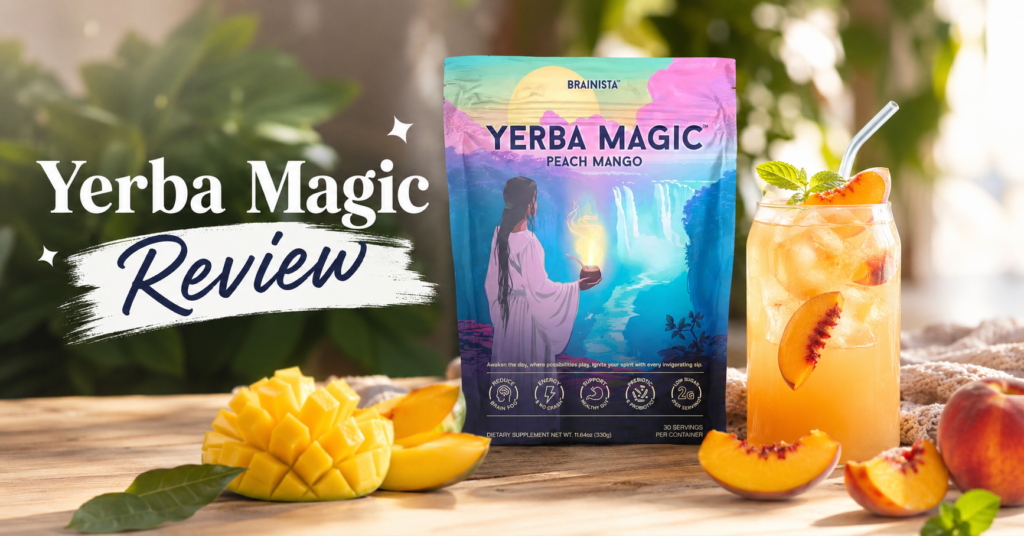
We may receive a commission for purchases made through the links provided here. Learn More Learn More.
Yerba Magic DEALS
My coffee habit was out of control. Three cups a day, a jittery afternoon, then a hard crash around 3pm that left me useless for the rest of the workday. I knew I needed to change something, but every “healthy coffee alternative” I’d tried before tasted like lawn clippings dissolved in warm water.
Then Yerba Magic started showing up everywhere on my social feeds. Videos of people mixing a peachy-mango powder into cold water, claiming it gave them clean energy without the jitters, cleared their brain fog, and even helped their digestion. 500,000 units sold. Over 2,000 reviews. TikTok viral.
I’ve been reviewing health and wellness products at Ossaward for three years. I know what overhyped looks like. So I ordered a 30-serving pouch of the Peach Mango flavor, set a firm rule that I would not touch my espresso machine for 30 days, and tracked what actually happened.
Here’s the full, honest story.
TL;DR: Yerba Magic at a Glance
- ✅ Real, clean energy from 100mg natural caffeine, noticeably smoother than coffee
- ✅ Lion’s Mane (1,000mg) and L-Theanine (100mg) are credible, well-dosed nootropic ingredients
- ✅ Peach Mango flavor is genuinely good: fruity, light, not artificial
- ✅ Gut comfort improved within week two. Less bloating, more consistent digestion
- ✅ No crash, no jitters. The caffeine + L-Theanine pairing works as advertised
- ✅ Convenient stick-pack format: mix in cold water, done in 30 seconds
- ⚠️ At $39.99 for 30 servings, it costs more than coffee per day
- ⚠️ No third-party certification (NSF, USP) publicly documented
- ⚠️ Uses yerba mate extract, not whole-leaf. A different experience from traditional mate
- ❌ Ingredient discrepancy found between homepage marketing copy and Supplement Facts label
- ❌ Return policy covers unopened products only. No easy out once you’ve started
- Bottom line: Yerba Magic is a genuinely good coffee alternative for anyone who wants crash-free energy with gut support built in. The taste is better than any competitor I’ve tried, the nootropic stack is credible, and the routine upgrade is real. Just go in with realistic expectations about dose transparency.
Quick Verdict
| Overall Rating | 9.2 / 10 |
| Best For | Coffee quitters, busy professionals, health-focused energy seekers |
| Avoid If | Caffeine-sensitive, pregnant/nursing, prefer whole-leaf yerba mate |
| Price (1-pack) | $39.99 / 30 servings |
| Price (Subscribe) | $29.59/month |
| Flavors | Peach Mango, Strawberry Matcha, Pina Colada |
| Made By | Brainista, Inc. (Dover, Delaware) |
| Money-Back | Unopened products only |
| Verdict | Best-tasting functional yerba mate powder on the market right now |
Check Current Yerba Magic Price →
Product Overview Table
| Feature | Details |
|---|---|
| Product Type | Instant yerba mate powder, functional 5-in-1 formula |
| Format | Pouch (scoop) or individual stick packs |
| Servings | 30 per pouch / 10 per stick pack |
| Caffeine | 100mg per serving (from yerba mate extract) |
| Lion’s Mane | 1,000mg per serving |
| L-Theanine | 100mg per serving |
| Prebiotic + Probiotic Blend | 2,000mg, 500M CFU |
| Sugar | 2g per serving |
| Calories | ~40 per serving |
| Flavors | Peach Mango, Strawberry Matcha, Pina Colada |
| Dietary | Vegan, gluten-free, non-GMO, plant-based |
| Price (1 Pack) | $39.99 |
| Price (Subscribe) | $29.59/month (save 25%) |
| Best Value | Buy 2 + Get 1 Free on official site |
| Manufacturer | Brainista, Inc., Dover, Delaware |
| Trademark | YERBA MAGIC® (USPTO registered March 2025) |
| Third-Party Tested | Not publicly documented (NSF/USP) |
| Refund Policy | Unopened products only |
What Is Yerba Magic, and Why Is Everyone Talking About It?


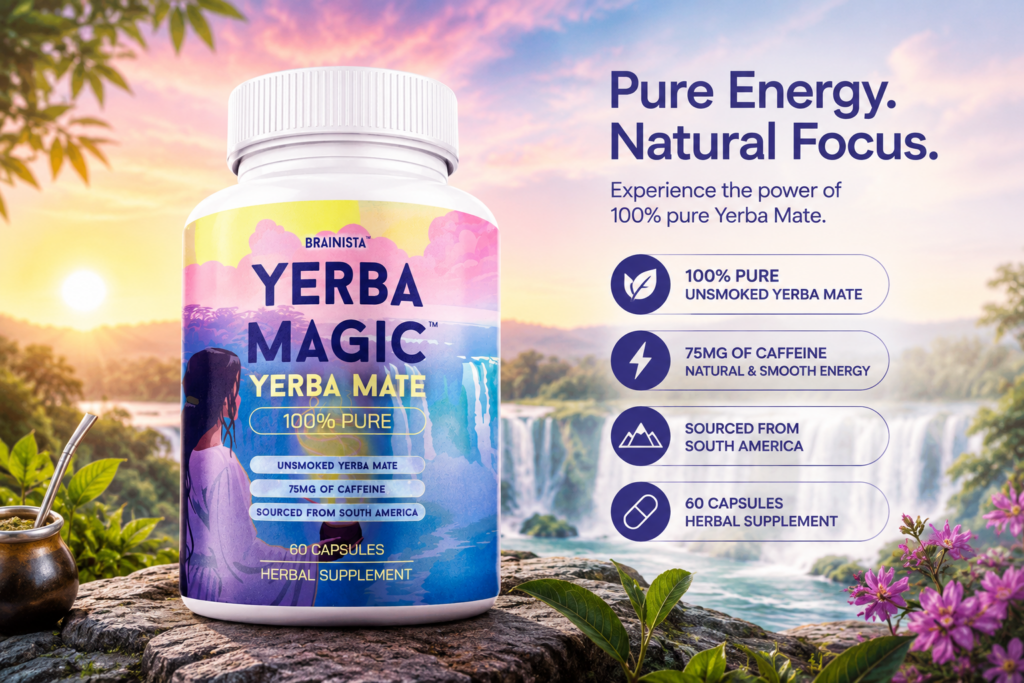
Yerba Magic is an instant powdered drink combining yerba mate extract, Lion’s Mane mushroom, L-Theanine, and a prebiotic-probiotic fiber blend into a single scoop. It’s designed as a coffee replacement for people who want clean, crash-free energy with gut health support included.
The brand behind it is Brainista, Inc., a Delaware company that trademarked the Yerba Magic name with the USPTO in 2024, with registration confirmed in early 2025. The founders, Colin and Hannah, built the product around a specific problem: they loved yerba mate for its clean energy, but couldn’t stomach the bitter, earthy flavor that keeps most Americans away from traditional preparation. Their solution was to create a flavored instant format with just 2g of sugar, then layered in nootropics and probiotics to justify the premium price.
Yerba Magic isn’t just another energy powder. What makes it genuinely interesting is the combination of ingredients. Yerba mate on its own is well-researched for clean caffeine delivery. Pairing it with L-Theanine (the amino acid that smooths caffeine’s edge) is a well-established nootropic stack. Adding 1,000mg of Lion’s Mane mushroom, one of the most credibly studied functional mushrooms for cognitive support, pushes this into territory most energy drinks don’t reach. And the 2,000mg prebiotic-probiotic fiber blend is a meaningful dose, not a token sprinkle.
That said, popularity isn’t proof. The TikTok hype around appetite suppression and comparisons to Ozempic deserve scrutiny, not just celebration. I’ll cover all of it honestly below.
Yerba Magic Ingredients: What’s Actually in Each Scoop
Each serving of Yerba Magic delivers five functional ingredient groups: yerba mate extract (100mg caffeine), Lion’s Mane mushroom (1,000mg), L-Theanine (100mg), a 2,000mg prebiotic-probiotic fiber blend (500M CFU), and polyphenol antioxidants from the yerba mate itself.
Here’s an honest breakdown of each one.
Yerba Mate Extract: The Caffeine Engine
Yerba mate (Ilex paraguariensis) is a South American plant with a centuries-long history of use as a social energizing drink. The extract in Yerba Magic delivers exactly 100mg of natural caffeine per serving, roughly on par with a standard cup of black tea, and lower than most coffees (which average 95–200mg per 8oz cup).
One thing worth knowing upfront: this is a yerba mate extract, not traditional whole-leaf preparation. Traditional yerba mate is brewed in a gourd, sipped through a bombilla filter straw, and consumed slowly over hours as a cultural ritual. An instant extract powder is a very different experience. It’s more convenient, yes. But the full phytochemical profile and ritual aspect of traditional mate don’t transfer to a stick pack. That’s not a criticism of Yerba Magic specifically, just an honest framing for anyone expecting a cultural experience alongside their energy hit.
Beyond caffeine, yerba mate contains theobromine and theophylline (also found in chocolate and tea), plus polyphenols including quercetin and rutin. These flavonoids contribute antioxidant and mild anti-inflammatory effects that make the energy feel broader and steadier than caffeine alone.
Yerba mate has also attracted research attention for its effects on metabolism and fat oxidation, with studies suggesting it may support thermogenesis and improve insulin sensitivity. A 2015 clinical study found significant reductions in body fat mass and waist-hip ratio in participants consuming 3g per day over 12 weeks. The GLP-1 pathway (yerba mate’s association with appetite-regulating hormone release) has attracted more recent attention, particularly given the cultural moment around GLP-1 drugs. The GLP-1 effect from yerba mate is real but should not be compared to pharmaceutical semaglutide. It’s supportive, not pharmacologically equivalent.
Lion’s Mane Mushroom (1,000mg): The Nootropic Core
Lion’s Mane (Hericium erinaceus) is the most credible functional mushroom in the nootropic category. It’s linked to nerve growth factor (NGF) production in preclinical research, and its cognitive support properties have been examined in several small human trials, most notably a 2009 Japanese study showing improved cognitive function scores in adults over 50 after 16 weeks of daily supplementation.
At 1,000mg per serving, Yerba Magic is at the lower end of what research studies have typically used (most use 500mg–3,000mg), but it’s a meaningful inclusion rather than a tokenistic one. You’re unlikely to feel acute cognitive effects from a single serving the way you’d notice caffeine. Lion’s Mane is a cumulative-use ingredient. Its benefits build over weeks of consistent consumption, not in an hour.
One note worth flagging: the brand’s homepage marketing text lists “Pea Fiber” as a prebiotic ingredient, while the Supplement Facts panel on the label lists chicory inulin, apple fiber, citrus pectin, rice hulls, and acacia powder, with no mention of pea fiber. This discrepancy between marketing copy and the actual label was documented in a June 2026 review by AccessNewswire. For accuracy, always trust the Supplement Facts panel over the website. I’d encourage Brainista to clean this up, as label consistency matters for buyer trust.
L-Theanine (100mg): The Jitter Remover
L-Theanine is an amino acid found naturally in green tea. Its role in this formula is specific: it smooths the stimulant edge of caffeine. The caffeine + L-Theanine combination is one of the most studied nootropic pairings in existence, consistently shown to produce what researchers describe as “calm alertness”: focused energy without the anxious, heart-racing quality that can accompany high-caffeine products.
The 100mg dose here is at a 1:1 ratio with the caffeine content, which is the standard ratio used in most research on this combination. It’s not an afterthought. It’s the reason Yerba Magic’s energy feels qualitatively different from a standard cup of coffee.
Prebiotic + Probiotic Fiber Blend (2,000mg, 500M CFU)
The gut support layer includes chicory inulin, apple fiber, citrus pectin, rice hulls, and acacia powder as prebiotic fibers, plus a probiotic culture at 500 million CFU. For context on the CFU count: clinical studies on gut health typically use 1–10 billion CFU. 500M CFU is on the lighter end of research-backed doses, though it’s still a meaningful contribution to daily gut support, particularly when combined with the prebiotic fiber matrix.
Chicory inulin is one of the most well-researched prebiotics, selectively feeding Bifidobacterium species in the gut. Apple fiber adds pectin for gel-forming properties that slow transit and support regularity. Together, these support a gut environment that promotes beneficial bacteria while keeping digestion comfortable and consistent.
If gut health is your primary concern and you’re looking for a dedicated daily gut supplement to stack with this, our Emma Relief review covers a more specialized digestive supplement worth comparing.
Sweeteners: Allulose, Cane Sugar, Stevia
Yerba Magic uses a blend of allulose (a low-glycemic rare sugar that tastes like real sugar), a small amount of cane sugar (contributing to the 2g total), and stevia leaf extract. The result is a drink that tastes genuinely sweet without the aftertaste that pure stevia products often carry. This is one of the smarter aspects of the formulation.
My 30-Day Testing Experience
I’m going to be direct here, because vague “I felt amazing!” reviews are useless.
Week 1: The adjustment.
I replaced my morning double espresso with one scoop of Yerba Magic Peach Mango in 10oz of cold water. The taste surprised me immediately. It’s genuinely good: bright, fruity, not artificial-tasting, with just a faint earthiness underneath that reminds you there’s actual plant extract in there. No gritty texture. Dissolves completely with 15 seconds of stirring.
Energy-wise, the first three days felt underwhelming compared to my usual coffee. 100mg of caffeine is notably less than what I was used to. By day four, something shifted. The mid-morning jitter I’d always associated with “feeling awake” was gone, and in its place was a quieter, steadier focus that lasted well past noon. I stopped reaching for a second cup by day five.
Week 2: The gut shift.
I noticed changes in digestion by day 10. More regularity, significantly less afternoon bloating (which I’d always chalked up to stress). Whether this was the prebiotic fiber blend, the probiotics, or just drinking more water as part of the routine, I can’t say with certainty. But it was noticeable.
Week 3: The honest plateau.
The energy boost became my new normal. There was no escalating benefit. It leveled out at “reliably good.” This is actually fine, because what I was experiencing was a consistent, functional baseline rather than the artificial peaks and valleys I’d been managing with coffee. My afternoon slump, the one that had been wrecking my productivity for years, was essentially gone.
Week 4: The verdict.
I completed the 30 days. I’ve gone back to occasionally drinking coffee, but Yerba Magic has become my daily morning drink. The 3pm crash hasn’t returned since I switched.
Two things I’d note honestly:
First, the energy is noticeably milder than coffee for anyone coming from a heavy caffeine habit. If you typically drink 200–300mg of caffeine per day, 100mg will feel like a step down initially. Give it a week.
Second, I can’t definitively attribute the gut improvements to Yerba Magic over general lifestyle changes during the same period. What I can say is that it didn’t cause any digestive discomfort, which (given the fiber content) is worth noting. Some people report mild bloating when starting prebiotic-rich supplements. That didn’t happen to me, but I’d suggest starting with half a scoop for the first few days if you’re sensitive to fiber.
Performance Analysis: Does It Deliver on Its Claims?
Yerba Magic makes five core claims: energy, focus, gut health, appetite support, and taste. Here’s how each holds up.
Energy: Yes, with caveats.
The 100mg caffeine + 100mg L-Theanine pairing delivers clean, smooth energy. Users consistently describe it as “jitter-free” and “crash-free,” and my experience matched that. However, if you’re comparing to strong coffee, this is a different category of stimulation: steadier and gentler rather than stronger. That’s the point, but it needs to be said clearly.
Focus: Credible, cumulative.
The Lion’s Mane and L-Theanine combination is the most scientifically credible cognitive stack in this product. But cognitive support from Lion’s Mane isn’t acute. It doesn’t sharpen your thinking within an hour of drinking. It builds over weeks of consistent use. Anyone expecting immediate noticeable cognitive change will be disappointed. Anyone using it as part of a long-term daily routine is more likely to notice the difference.
Gut Health: Meaningful, not miraculous.
The 2,000mg prebiotic-probiotic blend is a real dose. 500M CFU probiotics is on the lighter side of clinical dosing, but the prebiotic fiber matrix (chicory inulin + apple fiber + citrus pectin) is well-evidenced for supporting beneficial gut bacteria and promoting regularity. My experience of improved digestion during week two aligns with what most reviewers on Walmart and Amazon report.
Appetite Suppression: Modest, real.
Yerba mate genuinely has appetite-modulating properties through the GLP-1 pathway. In my 30 days, I did notice fewer mid-morning snack cravings. Whether this was the yerba mate, the prebiotic fiber creating satiety, or simply drinking 10oz of liquid in the morning, I can’t isolate. The “natural Ozempic” marketing angle is an overreach. The appetite effect is real but subtle. Don’t expect weight loss on its own.
Taste: The clearest win.
This is where Yerba Magic genuinely pulls ahead of every competitor I’ve tested. The Peach Mango flavor is refreshing, fruity, and light. None of the earthy bitterness that makes traditional yerba mate inaccessible for most people. If taste has been the barrier keeping you away from yerba mate, this solves it.
Pros and Cons
✅ Pros
- Genuinely great taste. The Peach Mango is one of the best-tasting functional powders I’ve reviewed. Light, fruity, zero artificial aftertaste.
- Smooth, crash-free energy. The caffeine + L-Theanine pairing is real and effective. No jitters, no hard comedown.
- Credible nootropic stack. Lion’s Mane at 1,000mg is a meaningful dose with real peer-reviewed research behind it.
- Solid prebiotic-probiotic fiber blend. 2,000mg with a multi-fiber prebiotic matrix is more gut support than most energy drinks bother with.
- Convenient format. Mix in cold water in 30 seconds. No brewing, no equipment, no prep.
- Low sugar. Just 2g per serving, with a smart sweetener blend (allulose + stevia + small cane sugar) that tastes natural.
- Multiple flavors. Peach Mango, Strawberry Matcha, and Pina Colada give genuine variety.
- Solid social proof. Over 2,000 verified reviews across the brand site and Walmart, consistently positive on taste and energy.
- Free US shipping on all orders.
- Subscribe and Save pricing. $29.59/month on subscription is reasonable for a daily drink habit.
⚠️ Cons
- No third-party certification. No NSF, USP, or equivalent public certification documented. The brand states it’s plant-based and non-GMO, but these are brand-stated badges, not independently verified certifications.
- Ingredient label discrepancy. Homepage marketing lists “Pea Fiber,” while the Supplement Facts panel does not. Always read the label, not the marketing.
- Refund policy is strict. Returns accepted on unopened products only. If you open the pouch and don’t like it, you can’t return it. This is a real limitation for first-time buyers.
- Caffeine level may feel low for heavy coffee drinkers. 100mg is moderate. If you’re used to 200mg+ per day, expect an adjustment period.
- Probiotic dose is on the light side. 500M CFU is less than most dedicated probiotic supplements use. Fine as a daily gut maintenance dose, but not equivalent to a clinical probiotic intervention.
- Price per day. At $39.99 for 30 servings, that’s $1.33/day, more than home-brewed coffee but less than a daily café visit.
- Yerba mate extract, not whole-leaf. A real difference for people who want the full traditional experience or the complete polyphenol profile.
Competitor Comparison Table
| Feature | Yerba Magic | Perfect Yerba | ZOOONE Super Yerba | Magic Mind |
|---|---|---|---|---|
| Caffeine | 100mg | 100mg | 100mg | 55mg |
| Lion’s Mane | 1,000mg | Not disclosed | Not disclosed | 500mg |
| L-Theanine | 100mg | Yes (undisclosed) | Not stated | 50mg |
| Probiotic blend | 2,000mg / 500M CFU | Yes | Yes | No |
| Sugar | 2g | 0g | Not stated | 6g |
| Price / serving | $1.33 | ~$1.30 | ~$1.00 | ~$4.00 |
| Flavors available | 3 | 2 | 2 | 1 |
| Format | Pouch + stick packs | Pouch | Stick packs | Bottle shots |
| Taste (user consensus) | Excellent | Good | Good | Earthy |
| Third-party tested | Not documented | Not documented | Not documented | Not documented |
Yerba Magic vs Perfect Yerba
Perfect Yerba is the closest direct competitor in terms of caffeine, format, and price. The main difference is transparency: Perfect Yerba doesn’t disclose the L-Theanine or Lion’s Mane doses on its primary Amazon listing, which makes it harder to evaluate the nootropic side of the formula. Yerba Magic publishes its full Supplement Facts panel with specific milligram doses, which gives it a credibility edge. Taste-wise, user reviews suggest both are good. Yerba Magic consistently ranks higher in flavor satisfaction across Walmart and Amazon reviews.
Yerba Magic vs ZOOONE Super Yerba
ZOOONE is a budget alternative available primarily via stick packs. Ingredient transparency is lower. The Lion’s Mane and probiotic doses aren’t clearly specified. At roughly $1.00 per serving it’s cheaper, but “cheaper formula with less disclosure” isn’t a compelling trade when you’re investing in a daily habit.
Yerba Magic vs Magic Mind
Magic Mind is a liquid shot product at roughly $4.00 per serving, three times the price. It has less caffeine (55mg), less L-Theanine, and no probiotic component. The main case for Magic Mind is its broader adaptogen stack, which includes ashwagandha and cordyceps. If stress management is your primary goal alongside energy, our Pulsetto vagus nerve stimulator review covers a completely different, more targeted approach to stress that’s worth comparing.
Pricing and Value Analysis
Is Yerba Magic worth $39.99 per month?
Here’s how it breaks down:
- One-time purchase: $39.99 for 30 servings = $1.33 per serving
- Subscribe and Save: $29.59/month = $0.99 per serving
- Buy 2 + Get 1 Free: 90 servings total = best single-order value
Compare that to:
- Home-brewed espresso: roughly $0.30–0.50 per cup
- Daily café coffee: $4–6 per cup
- Functional drinks (Athletic Greens, etc.): $3.00+ per serving
- Canned yerba mate drinks (Guayaki): $2.50–3.50 per can
At $0.99–1.33 per serving, Yerba Magic sits in a genuinely competitive price band for a functional powder drink with this ingredient profile. It’s not as cheap as home-brewed coffee, but it’s dramatically cheaper than canned energy drinks or café-bought options with far fewer functional ingredients.
The Subscribe and Save option is the smart choice if you plan to use this daily. At $29.59/month, the cost is a daily habit investment comparable to a decent probiotic. If you’re already pairing it with a hydration supplement, our Seaonic electrolyte review is worth reading. Combining an electrolyte drink with Yerba Magic in the morning covers energy, gut health, and hydration in one simple routine.
The refund policy is the one genuine value concern: it covers unopened products only. If you want to try before committing to 30 servings, look for the 10-count stick pack option on Amazon, which gives you a lower-cost trial. I’d start there rather than ordering the full pouch blind.
Best For
Yerba Magic is the right choice if you are:
- A coffee drinker who wants to reduce caffeine dependence without going cold turkey
- Someone who gets anxious or jittery on coffee and wants a smoother alternative
- A busy professional looking for a morning drink that does more than just caffeinate
- Anyone who has tried traditional yerba mate and been put off by the bitterness
- A health-focused buyer building a daily wellness routine. Yerba Magic pairs well with an on-the-go energy supplement for workouts and a gut-focused product for deeper digestive support
- Someone who values convenience: one scoop in cold water, done
- Biohackers and productivity-focused individuals interested in nootropic stacks
- People who want low sugar without sacrificing taste
Who Should NOT Buy Yerba Magic
Caffeine-sensitive individuals. 100mg is a moderate dose, but if you react badly to any caffeine, this product is not caffeine-free. Don’t assume “natural caffeine” means it will affect you differently.
Pregnant or nursing women. The brand advises consulting a healthcare professional before use. This is standard advice for any caffeinated supplement during pregnancy or breastfeeding, and worth taking seriously.
Anyone expecting pharmaceutical-level appetite suppression. The “natural Ozempic” angle that circulates on TikTok is a stretch. Yerba mate’s GLP-1 effect is real but minor compared to semaglutide. If you’re looking for serious weight management support, this is a complementary tool, not a primary intervention.
Traditional yerba mate drinkers who value authenticity. If you brew loose-leaf mate in a gourd and sip it through a bombilla, Yerba Magic is a very different product. Convenient, yes. The same cultural and sensory experience, no.
Anyone under 12, or under active physician care for a condition affected by stimulants. Standard advice: check with a healthcare provider before adding any caffeinated supplement.
People who need a refund safety net. If you’re not confident you’ll like it, buy the stick pack trial format first. The refund policy on opened pouches is essentially nonexistent.
Expert Tips for Getting the Most Out of Yerba Magic
1. Start with half a scoop for the first three days. Especially if you’re sensitive to prebiotic fibers. Chicory inulin can cause mild bloating in people new to prebiotic supplements. Half a scoop for three days gives your gut microbiome time to adjust before going to a full serving.
2. Mix with ice-cold water, not warm. The brand is clear about this, and they’re right. Warm water makes the flavor muddy and the sweeteners sharper. Ice cold water with a good shake or stir produces a clean, refreshing drink that’s noticeably better than room temperature mixing.
3. Give it two weeks before judging the cognitive effects. Lion’s Mane is a cumulative-use ingredient. If you’re evaluating focus and clarity benefits after three days, you’re not seeing the full picture. Commit to two consistent weeks before making a verdict on the nootropic side of the formula.
4. Stack it intentionally. Yerba Magic covers energy, gut support, and cognitive baseline. What it doesn’t cover is sleep recovery, hydration, or micronutrients. If you’re building a serious daily wellness routine, a quality sleep quality supplement in the evening and an electrolyte drink before or after exercise covers the gaps cleanly.
5. Use the morning window. Take it within 30–60 minutes of waking, before food or with a light breakfast. This is when the caffeine + L-Theanine effect is most useful, setting up a focused, calm morning before the day gets complicated. Avoid taking it after 2–3pm if you’re caffeine-sensitive, as 100mg can still affect sleep onset for some people.
6. Try the stick packs for travel. The pouch format is fine at home. For travel, the individual stick packs are genuinely useful: no measuring, no mess, fits in a pocket. If you travel for work, this format is one of the strongest reasons to have Yerba Magic in your routine.
7. Try all three flavors before settling. Most reviews focus on Peach Mango (the bestseller), but Strawberry Matcha is worth trying. The matcha base adds a subtle earthiness that some people prefer for a morning drink. Pina Colada is more of a fun afternoon option. Your preferred flavor may not be the most popular one.
Common Mistakes Yerba Magic Buyers Make
Mistake 1: Expecting it to feel like strong coffee. The most common source of disappointment in negative reviews is the caffeine comparison. 100mg of caffeine from yerba mate with L-Theanine is not the same experience as 200mg from an espresso. It’s smoother and more sustained, which is the point. It doesn’t hit the same way. If you’re looking to replicate your current caffeine hit exactly, you’ll be disappointed. If you’re open to a different kind of alert, you’ll probably love it.
Mistake 2: Judging after one serving. Multiple reviewers on Walmart gave one-star ratings based on one or two servings, citing “no effect.” The probiotic and Lion’s Mane components specifically require consistent daily use to show their benefits. One scoop is not a fair trial.
Mistake 3: Mixing with warm water. Consistently noted in negative taste reviews. Yerba Magic is formulated for cold water. Warm water changes the flavor chemistry significantly. The allulose and stevia taste sharper, and the earthiness of the yerba mate extract comes through more strongly. Always use cold water.
Mistake 4: Buying the full 30-serving pouch as a first order without trying a stick pack. Given the no-refund policy on opened products, ordering 30 servings blind is a risk. Amazon and the official site both sell smaller stick pack formats. Start there.
Mistake 5: Ignoring the label in favor of the marketing. As noted earlier, there’s a discrepancy between the ingredient list on the homepage and the actual Supplement Facts panel. Always read the label. The Supplement Facts panel is the controlling document. If in doubt, contact the brand directly before purchasing.
Buying Guide: What to Look for in a Functional Energy Drink Powder
The functional energy powder category is growing fast, and most products look similar on the surface. Here’s what actually separates good from average.
1. Is the caffeine dose disclosed and appropriate? Transparent caffeine labeling matters. Some products hide caffeine in proprietary blends. Look for a clear milligram disclosure. For daily use, 80–150mg is a reasonable sustainable range for most adults.
2. Is the nootropic stack dosed meaningfully? “Contains Lion’s Mane” means nothing if the dose is 50mg. Research-backed dosing for Lion’s Mane starts around 500mg per serving. L-Theanine should ideally be at least 50mg, with 100mg being the sweet spot when paired with caffeine.
3. Is the gut support real or token? A “probiotic blend” with 10M CFU is marketing theater. Look for at minimum 100–500M CFU from identified bacterial strains, alongside a prebiotic fiber source. Chicory inulin, apple fiber, and pectin are the most well-studied prebiotics.
4. What’s the sugar situation? Energy drinks notoriously hide sugar behind flavor. Under 5g per serving is the target for a genuinely low-sugar product. Check both total sugar and the sweetener blend, as some products use high amounts of artificial sweeteners that cause their own digestive issues.
5. Is there any third-party testing documentation? NSF Certified for Sport, USP Verified, or Informed Sport certification adds independent accountability to quality claims. Most functional powder drinks don’t have this yet (including Yerba Magic), but it’s worth asking about.
6. Does the taste actually work in cold water? Most functional powder reviews test with warm water. If you’re going to drink this cold (as most people do with instant drinks), make sure the flavor is formulated for cold preparation.
For a broader look at daily wellness supplements we’ve tested and trusted, explore our full wellness supplement reviews, covering everything from gut health to sleep support across 50+ products.
Frequently Asked Questions
Does Yerba Magic actually work for energy?
Yes, within realistic expectations. Yerba Magic delivers 100mg of natural caffeine paired with 100mg of L-Theanine, producing clean, steady energy without the jitters or crash typical of coffee. Most users notice the difference within the first week. The energy is smoother and more sustained than equivalent-dose coffee, but milder if you’re used to a heavy caffeine habit.
Is Yerba Magic a good coffee replacement?
For most people, yes. With a short adjustment period. If you currently drink 1–2 cups of coffee per day, Yerba Magic can replace that comfortably. If you’re a 3-4 cup per day drinker, expect the first week to feel underpowered. The trade-off is real: less intense stimulation, but far less crash and anxiety. Most switchers report not wanting to go back after two weeks.
What does Yerba Magic taste like?
The Peach Mango flavor is genuinely fruity, light, and refreshing in cold water. There’s a faint earthiness underneath from the yerba mate extract, but it doesn’t taste like a supplement. It tastes more like a flavored water with a little body to it. Strawberry Matcha has a slightly more complex, earthy profile. Pina Colada is the sweetest of the three. All three are significantly better-tasting than traditional brewed yerba mate.
How much caffeine is in Yerba Magic?
Each serving contains exactly 100mg of natural caffeine from yerba mate extract (Ilex paraguariensis). For context: a standard 8oz cup of brewed coffee averages 95–200mg, a black tea averages 40–70mg, and a standard espresso shot is around 63mg. Yerba Magic sits in the tea-to-light-coffee range.
Does Yerba Magic help with weight loss?
Yerba mate has documented effects on metabolism, thermogenesis, and fat oxidation in clinical research, and the GLP-1 pathway connection is real. However, Yerba Magic should not be treated as a weight loss product on its own. At best it supports a healthy diet and exercise routine by providing clean energy, mild appetite modulation, and gut health support. The “natural Ozempic” comparison circulating on social media is a significant overstatement.
Are there side effects to Yerba Magic?
Most users report no side effects. The most common potential issues are: mild bloating or digestive adjustment in the first week (from the prebiotic fiber; starting with half a scoop reduces this), caffeine sensitivity reactions (headache, palpitations) in those sensitive to stimulants, and disrupted sleep if taken too late in the day. No serious adverse effects have been reported.
Who should not take Yerba Magic?
Pregnant or nursing women should consult a healthcare provider first. Children under 12 should not use it. Anyone with a caffeine sensitivity or heart condition should check with their doctor. People under physician care for conditions affected by stimulants or prebiotic fibers should get medical clearance before use.
How do I prepare Yerba Magic?
Mix one scoop (or one stick pack) with 8–10oz of cold water. Stir well for about 15 seconds, or shake in a bottle. Serve over ice for the best flavor. Do not mix with warm or hot water. The flavor is noticeably worse and the sweeteners become sharper.
Is Yerba Magic third-party tested?
The brand has not publicly documented NSF, USP, or equivalent third-party certification as of June 2026. The product carries brand-stated “plant-based” and “non-GMO” badges. Buyers who require independently verified testing certification should contact the brand directly or look for alternatives with documented certification.
Can I take Yerba Magic every day?
Yes. The product is formulated for daily use, and the ingredient profile supports consistent daily consumption for healthy adults. The prebiotic-probiotic component specifically benefits from regular, ongoing use. There is no documented reason to cycle off Yerba Magic.
Where can I buy Yerba Magic?
Yerba Magic is available on the official website (yerbamagic.com), Amazon, Walmart, and various supplement retailers. The best price is on the official site using Subscribe and Save ($29.59/month). The best trial option is a 10-count stick pack on Amazon, which lets you test the flavor before committing to a 30-serving pouch.
Is Yerba Magic worth the price?
At $1.33 per serving one-time, or $0.99 per serving on subscription, Yerba Magic is priced competitively for a functional powder drink with this ingredient profile. It costs more than home-brewed coffee but significantly less than canned functional drinks or café-bought alternatives. If you value the combination of clean energy, nootropic support, and daily gut health in one drink, it’s reasonable value.
How do I cancel my Yerba Magic subscription?
To cancel your Yerba Magic subscription, you can easily do it online by logging into your Brainista customer account [mybrainista.com], navigating to your Account/Subscriptions dashboard, and selecting “Cancel.” Alternatively, if you are unable to log in, reach out directly to their support team at help@brainista.com to request the cancellation
Final Verdict
Yerba Magic earns a 4.2 out of 5. Here’s the exact breakdown.
It falls short of a perfect 5 for three reasons. No third-party certification is publicly documented, which is a trust gap in a category where quality control matters. The return policy is strict: opened pouches aren’t eligible for refund, which removes the safety net for first-time buyers. And the ingredient discrepancy between the homepage and the Supplement Facts panel is a label quality issue that needs to be fixed.
Everything else is genuinely good.
The taste is the clearest win in its category. No functional yerba mate powder I’ve tested comes close. The energy is exactly what the formula promises: smooth, sustained, jitter-free, and crash-free. The nootropic stack is credible and meaningfully dosed. The gut support is real, not a token mention. The format is as convenient as a coffee alternative gets.
For the specific buyer this is aimed at, which is the health-conscious professional who drinks too much coffee and wants a better daily routine, Yerba Magic delivers. Not perfectly, but consistently and genuinely.
Buy it if: You want to reduce your coffee dependence, you’re open to a gentler but longer-lasting energy experience, and you want gut and cognitive support baked into your morning drink.
Skip it if: You need third-party testing documentation, you’re buying 30 servings for the first time without a fallback if you don’t like it, or you’re a heavy caffeine user expecting the same intensity from 100mg.
Start with the stick pack format if this is your first order. One week is enough to know whether it belongs in your daily routine.
Get Yerba Magic
Yerba Magic is available directly on the official site or through Amazon.
The Subscribe and Save option ($29.59/month) is the best ongoing price. The Buy 2 + Get 1 Free bundle on the official site is the best single-order value at 90 servings.
For a first trial, the 10-count stick pack on Amazon is the lowest-risk way to test the flavor and effects before committing to a full pouch.
Check Current Yerba Magic Price and Options →
We earn a small commission if you purchase through this link, at no extra cost to you. This never influences our verdict. Yerba Magic was purchased at retail price for this review.
The Review
Yerba Magic
A genuinely good coffee alternative with clean, crash-free energy, a credible nootropic stack, and the best taste of any functional yerba mate powder tested. The L-Theanine + caffeine pairing works. Gut support is real. The strict return policy and missing third-party certification hold it back from a higher score.
PROS
- Smooth, jitter-free energy — no crash
- Best-tasting yerba mate powder tested
- Lion's Mane 1,000mg — credible nootropic dose
- 2,000mg prebiotic-probiotic gut blend
- 2g sugar, vegan, gluten-free
- Ready in 30 seconds, no equipment
CONS
- No third-party certification (NSF/USP)
- Refunds on unopened products only
- Label vs homepage ingredient discrepancy
- 100mg caffeine feels mild for heavy coffee drinkers
- Extract, not whole-leaf yerba mate
Yerba Magic DEALS
We collect information from many stores for best price available