






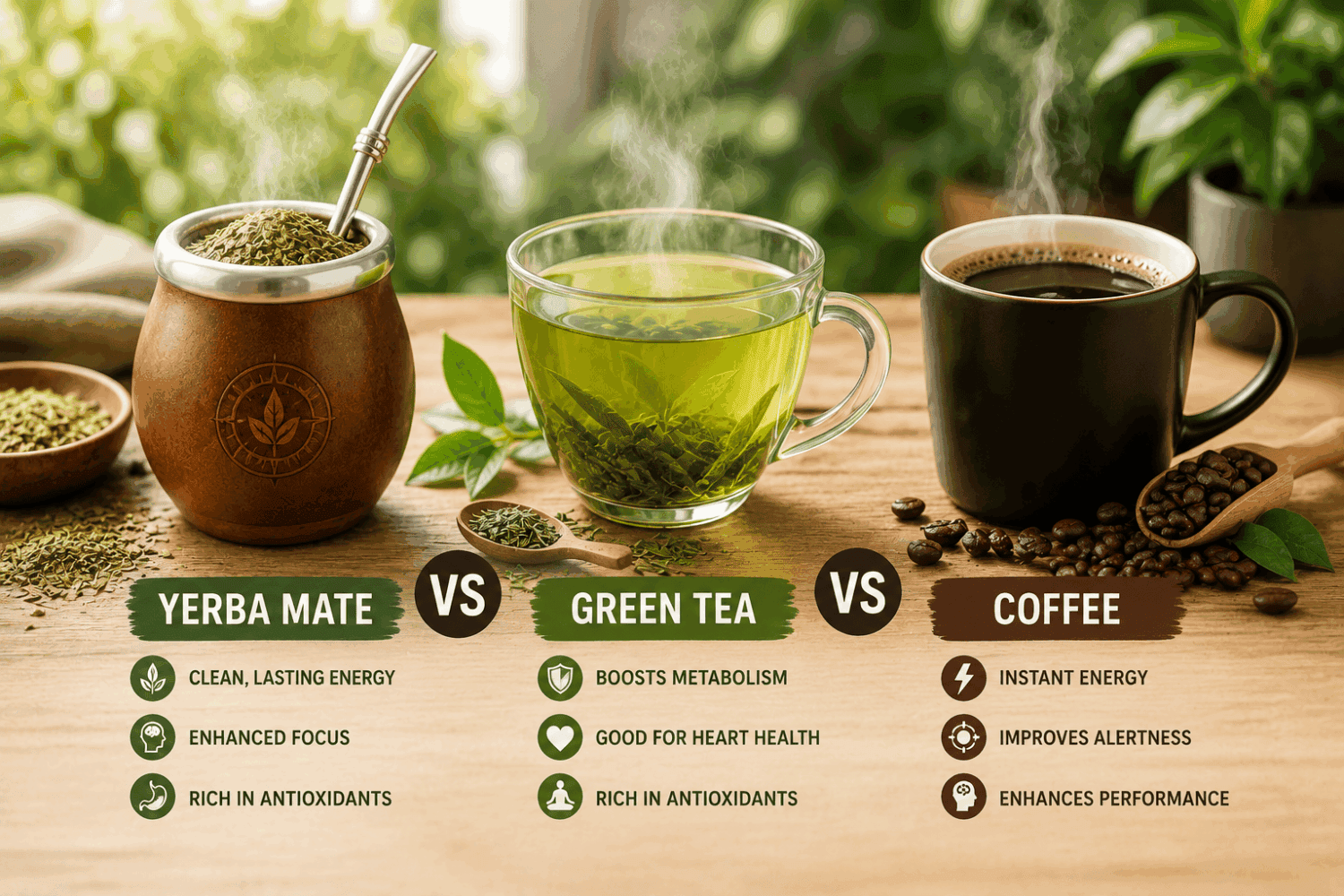
Three of the world’s most widely consumed caffeinated beverages. Each with passionate advocates, meaningful scientific research, distinctive taste, and cultural significance. Each better suited to different people, different goals, and different circumstances.
This comparison doesn’t pick a winner, there isn’t one. What it does is give you an accurate enough picture of each to make a genuinely informed personal choice rather than one based on marketing or cultural pressure.
TL;DR
- Coffee: highest caffeine, fastest onset, most robust taste, greatest jitter risk, best for acute high-energy output
- Green tea / matcha: naturally balanced caffeine + L-theanine, calm focused energy, best for analytical sustained work, lowest caffeine ceiling
- Yerba mate: co-alkaloid smooth energy, longer duration, highest antioxidants, best for sustained active focus
- Instant mate powder (Yerba Magic): adds L-theanine and functional stack to mate’s natural advantages, arguably the most complete morning functional drink available
- None of these is objectively “best”, the right choice depends on your specific goals
Caffeine Content and Delivery
An 8oz cup of coffee has roughly 95 to 200mg of caffeine depending on roast, grind, and preparation method. Black tea averages 40-70mg per 8oz. Green tea 20-45mg. Yerba mate approximately 70-85mg per 8oz traditionally prepared.
Coffee provides the highest and fastest caffeine of the three. The caffeine in coffee absorbs relatively quickly, producing a rapid alertness spike. Coffee’s polyphenol profile (primarily chlorogenic acids) provides antioxidants but doesn’t meaningfully slow caffeine absorption the way mate’s profile does.
Green tea / matcha provides the lowest caffeine ceiling but pairs it with naturally occurring L-theanine, producing the most distinctive energy quality: calm, focused, less energized in volume but more refined in character.
Yerba mate provides moderate caffeine (similar to black tea) alongside theobromine, theophylline, and a high concentration of chlorogenic acids. <cite index=”44-1″>The high concentration of chlorogenic acids in mate slows caffeine absorption, creating a more gradual and sustained energy curve than coffee.</cite>
Instant mate powder (Yerba Magic): 100mg caffeine + 100mg L-theanine. This is mate’s natural advantages plus the green tea’s L-theanine addition, the two key mechanisms for smooth, focused energy delivered together.
Antioxidant Profile
All three beverages are significant dietary antioxidant sources.
Yerba mate has been measured as having a higher overall antioxidant concentration than green tea in multiple comparative analyses, though the dominant antioxidant types differ significantly.
Coffee: Primarily chlorogenic acids. Despite public perception, coffee is the largest single source of dietary antioxidants for most Americans, simply due to consumption volume. Cafestol and kahweol (diterpenes in unfiltered coffee) have additional anti-inflammatory and hepatoprotective properties.
Green tea: Primarily EGCG (epigallocatechin gallate) and other catechins. EGCG specifically has extensive research for neuroprotective, anti-inflammatory, and anti-cancer properties in laboratory research.
Yerba mate: Primarily chlorogenic acids (same as coffee) plus quercetin, rutin, and other polyphenols. The total measured antioxidant capacity is high, with some analyses finding mate exceeds green tea.
Energy Quality: The Practical Difference
Coffee energy: fast onset (30-45 minutes), strong alertness, higher anxiety and jitter risk, moderate crash at 3-4 hours, greatest benefit for acute high-output tasks requiring maximum stimulation.
Green tea / matcha energy: slower onset (45-60 minutes from the GABA and L-theanine effects), calm and focused, very low jitter even for caffeine-sensitive people, gentle taper, best for analytical and creative tasks requiring sustained calm attention.
Yerba mate energy: moderate onset, slightly more sustained than coffee due to chlorogenic acid slow release, theobromine’s mild cardiovascular smoothing, longer effective window (4-6 hours typically), lower jitter than coffee at equivalent caffeine.
Yerba Magic (mate + L-theanine): Combines mate’s natural slow release with L-theanine modulation. The result is arguably the cleanest energy profile of any daily caffeinated drink: meaningful alertness, sustained duration, minimal anxiety, no hard crash.
Gut Health Impact
Coffee: Stimulates gastric acid secretion, which can cause stomach upset for many people. The high acidity of coffee can worsen acid reflux. However, coffee also has prebiotic effects on certain gut bacteria species and is associated with favorable gut microbiome diversity in some research.
Green tea: Very low acid, gentle on the stomach. Polyphenols in green tea have demonstrated prebiotic effects on gut bacteria in research. Generally the most GI-friendly of the three for sensitive stomachs.
Yerba mate (traditional): Lower acid than coffee, generally well-tolerated. Some research on mate polyphenols and gut microbiome interaction.
Yerba Magic (with prebiotic-probiotic blend): This is where instant mate powder becomes categorically different from the other beverages, it adds 2,000mg of clinically relevant prebiotic fiber and 500M CFU probiotics to the morning drink. No traditional coffee, tea, or plain mate provides this gut health support.
Practical Morning Routine Comparison
| Factor | Coffee | Green Tea / Matcha | Yerba Magic |
|---|---|---|---|
| Preparation time | 5-10 min (home), instant (instant coffee) | 3-5 min | <1 min |
| Equipment needed | Brewer (various) | Kettle, whisk/strainer | Cup |
| Caffeine | 95-200mg | 25-70mg | 100mg |
| L-theanine | None naturally | 20-50mg naturally | 100mg added |
| Nootropic addition | None | None | Lion’s Mane 1g |
| Gut health support | Minimal | Minimal | Yes (prebiotic+probiotic) |
| Jitter risk | Medium-High | Low | Low |
| Crash risk | Medium | Low | Low |
| Cost/day | $0.50-5.00 | $0.30-3.00 | $0.99-1.33 |
Specific Use Case Recommendations
For early morning before high-focus cognitive work: Yerba Magic or ceremonial matcha. Both provide focused energy without the anxiety peak.
For maximum acute energy (gym, early flight, crucial presentation): Coffee. The higher, faster caffeine is appropriate for acute maximum performance.
For someone who gets anxious on coffee: Matcha or Yerba Magic. Both provide meaningful energy with strong theanine modulation.
For someone who loves the taste of coffee and won’t change: Mushroom coffee blends or adding L-theanine to existing coffee. The beverage itself doesn’t need to change.
For comprehensive morning wellness (energy + cognition + gut health): Yerba Magic. No traditional beverage provides the complete package.
For budget-sensitive daily use: Green tea (bag) is the most economical quality caffeinated drink. Yerba Magic on subscription ($0.99/serving) is competitive with café coffee.
The Health Research Snapshot (Brief)
Coffee: Strong evidence for reduced type 2 diabetes risk, reduced Parkinson’s disease risk, protective liver effects, and improved physical endurance performance. The strongest epidemiological evidence base of the three beverages for specific health outcomes.
Green tea: Strong evidence for cardiovascular health (endothelial function), anti-inflammatory effects, potential cancer risk reduction in some studies, and specific neuroprotective properties from EGCG.
Yerba mate: Emerging evidence for metabolic health (fat oxidation, insulin sensitivity), cardiovascular polyphenol benefits, and adaptogenic/anti-inflammatory properties from saponins.
All three beverages have substantial health-positive evidence. None of them is the uniquely “healthiest” choice, the combination of which benefits you specifically need and which beverage experience you’ll maintain consistently determines the practical winner for you personally.
Frequently Asked Questions
Is yerba mate better than coffee for your health?
Neither is objectively better. Mate has a smoother energy profile (due to co-alkaloids and chlorogenic acids), comparable or higher antioxidants, and fewer GI side effects for many people. Coffee has more total caffeine per serving, stronger evidence for certain specific health outcomes (liver, Parkinson’s), and is more widely culturally accessible. The better beverage is the one that works for your body and goals.
Is green tea healthier than coffee?
Different, not objectively better. EGCG in green tea has some of the most extensively studied specific health properties of any food compound. Coffee’s larger consumption volume per serving contributes more total antioxidants for most daily coffee drinkers. Both have compelling evidence for different health benefits.
Which has more antioxidants, coffee or mate?
Per serving, this depends on preparation. Mate may have higher measured ORAC (antioxidant capacity) values in some comparative studies. Coffee drinkers who consume multiple cups may have higher total daily antioxidant intake from coffee despite lower per-serving values.
Can I drink all three in one day?
Yes, if you stay within 400mg total daily caffeine. A morning Yerba Magic (100mg) + afternoon green tea (30mg) is a common and well-tolerated combination. Adding coffee to this creates higher total caffeine.
Which is best for intermittent fasting?
All three have minimal to zero calories in their pure forms (unsweetened). Yerba Magic’s 2g of sugar technically breaks a strict fast. For most practical fasting purposes, the tiny caloric impact is inconsequential. Pure coffee, green tea, or traditional mate (no additives) are all zero-calorie.
For the complete Yerba Magic review and daily experience across all three comparison dimensions: Yerba Magic Review. For all our tested wellness products: Wellness Gadgets Category.

