






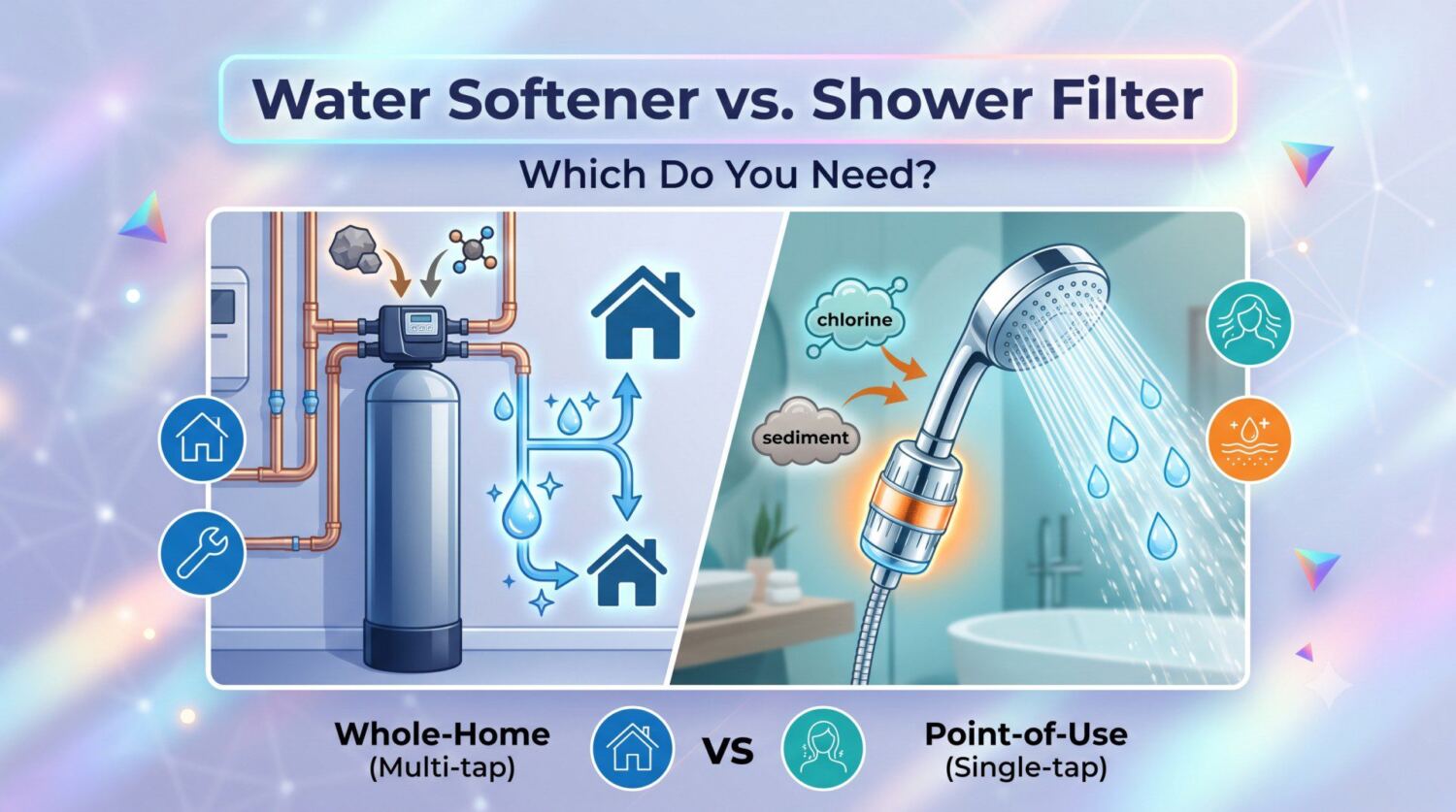
We have all experienced it: stepping out of the shower expecting to feel refreshed, only to be met with tight skin, an itchy scalp, and brittle hair. If you are struggling with poor water quality, you have likely come across two popular solutions: water softeners and shower filters.
While both systems aim to upgrade your daily shower experience, they tackle completely different water problems. Understanding the science behind each will save you money and ensure you actually solve your specific hair and skin issues.
Here is the ultimate guide to the “water softener vs. shower filter” debate, how they work, and which one is right for your home.
The Core Difference: Softening vs. Conditioning
The most common misconception is that a shower filter and a water softener do the exact same thing. They do not.
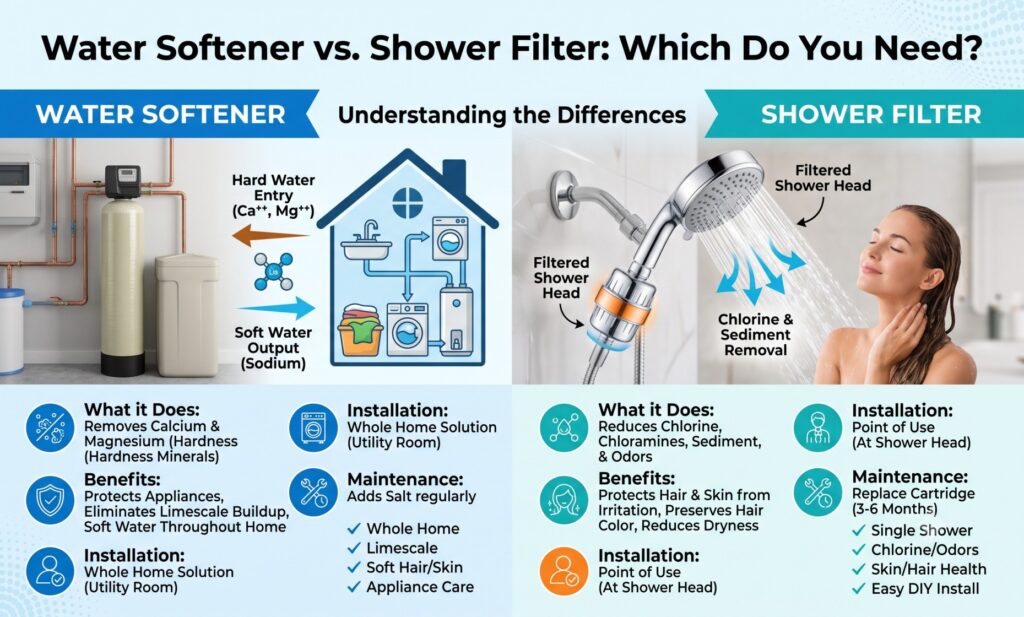
- Water Softeners (Ion Exchange): A water softener is typically a whole-house system installed at your main water line. It physically removes the minerals responsible for hard water—specifically calcium and magnesium. Using a salt-based ion-exchange process, it replaces these hard minerals with sodium ions, completely eliminating limescale buildup. Standard water softeners do not remove chlorine.
- Shower Filters (Water Conditioning): A shower filter is a small, point-of-use device that attaches directly to your showerhead or shower arm. A shower filter cannot physically remove calcium and magnesium ions; therefore, it does not actually “soften” the water. Instead, it uses filtration media like KDF-55, activated carbon, and Vitamin C to filter out chlorine, heavy metals, and sediments.
The takeaway: Softeners stop mineral scaling, while filters stop chemical irritation.
When Should You Choose a Shower Filter?
Shower filters focus on purifying your bathing water from harsh municipal treatment chemicals, primarily chlorine. Chlorine aggressively strips natural oils from your body, leading to frizz, color-fading in hair, and skin dryness.
Pros of a Shower Filter:
- They effectively neutralize chlorine and heavy metals.
- They are highly affordable and require zero professional installation (often a DIY job that takes under 5 minutes).
- They are renter-friendly and portable, meaning you can take them with you when you move.
- They provide immediate relief for dry skin and brittle hair caused by chemical irritants.
Cons of a Shower Filter:
- They do not stop hard water limescale from forming on your glass doors or tiles.
- You must replace the filter cartridge periodically (usually every 3 to 6 months) to maintain effectiveness.
Who it’s best for: Renters, apartment dwellers, and anyone whose primary complaint is dry skin, itchy scalp, or a “swimming pool” smell in their shower. If this sounds like the right solution for you, check out our NUUD showerhead review to see how a premium filtration system can transform your daily routine.
When Should You Choose a Water Softener?
If your home is plagued by thick, white, chalky residue on your faucets and showerheads, your plumbing is suffering from hard water. Over time, calcium and magnesium will destroy your water heater, clog your pipes, and ruin your appliances.
Pros of a Water Softener:
- It protects your home’s entire plumbing system and water-using appliances from scale buildup, prolonging their lifespan.
- It makes soaps and shampoos lather significantly better, requiring you to use less product.
- It leaves your laundry feeling softer and looking brighter, while fabrics maintain their texture longer.
Cons of a Water Softener:
- They require a high upfront investment and usually need professional installation.
- They demand regular maintenance, including heavy bags of salt for regeneration.
- Standard salt-based softeners do not remove chlorine or heavy metals from the water.
Who it’s best for: Homeowners looking for a long-term investment to protect their property’s plumbing, appliances, and fixtures from severe hard water damage.
Head-to-Head Comparison
| Feature | Shower Filter | Water Softener |
| Primary Function | Removes chlorine, metals, and odors. | Removes calcium and magnesium (hardness). |
| Installation | DIY, takes under 5 minutes. | Requires a professional plumber. |
| Initial Cost | Low (budget-friendly). | High upfront investment. |
| Maintenance | Replace cartridge every 3-6 months. | Requires regular salt top-offs. |
| Space Required | Attaches to existing shower arm. | Requires dedicated utility space. |
| Stops Limescale? | No. | Yes. |
Do You Actually Need Both?
In many modern municipal environments, the answer is yes.
If you own a home in an area with hard water, a water softener is essential to protect your plumbing infrastructure. However, because standard water softeners do not remove the harsh chlorine pumped into city water, your skin and hair can still suffer.
For the ultimate bathroom setup, many homeowners install a whole-house water softener to handle the minerals, and then add a high-quality shower filter specifically to neutralize the chlorine before it hits their skin.
Final Verdict
If you are a renter or live in an apartment where you cannot make plumbing modifications, a shower filter is your best—and most affordable—option to quickly improve your daily routine and protect your hair and skin.
If you own your home, are tired of scrubbing chalky stains off your shower doors, and want to extend the life of your appliances, a water softener is a necessary investment.

