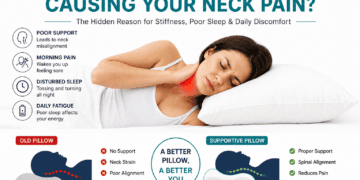
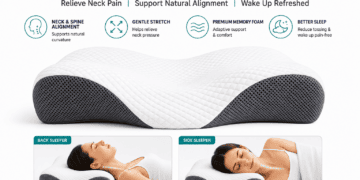
Side sleeping is the most common sleep position for adults globally, and it creates a specific set of sleep mask challenges that most review guides treat as an afterthought. A mask that works perfectly for a back sleeper often fails completely for an active side sleeper, through strap migration, cup edge displacement, or uncomfortable rigid edges being pressed into the face by pillow contact.
This guide exists specifically for side sleepers. Every ranking takes into account lateral pressure behavior, strap stability during movement, seal maintenance under pillow compression, and long-night wear comfort in the side position.
TL;DR
- Side sleeping requires masks that handle lateral compression without losing seal or becoming uncomfortable
- Rigid cup-style masks (Manta, Manta Pro) can be displaced by pillow pressure, breaking the light seal
- Plush or conforming designs perform best for side sleepers
- illo leads for side sleepers due to plush fill that compresses without losing contact
- Alaska Bear silk is the best budget side-sleeping option, with limitations
- Single-strap masks almost universally migrate during active side sleeping
Why Side Sleeping Is a Sleep Mask Design Challenge
When you lie on your side, your face is laterally compressed against a pillow. This creates forces that flat masks and cup-style masks handle very differently:
Flat masks: The fabric compresses against the face along with the pillow, which can actually improve seal completeness under pressure. The problem is strap migration, with lateral compression pulling the mask toward the pillow, the single strap often migrates upward and the mask eventually rides up from its correct position.
Cup-style masks (Manta Pro, contoured foam masks): The rigid cups maintain their three-dimensional shape under lateral force but do so by resisting the compression. This means the cup edge either presses harder into the face (creating discomfort) or the cup shifts position to relieve the force (breaking the seal). For moderate side sleepers this is often manageable; for active side sleepers who press fully against the pillow, this is a consistent performance issue.
Plush fill masks (illo): The fill compresses gently under lateral pressure while maintaining contact with the face. The seal is maintained through soft conforming contact rather than structural rigidity, so compression improves rather than disrupts coverage. The plush fill also prevents the mask from sliding across the face under lateral force.
#1: illo Wearable Pillow Sleep Mask. Best Overall for Side Sleepers
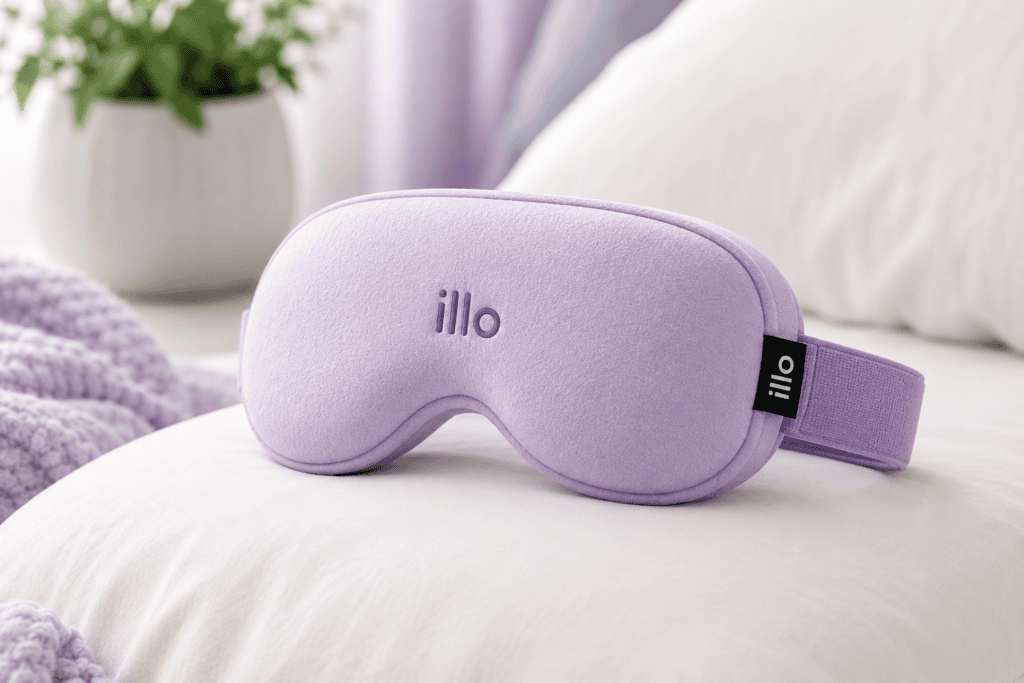
Why it works: illo’s entire construction is plush, soft, and conforming. When lateral pillow pressure is applied, the fill compresses without losing face contact. The light seal is maintained through material compression rather than structural rigidity.
The additional practical advantage for side sleepers: when the plush is pressed against the pillow from the side, it creates a cushioning layer between the face and the pillow surface. This is more comfortable than wearing a flat mask or rigid mask while lying sideways, the plush acts as additional padding rather than a rigid object caught between face and pillow.
The passive sound buffering from the plush fill is particularly relevant for side sleepers, whose uncovered ear is exposed and receives ambient noise directly. Even modest noise buffering on the covered side helps balance the acoustic environment.
Rating for side sleepers: Excellent across all sleeping styles.
Full review: illo Review.
#2: Nidra Deep Rest Contoured Mask. Best Budget Structured Option
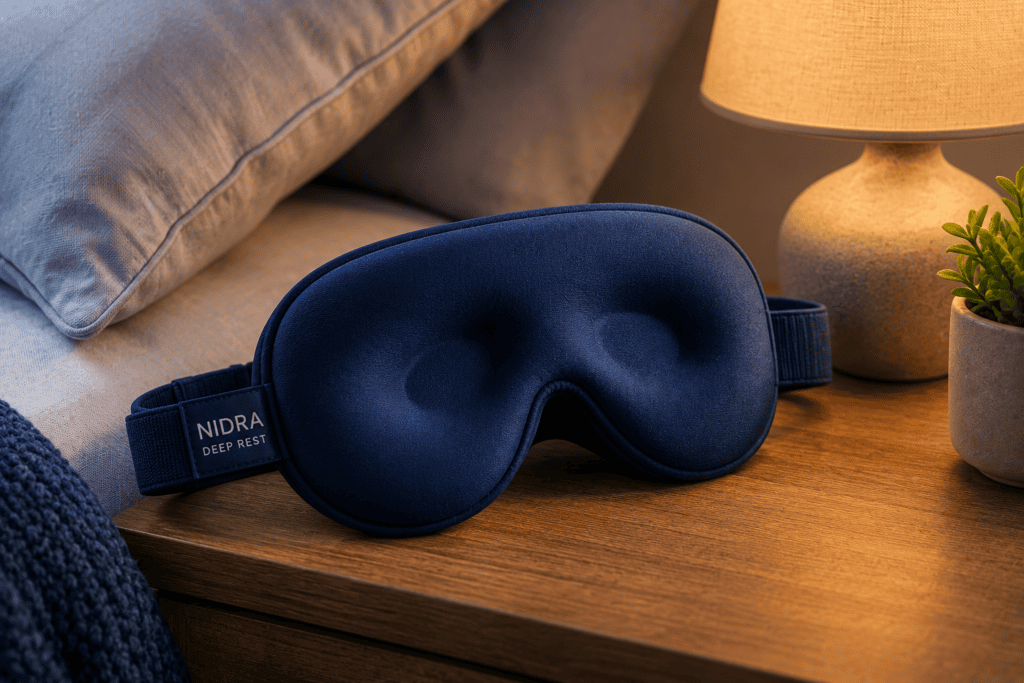
Price: ~$10-15 Design: Contoured shell with dual-buckle strap system Material: Foam with soft fabric cover
The Nidra’s primary advantage for side sleepers is the dual-sliding buckle strap system that maintains position significantly better than single elastic straps. The strap sits lower on the head and uses two adjustment points that resist the upward migration common with single-strap designs.
The contoured design keeps the mask in the correct orbital position without pressing on the eyelids. For moderate side sleepers (those who sleep on their side without aggressively pressing into the pillow), the Nidra performs well.
Limitation: Some nose bridge light leakage for users with smaller faces or flatter nose bridges. Not as conforming as illo for very active side sleeping.
#3: Alaska Bear Mulberry Silk Flat Mask. Best Budget Side Sleeping Option
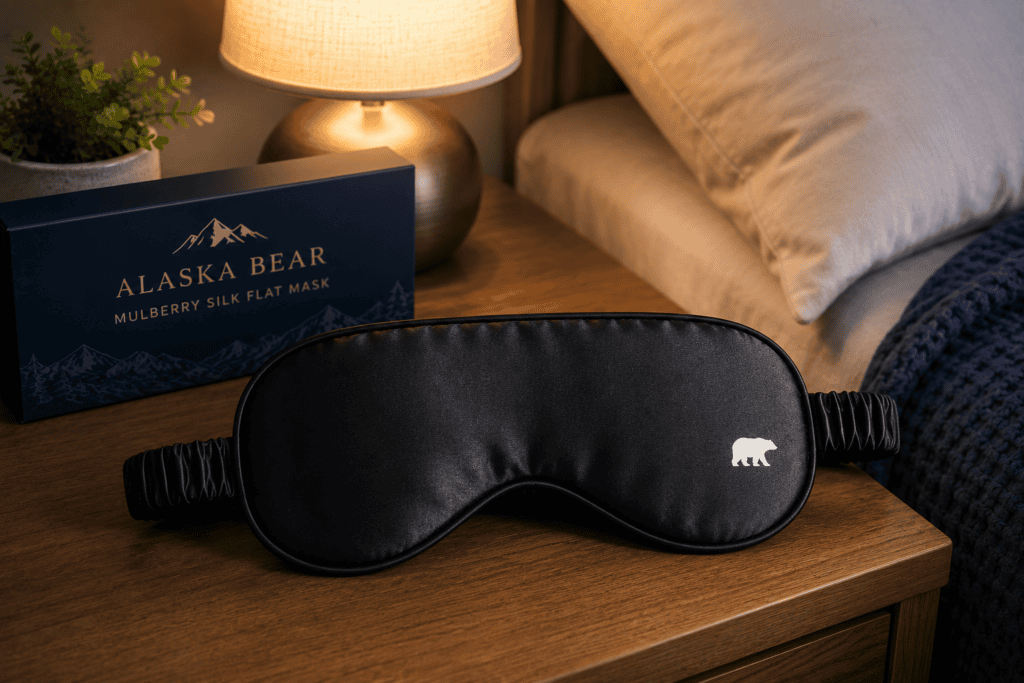
Price: $15-20 Design: Flat single layer, single elastic strap
The Alaska Bear performs better for side sleeping than most flat masks because the single-layer silk conforms to the face under lateral compression rather than maintaining rigid geometry. The silk is smooth enough that it doesn’t create friction-induced displacement when compressed sideways.
The limitation: The single strap migrates. This is the Alaska Bear’s primary side-sleeping weakness. It will eventually drift from its correct position over a full night of active side sleeping, particularly for people who move significantly.
Best for: Mild to moderate side sleepers who don’t move excessively and are willing to reposition the mask if needed during the night.
#4: MZOO 3D Contoured Mask. Best Mid-Range Value
Price: ~$18 Design: 3D injection-molded shell, memory foam edges
The MZOO uses a hard-shell 3D design with memory foam padding on the contact edges. For side sleeping, the memory foam edges conform somewhat under pressure, improving on fully rigid designs. The shell maintains eye clearance.
Limitation: Some reviewers report the hard shell creates a clicking or shifting sensation under heavy lateral pillow pressure. Not as smooth-conforming as illo’s plush fill. Better than Manta Pro for side sleeping but not as good as illo.
#5: Manta Pro. Works With Caveats for Side Sleeping
Price: ~$79
The Manta Pro can work for side sleeping, particularly for people who sleep on their side without pressing heavily into the pillow. The adjustable cups help minimize the displacement issue.
The problem: For active side sleepers who bury their face in the pillow, the rigid cup geometry creates two failure modes: displacement (mask shifts, breaking seal) or discomfort (cup edge presses into face under compression). At $79, failing at side sleeping is a significant value problem.
Masks to Avoid for Side Sleepers
Weighted blanket-style eye masks (Nodpod): Designed for back sleepers. Weight provides soothing pressure for back sleeping but falls off completely during side sleeping.
Standard single-strap foam masks: The cheapest Amazon category of sleep mask. Foam maintains rigid geometry under side pressure (creating discomfort) and single straps migrate freely. Poor side-sleeping performance.
Gel spa masks: Designed for cooling/therapeutic back use. Not appropriate for sleep or side use.
What Every Side Sleeper Should Look For
Strap stability: Dual straps, adjustable buckles, or wrap-style designs that don’t migrate upward.
Lateral compression behavior: How does the mask handle being pressed from the side? Conforming materials outperform rigid ones.
Nose bridge coverage: Flat masks have gap risk at the nose bridge in side position. Plush fills and contoured designs cover this better.
Cushion effect: For comfortable extended side sleeping, the mask should add comfort rather than create a hard object between face and pillow.