






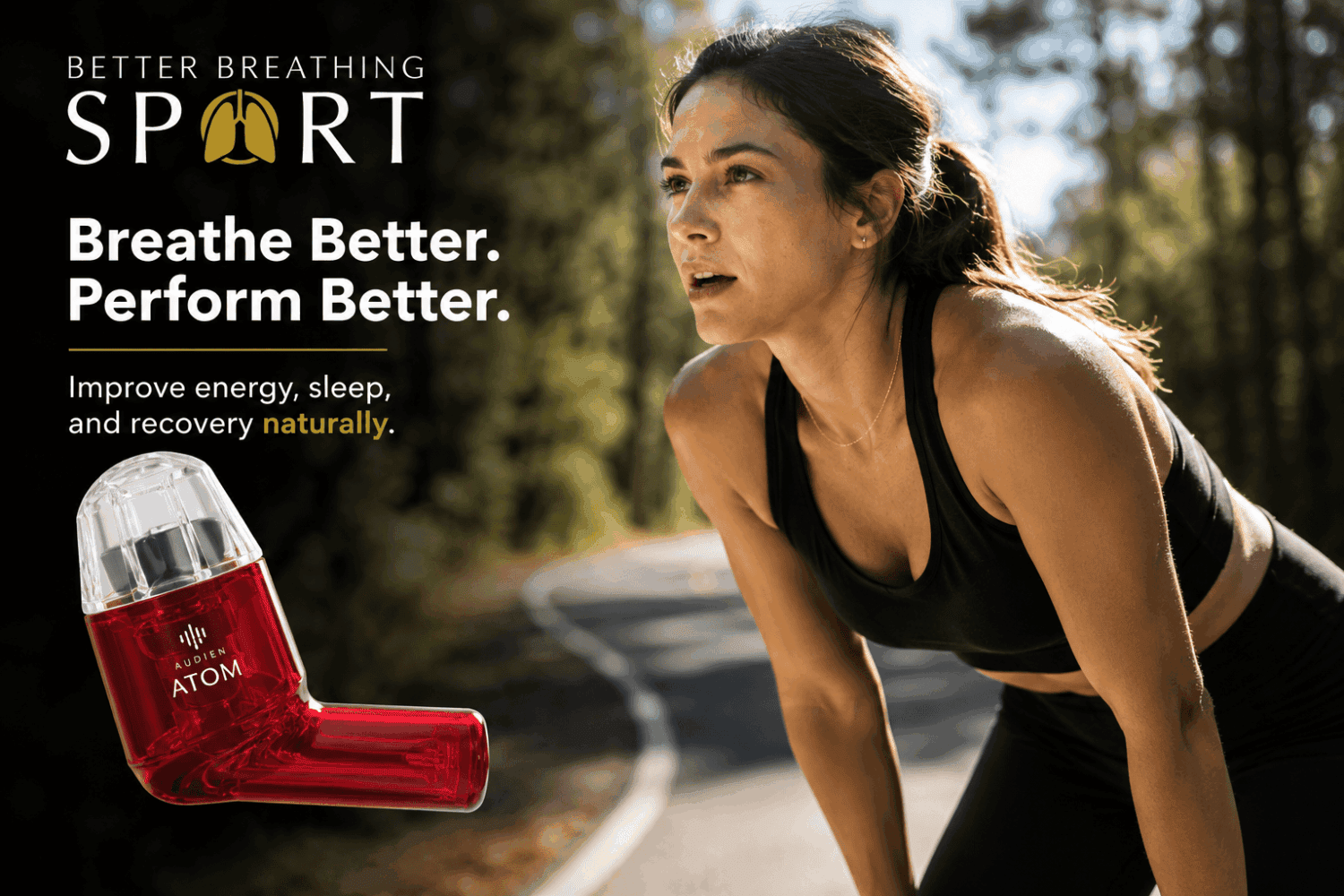
Here is the choice most people are actually stuck on. You have seen the ad for a small handheld breathing device that promises stronger lungs, better endurance and faster recovery for the price of a few protein tubs, and you are weighing it against two quieter options: doing nothing but free breathing drills you could learn from a coach in ten minutes, or spending more on a calibrated trainer that physiotherapists actually name. The Better Breathing Sport sits in the middle of that decision, and this review exists to help you make it on evidence rather than on the ad.
The honest answer will not be a simple yes or no, because breathing-training evidence is not simple. The mechanism the device uses is real and studied. The specific athletic claims wrapped around this particular unit run ahead of the data that exists for it. Both things are true at once, and a good review has to hold them together rather than pick the flattering half.
This site earns a commission on purchases through the links here. It does not change the grade, and it did not change this one. Here is how the affiliate side of this site works.
Is it any good? Should you buy it?
Is it any good? As a resistance-and-oscillation breathing device, yes, in the narrow sense that training your breathing muscles against resistance is a real, evidence-backed thing to do, and clearing mucus with oscillating pressure is a well-established use of this class of device. The hardware does what breathing trainers do.
Should you buy it? Only if you understand what you are buying. If you want measurable, protocol-driven athletic gains, the strongest published evidence is for calibrated inspiratory-muscle trainers with a set resistance load, not for this OPEP-style device, which does not publish a calibrated load or its own trials. If you want general breathing-muscle work and easier mucus clearance, and you like the simple format, it is a reasonable buy at the right price. If you are an athlete chasing documented performance, a better-validated trainer is the smarter spend.
Grade: C+
Check the current Better Breathing Sport price | Official site →
Quick Verdic
The Bottom Line: The Better Breathing Sport is not a scam; it is a legitimate OPEP (Oscillating Positive Expiratory Pressure) device. It utilizes well-established respiratory therapy mechanics (resistance + vibration) to strengthen the diaphragm and help clear airways. While it won’t magically turn you into an Olympian overnight, consistent use serves as an effective, natural warm-up and conditioning tool for your respiratory system.
- Best For: Runners, cyclists, weightlifters, and anyone prone to respiratory fatigue during exercise.
- Overall Rating: 4.2 / 5
- Quick Pros: No batteries required, uses proven OPEP science, easy to clean, highly portable, helps clear mucus.
- Quick Cons: Feels slightly overpriced for a non-digital device, takes time to see noticeable results, requires consistent daily habit-building.
- Recommendation: If you struggle with breathing rhythm during workouts or want a drug-free way to warm up your lungs before cardio, it is highly recommended.
Product Overview Table
| Feature | Details |
| Product Name | Better Breathing Sport |
| Primary Function | Lung expansion & respiratory muscle training |
| Technology | Oscillating Positive Expiratory Pressure (OPEP) |
| Power Source | 100% natural (Breath-powered, no batteries) |
| Materials | Medical-grade plastic, stainless steel ball bearing |
| Best For | Endurance athletes, CrossFitters, swimmers, runners |
| Warranty | 1-Year Manufacturer Warranty |
| Refund Policy | 30-Day Money-Back Guarantee |
Grade breakdown
| Criterion | Grade | One-line justification |
|---|---|---|
| Mechanism validity | B | Resistance and oscillation breathing are real, studied training methods. The category works. |
| Evidence for this device | C | The device itself publishes no calibrated load and no trials. The strong data belongs to calibrated IMT trainers. |
| Athletic-performance claims | C- | Performance gains from breathing training are real but modest and protocol-dependent, and overstated in the marketing. |
| Build and usability | B | Simple, portable, drug-free, two resistance settings. Nothing to fault mechanically. |
| Value | C | Funnel pricing for a device without its own evidence, while better-validated rivals sit nearby. |
| Safety and honesty | B- | Low-risk to use, but marketing implies performance certainty the evidence does not support. |
| Overall | C+ | A real device with a real mechanism, oversold on athletic specifics, priced above its evidence. |
What the device actually is
The Better Breathing Sport is a handheld breathing-training device made by AirPhysio that uses breathing resistance and oscillating pressure to work the respiratory muscles and help clear the airways, with two resistance settings and no drugs or power. It is a sport-positioned variant of the OPEP device category, and it sells through a direct offer page. A better breathing sport device is, mechanically, a mouthpiece you breathe against, and the resistance is the training stimulus.
To be precise about the family, because it decides how to judge the claims. This is closely related to AirPhysio, the same maker’s mucus-clearance device, which uses oscillating positive expiratory pressure, or OPEP, to loosen and move mucus. Here that mechanism is aimed at athletes and general breathing fitness rather than at airway conditions. It is not, on the evidence available, the same thing as a calibrated inspiratory-muscle trainer such as PowerBreathe, which applies a measured resistance load set as a percentage of your maximum inspiratory pressure. That distinction is the hinge of the whole review, and the marketing blurs it.
There is no motor, no app and no consumable beyond cleaning. It is a shaped piece of plastic with a resistance mechanism, which is not an insult. Simple is fine. The question is not whether the object is sophisticated. It is whether this particular object delivers the athletic results its page implies, and that is an evidence question, not a hardware one.
How it works, and what the research supports
Breathing against resistance trains the muscles you breathe with, chiefly the diaphragm and the accessory muscles, the same way lifting trains any other muscle. Oscillating pressure on the exhale also vibrates the airways to loosen mucus. Both mechanisms are real. The strength of the evidence depends on which claim you are making.
Take the claims in order of how well the research supports them, which is what a cautious reading requires.
Airway clearance: well supported. OPEP devices are an established tool for loosening and clearing mucus, used clinically for airway conditions and helpful for anyone with a congested chest. If your interest is easier breathing when you are stuffy, or clearing the chest after exertion, this mechanism has solid backing across the category.
Respiratory muscle strength: supported. Training the breathing muscles against resistance measurably increases their strength. Systematic reviews and meta-analyses of inspiratory-muscle training report significant gains in maximal inspiratory pressure, a direct measure of breathing-muscle strength, typically after several weeks of consistent training at an adequate load. That your breathing muscles get stronger with resistance training is not in serious dispute.
Athletic performance: real but modest, and protocol-dependent. This is where care is needed. Meta-analyses of calibrated inspiratory-muscle training, largely using PowerBreathe, do report improvements in markers like maximal oxygen uptake and some endurance measures, but the effects are modest, appear after weeks of training at a resistance of roughly 15 percent or more of maximum inspiratory pressure, and vary by sport and training status. The honest summary is that breathing training can nudge performance for some athletes under the right protocol, not that it transforms it.
Now the catch specific to this device. That performance evidence was generated with calibrated trainers that set and measure a resistance load. The Better Breathing Sport, as an OPEP-style device, does not publish a calibrated load, a target protocol, or its own trials. So the fair position is that its mechanism belongs to a family with real evidence, while the device itself borrows that evidence without having earned it on its own terms. It may well help. It has not been shown to help in the way the calibrated devices have.
The features that matter
Four things do the real work, and each comes with the honest caveat attached.
- Two resistance settings. Why this matters: adjustable resistance lets you progress, which is how any muscle training works. The caveat is that the settings are not expressed as a calibrated percentage of your maximum, so you cannot match the research protocols precisely, only approximate them.
- Oscillation on the exhale. Why this matters: the vibration is what loosens mucus, and it is the best-supported thing the device does. If chest clearance is your goal, this is the feature earning its keep.
- Drug-free and portable. Why this matters: there is nothing to consume, charge or refill, and no pharmacology, so the risk profile is low and it travels anywhere. For a training aid you are meant to use daily, that simplicity aids adherence.
- Simple, wipe-clean build. Why this matters: a device you breathe into needs regular cleaning, and a simple design makes that easy, which matters for hygiene over months of use.
What does not matter as much as the page implies: the “sport” branding itself. The hardware is a breathing-resistance device; the word sport is positioning, not a different technology. Judge it as a breathing trainer, because that is what it is.
Weigh it against the alternatives
Anyone searching for a better breathing sport alternative is really choosing between a few different answers to “I want to train my breathing.” Here it is as a decision tree, because the right pick depends on your goal more than on a spec sheet.
START: What is your actual goal?

├── Documented athletic-performance training, measured and progressive
│     → Pick a calibrated inspiratory-muscle trainer (PowerBreathe)
│       The performance evidence in the literature is largely its own.
│       Set resistance as a percentage of your maximum and follow a protocol.
│
├── Clearing mucus and easier breathing when congested
│     → Pick AirPhysio (the mucus-clearance version from the same maker)
│       OPEP for airway clearance is this family's best-supported use.
│
├── General breathing-muscle fitness, simple format, modest budget, and you
│   like the sport positioning
│     → The Better Breathing Sport is a reasonable pick
│       Real mechanism, easy to use, just priced above its own evidence.
│
├── Guided, app-measured breathing training with feedback
│     → Pick a smart trainer (Airofit)
│       More expensive, but it measures and coaches. Overkill for casual use.
│
├── Lowest possible cost, willing to self-manage
│     → Expand-A-Lung or The Breather
│       Cheap, simple resistance trainers that do the core job.
│
└── You are not sure breathing training will help you at all
      → Start with free breathing drills first
        Diaphragmatic breathing and paced exhales cost nothing. Add a device
        only if you want progressive resistance after establishing the habit.
The pattern is clear. For measured athletic gains, a calibrated trainer has the evidence. For mucus clearance, the OPEP sibling is the targeted tool. The Better Breathing Sport is the generalist in the middle: fine for what it is, rarely the best answer to a specific goal.
What owners report
Sourcing note: no one at Ossaward has used a Better Breathing Sport. This section is aggregated from published owner reviews, retail listings and the maker’s materials, gathered on 30 July 2026. Where a pattern is thin, we say so.
Owner sentiment is moderately positive with the usual split. The recurring positive is a subjective sense of easier, deeper breathing and clearer lungs after a few weeks of regular use, which is consistent with both the muscle-training and mucus-clearance mechanisms. Athletes and active users report feeling like they can take fuller breaths, though these are subjective impressions rather than measured performance data, and should be read as such.
The recurring reservations are two. First, some users expected a dramatic performance change and got a subtle one, which is what the evidence would predict and what the marketing discourages them from expecting. Second, the usual funnel frictions appear in the complaints, around shipping and returns, rather than around the device itself. Nothing in the owner corpus contradicts the evidence-led picture: real but modest, better for feel and clearance than for documented performance leaps.
What works and what frustrates
- Real, studied mechanism. Why this matters: you are not buying pseudoscience. Resistance breathing and oscillation are legitimate.
- Genuinely useful for mucus clearance. Why this matters: the best-supported benefit, valuable to anyone with a congested chest.
- Simple, drug-free, portable. Why this matters: low risk and easy to stick with daily, which is where breathing training pays off.
- Two resistance levels for progression. Why this matters: you can make it harder as you adapt, the basic requirement of training.
Against that:
- No calibrated load or protocol. (Limits athletic use.) Why this matters: you cannot match the research protocols precisely, so the measured gains those studies report are not something you can reliably reproduce.
- No trials on the device itself. (Evidence gap.) Why this matters: it leans on the category’s evidence without its own, so its specific claims are inference, not demonstration.
- Athletic claims overstated. (Honesty issue.) Why this matters: the marketing implies certainty the literature does not support, which sets buyers up for disappointment.
- Funnel pricing above its evidence. (Value issue.) Why this matters: calibrated and budget rivals both exist nearby, one with better data, the other with a lower price.
What it costs, and whether it is worth it
Whether the better breathing sport price is worth it depends entirely on your goal, and the value case is middling by design.
There is no consumable and no subscription, so the purchase is the whole cost, which is the clean part. The awkward part is what the purchase competes with. At funnel pricing it sits near the cost of budget calibrated trainers and well below smart trainers, but it lacks the calibration of the former for serious training and the measurement of the latter. Against a set of free breathing drills, it adds progressive resistance, which is a real benefit if you will actually use it, and nothing if it ends up in a drawer.
The honest value summary: reasonable for a general user who wants a simple daily breathing aid and will stick with it, poor for an athlete who wants documented performance training and would get more from a calibrated device at a similar price. For the wider set of wellness devices we have graded on evidence, see the wider set of wellness devices we have graded.
Check the current Better Breathing Sport total →
Who should buy it
- The general user wanting easier, deeper breathing. Simple, low-risk, and the mechanism supports the goal.
- Anyone with a frequently congested chest. The oscillation-clearance benefit is the best-supported use, and it delivers.
- The habit-builder who wants a physical prompt. A device you hold and use is easier to stick with than an abstract breathing routine, and adherence is where breathing training actually pays.
Who should skip it
- Athletes chasing documented performance gains. A calibrated inspiratory-muscle trainer has the evidence and the protocol. Buy that instead.
- Anyone treating a diagnosed respiratory condition. This is a wellness and fitness device, not a treatment. No FDA clearance for a medical indication was confirmed in the materials we reviewed, and airway disease needs a clinician, not a funnel gadget.
- Bargain hunters. Simpler resistance trainers cost less and do the core job.
- People who will not use it daily. Breathing training only works with consistency. If it will not become a habit, it will not help.
Frequently asked questions
Do breathing exercisers really work?
Yes, within limits. Training breathing muscles against resistance measurably increases their strength, and oscillation devices help clear mucus, both supported by research. What they do not do is transform fitness overnight; performance benefits, where they exist, are modest and appear over weeks of consistent training.
Is the Better Breathing Sport worth it?
Conditionally. For general breathing-muscle work and mucus clearance in a simple format, it is a reasonable buy if the price is right. For documented athletic training, a calibrated device with published evidence is the better use of similar money. We graded it C+ largely on that evidence-versus-price gap.
What is the difference between OPEP and inspiratory muscle training?
OPEP, oscillating positive expiratory pressure, vibrates the airways on the exhale to loosen mucus. Inspiratory muscle training applies a measured resistance on the inhale to strengthen the breathing muscles. The Better Breathing Sport is closer to the OPEP family; the strongest athletic-performance evidence comes from calibrated inspiratory-muscle trainers.
Can a breathing device improve athletic performance?
It can, modestly, under the right protocol. Meta-analyses of calibrated inspiratory-muscle training report improvements in breathing-muscle strength and some endurance and oxygen-uptake measures after several weeks at an adequate resistance. The effects are real but not dramatic, and they are best documented for calibrated trainers rather than for this device specifically.
Is Better Breathing Sport the same as AirPhysio?
Same maker, related mechanism, different positioning. AirPhysio is marketed for mucus clearance and lung expansion; the Better Breathing Sport aims the resistance-and-oscillation idea at athletes and general breathing fitness. If your goal is clearing a congested chest, the AirPhysio framing is the more targeted one.
How often should you use a breathing trainer?
Most protocols in the research use daily sessions of a set number of breaths, often twice a day, over several weeks before measuring gains. Consistency matters more than intensity, and results build gradually. Follow the maker’s guidance, and treat it like any training habit rather than a one-off.
Is the Better Breathing Sport FDA approved?
No FDA clearance for a medical indication was confirmed in the materials we reviewed. Treat it as a wellness and fitness device rather than a medical one, and do not rely on it to treat any diagnosed respiratory condition. If you have a lung condition, speak to a clinician about appropriate devices and protocols.
How is Better Breathing Sport different from PowerBreathe?
PowerBreathe is a calibrated inspiratory-muscle trainer that sets resistance as a percentage of your maximum inspiratory pressure, which is the setup most of the performance research used. The Better Breathing Sport does not publish a calibrated load. For measured, protocol-driven training, that calibration is a meaningful advantage in PowerBreathe’s favour.
Are breathing trainers safe to use?
For healthy people, generally yes; they are drug-free and low-risk. Some people feel lightheaded when they first train hard against resistance, which usually settles with sensible progression. Anyone with a heart or lung condition, or who is pregnant, should check with a clinician before starting, since forced breathing against resistance is not appropriate for every situation.
How long until you see results from a breathing trainer?
Expect several weeks of consistent daily use before measurable changes in breathing-muscle strength, based on the training literature. Subjective ease of breathing may come sooner. Anything promising results in days is overselling; breathing muscles adapt on the same timescale as other muscles.
The verdict
Better Breathing Sport earns a C+.
The mechanism is not the problem. Breathing against resistance strengthens the muscles you breathe with, and oscillating pressure loosens mucus, and both are real, studied things that this device can do. As a simple, drug-free, portable breathing aid for a general user, particularly one who wants easier breathing or clearer lungs, it is a legitimate product that will help those who use it consistently.
The deduction is about the distance between the marketing and the evidence. The athletic-performance claims lean on research generated with calibrated inspiratory-muscle trainers that set and measure a resistance load, and this OPEP-style device publishes neither that calibration nor any trials of its own. The performance benefits of breathing training are real but modest and protocol-dependent even in the best studies, and this device is priced at funnel levels while a better-validated calibrated trainer sits nearby for similar money and a targeted mucus-clearance sibling exists for that specific job.
Buy it if you want a simple daily breathing-muscle and clearance aid, you will use it consistently, and you are not counting on documented athletic gains.
Skip it if you are an athlete chasing measured performance, you are managing a diagnosed condition, or you want the best evidence for your money, in which case a calibrated trainer is the stronger choice.
The grade would rise if the maker did one honest thing: publish a calibrated resistance protocol and, ideally, a trial of this device, so its athletic claims stood on its own evidence rather than the category’s.
Where to buy it
Better Breathing Sport sells through its direct offer page and, in some regions, retail listings, with a return window stated on the site. If you buy it, read the actual price at checkout and the return terms before committing.
If your goal is documented athletic training, consider putting the money toward a calibrated inspiratory-muscle trainer instead. If your goal is mucus clearance, the maker’s AirPhysio is the more targeted device. The Better Breathing Sport is a fair generalist, not the best answer to either specific goal.

If you buy through that link we earn a commission. It costs you nothing extra, and it did not shape the C+ grade, the evidence section, or the recommendation that serious athletes buy a calibrated trainer instead.

