



Two beliefs get in the way of judging a device like this fairly, and they pull in opposite directions. The first is that any handheld gadget promising pain relief must be a gimmick, a placebo in a plastic case. The second, which the marketing prefers, is that it will fix your pain. Both are wrong. The Paingone Plus uses TENS, transcutaneous electrical nerve stimulation, which is a real, regulated, decades-old method that a lot of physiotherapy clinics use, and it does not cure anything. It can, for some people, temporarily turn the volume down on certain kinds of pain. That is the honest space this product lives in, and it is neither snake oil nor a solution.
This review starts from that corrected picture and works forward: what a TENS pen genuinely does, what the evidence supports, how relief tends to play out over time in owner reports, and whether a single-point pen at this price is smart money when a full pad-based TENS unit costs less.
This site earns a commission on purchases through the links here. It does not change the rating, and it did not change this one. Here is how the affiliate side of this site works.
The Quick Read
- ✅ TENS is a real, regulated modality. Electrical nerve stimulation can genuinely dull localised pain for some people, temporarily. This is not a placebo gadget.
- ✅ The pen format is convenient. No pads, no wires, one AAA battery, press it to the spot and click. For quick, targeted relief it is genuinely easy.
- ⚠️ It treats the symptom, not the cause. Relief is temporary and does not address whatever is producing the pain. Manage expectations accordingly.
- ⚠️ A pad-based TENS unit does more for less. For roughly half the price you get larger coverage, multiple modes and hands-free pads.
- ❌ Not for everyone. Pacemakers, pregnancy, epilepsy and several other situations are contraindications. This is a device to clear with a clinician if any apply.
Rating: ★★★☆☆ (3 out of 5). Verdict: a convenient, legitimate spot-pain tool, priced above a fuller TENS machine that suits most people better.
Check the current Paingone Plus price | Official site →
What you are actually buying
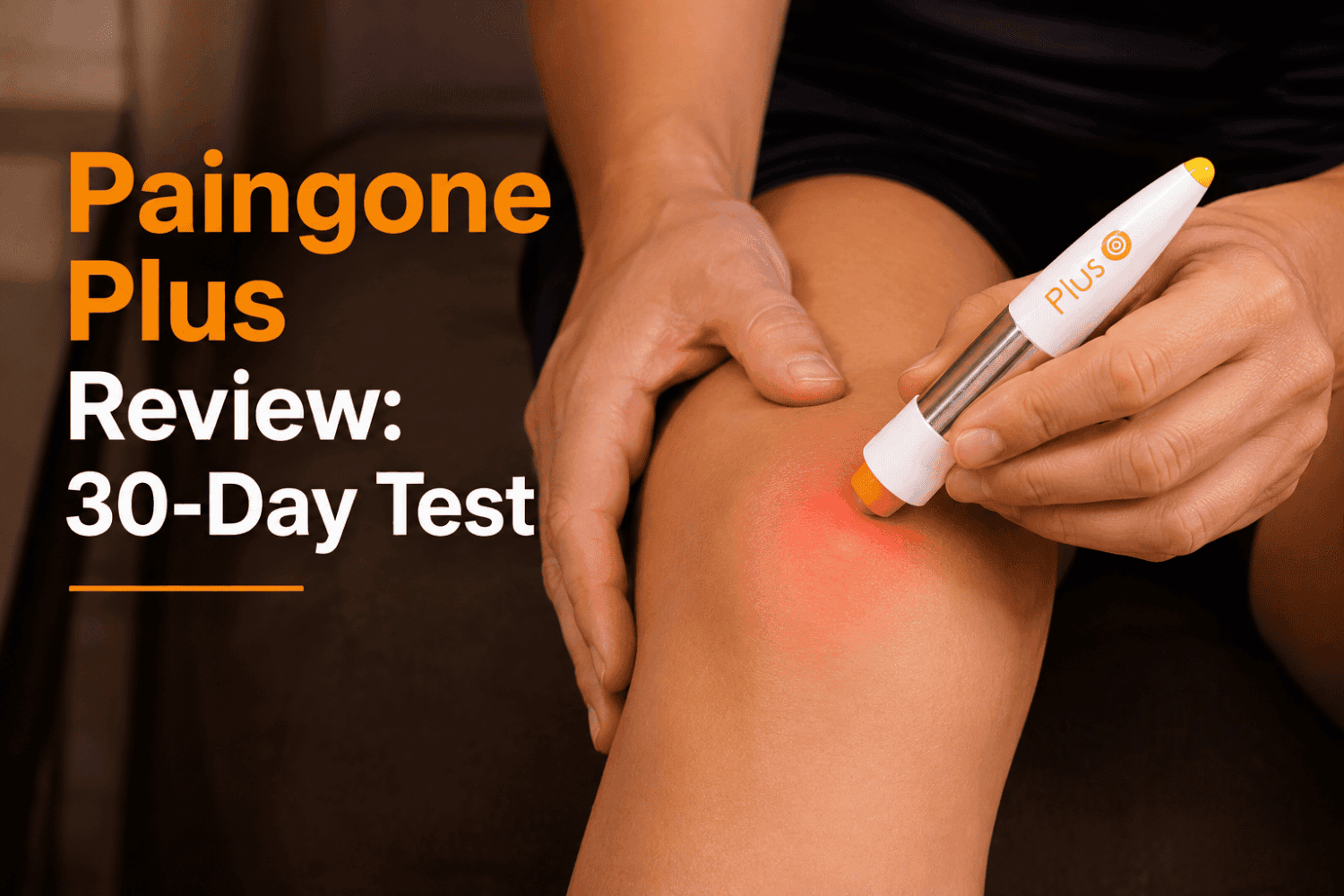
The Paingone Plus is a handheld single-point TENS pen: a pen-shaped device you press against a painful spot and click to deliver small electrical pulses through the skin, aiming to reduce the sensation of pain in that area. It uses no pads and no wires, runs on a single AAA battery, and sells for around $70 through a direct offer page. A paingone plus tens pen is, mechanically, a self-contained nerve stimulator you aim by hand rather than by sticking electrodes on.
It belongs to the same family as the pad-based TENS machines physiotherapists use, with one design difference that defines it. Instead of adhesive electrodes wired to a controller, the current passes through a single tip you hold against the pain point, so you treat one small spot at a time and hold the device there. That makes it fast and fiddle-free for a knee or a knuckle, and it makes it awkward for a large area or a spot you cannot easily reach, like the middle of your own back. It is a drug free pain relief device, which is its genuine appeal for people who would rather not reach for another painkiller.
How it works, and what the evidence says
TENS works on what physiologists call the gate-control theory of pain: stimulating the nerves in an area with a mild electrical current can interfere with the pain signals travelling to the brain, effectively closing a gate so you feel less pain while the stimulation is on. The relief is real for many users and it is temporary and symptomatic. It does not heal tissue or fix the underlying cause. That is the mechanism, stated honestly.
On the strength of the evidence, a cautious summary is fair. TENS is an established, low-risk modality, and many patients report meaningful temporary relief, particularly for localized musculoskeletal and joint pain. At the same time, formal reviews of the research often rate the evidence as mixed or low-quality for chronic pain, meaning the studies do not consistently prove a large effect even though individual users frequently feel one. The honest position is that TENS can help, the help is temporary, and it varies a lot from person to person and pain to pain. Anyone selling it as a certainty is overstating what the literature supports.
Two practical implications follow. First, it is best judged as symptom management you use alongside whatever addresses the cause, not as a treatment. Second, because response varies so much, the return window matters more than usual, since trying it is the only way to know if you are one of the people it helps.
What relief looks like over time
Because the honest question is not just “does it work once” but “does it keep helping,” here is how owner reports tend to play out across the arc of ownership. This timeline is assembled from aggregated reviews, not from any hands-on use.
The first use. The common first impression is a distinct tingling or prickling at the tip, ramping up as you hold the button, and for responders a noticeable easing of the local ache within a few minutes. People treating hand, knee and elbow pain most often report this quick, localized effect. A minority find the sensation too sharp, especially on sensitive skin, which is a real and immediate reason some return it.
The first weeks. For those it suits, a pattern settles: a short session on the sore spot gives a window of reduced pain that lasts a while after, used as needed through the day. This is the sweet spot the product is built for and where satisfied owners live. Others in this window conclude it does little for their particular pain, which the variable evidence would predict, and this is exactly when the return window is doing its job.
The longer term. Over months, two things surface in the corpus. The positive is durability of the benefit for responders, who keep it in a drawer and reach for it during flare-ups. The negative is a thread of reliability complaints: a share of owners report the device weakening or stopping within the first month or two, which for a $70 device is a real deduction and a reason the guarantee terms matter. Battery life itself is a non-issue, with the single AAA rated for a large number of sessions.
The overall shape is consistent with the evidence: quick, temporary, localized relief for a meaningful subset, no lasting cure for anyone, and a minority let down by either the sensation or a hardware fault.
The features that shape the experience
- Single-point tip, no pads or wires. Why this matters: it is the fastest possible way to treat a specific spot, with nothing to stick on or plug in, which is the product’s real convenience edge over a pad machine.
- Handheld, hold-to-treat design. Why this matters: great for a knee or knuckle, poor for a large area or an unreachable spot, so your pain’s location largely decides whether the format suits you.
- Adjustable intensity by click. Why this matters: you can ramp the stimulation to a tolerable level, which is how TENS is meant to be dosed, and it lets sensitive users start gentle.
- Single AAA battery, many uses. Why this matters: no charging, no proprietary power, and the running cost is a battery every several hundred sessions, which is negligible.
How it compares
Anyone weighing a paingone plus alternative is really choosing between a convenient single-point pen and a fuller, cheaper pad-based machine, plus a few non-electrical options.
| Option | Typical price | Coverage | Hands-free | Modes | Best for |
|---|---|---|---|---|---|
| Paingone Plus | ~$70 | Single point | No (hold it) | Intensity only | Quick spot relief, no setup |
| TENS 7000 (pad unit) | ~$30 | Large, multi-pad | Yes | Multiple modes | Broad or hard-to-reach areas, value |
| iReliev TENS | ~$40-60 | Large, multi-pad | Yes | Many modes | Feature-rich home use |
| Omron TENS | ~$40 | Pad-based | Yes | Several | Brand-trusted pad unit |
| Acupuncture pen | ~$15-25 | Single point | No | Basic | Cheapest pen-style option |
| Heat / topicals | ~$5-15 | Area | Yes | n/a | Non-electrical adjunct |
The comparison is not flattering on value. A pad-based TENS machine like the TENS 7000 costs roughly half, sticks pads where you need them so you are not holding a pen, covers a larger area, and offers multiple stimulation modes. What it gives up is the pen’s grab-and-go convenience for a single spot and its lack of setup. The Paingone Plus is paying a premium for that convenience, and whether it is worth it depends on how much you value not dealing with pads.
Paingone Plus vs. Paingone Original
The original Paingone pen uses piezoelectric crystals (like the spark in a barbecue lighter). You have to physically click the button down with your thumb 30 to 40 times per treatment. If you have severe arthritis in your hands, the original model is incredibly difficult to use. The Paingone Plus solves this entirely by using a battery to automate the pulses. If you are choosing between the two, always upgrade to the Plus.
Paingone Plus vs. Traditional TENS Machines
Traditional TENS units use wires and pads. They offer customizable intensity levels, massage patterns, and cover massive surface areas (like the entire lower back). They are vastly superior for deep, chronic pain. However, you can’t use them while walking down the street. The Paingone Plus wins purely on speed and convenience.
Paingone Plus vs. Paingone Easy
The Paingone Easy is a wireless, wearable TENS pad. It sticks to your back or shoulder and runs for 15 minutes. If your pain is strictly in a large area (like the lower back), the Paingone Easy is a better choice than the Plus pen.
What works and what frustrates
- Legitimate, drug-free mechanism. Why this matters: you are buying a real modality, not a placebo, which is more than many funnel gadgets can claim.
- Fast, targeted, no setup. Why this matters: for a single sore spot it is genuinely the easiest option, with nothing to stick on.
- Adjustable and simple. Why this matters: easy to dose to a comfortable level, which suits older users and first-timers.
- Negligible running cost. Why this matters: one cheap battery lasts a long time; no consumable pads to replace.
Against that:
- Temporary and symptomatic. (Manage expectations.) Why this matters: it does not treat the cause, so it is a comfort tool, not a fix, and buying it as a cure leads to disappointment.
- Priced above a fuller TENS machine. (Value issue.) Why this matters: a pad unit does more for less, so the pen’s premium buys convenience, not capability.
- Single point, hold-to-use. (Limits some pains.) Why this matters: poor for large or unreachable areas, where pads win easily.
- Reliability complaints. (Real deduction.) Why this matters: a share of owners report early failure, so the guarantee terms are part of the value.
- Not suitable for everyone. (Safety.) Why this matters: contraindications are real and must be respected, covered below.
What it costs, and whether it is worth it
Whether the paingone plus price is worth it comes down to convenience versus capability. There is no consumable beyond an occasional battery and no subscription, so the purchase is essentially the whole cost. The awkward comparison is that the same money, or less, buys a pad-based TENS machine that covers more, offers more modes and frees your hands. The pen justifies its premium only if the single-point, no-setup convenience genuinely matters to you and your pain is localized and reachable.
The value verdict is middling by design: reasonable for someone who wants instant spot relief with zero fuss and will actually use it, poor for someone who would be better served by a cheaper, more capable pad unit. For the wider set of wellness devices we have graded on evidence and value, see the wider set of wellness devices we have graded.
Check The Current Paingone Plus Total →
Who should buy it, and who should skip it
Buy it if you have localized, reachable pain like a knee, hand or elbow, you value grab-and-go relief with no pads to stick on, you want a drug-free option for flare-ups, and you are cleared to use TENS.
Skip it if your pain is widespread or in a spot you cannot reach, if value matters more than convenience, in which case a pad-based TENS machine does more for less, or if any contraindication applies to you. And skip it as a cure, because it is not one; it is temporary relief you use alongside whatever addresses the cause.
Safety first: who should not use it
TENS is low-risk for most healthy adults, but it is not for everyone, and this matters more than any feature. Do not use it if you have a pacemaker or other implanted electronic device, if you are pregnant, or if you have epilepsy, and do not place it over the front of the neck, the eyes, broken or numb skin, or an area of undiagnosed pain or a known cancer. If you have a heart condition, or any doubt at all, clear it with a clinician first. None of this is a knock on the product; it is how TENS works for everyone, and a responsible review states it plainly. No claim of FDA clearance for this specific device was verified in the materials we reviewed; treat it as an over-the-counter TENS device and its output as temporary symptomatic relief.
Frequently asked questions
Does the Paingone Plus really work?
For some people, temporarily, yes. TENS can genuinely dull localized pain by interfering with pain signals, and many owners report a useful window of relief on a knee, hand or elbow. It works better for some pains and people than others, the effect is temporary, and it does not treat the cause. Read it as symptom relief, not a fix.
Is the Paingone Plus worth it?
Worth it for convenience, less so on value. If you want instant, no-setup relief for a specific spot and you are cleared to use TENS, it is a reasonable buy. If value is the priority, a pad-based TENS machine costs about half and does more, so the pen’s premium only makes sense if grab-and-go simplicity matters to you.
How does a TENS pen work?
It sends mild electrical pulses through the skin to stimulate the nerves in a painful area. On the gate-control theory of pain, that stimulation interferes with pain signals travelling to the brain, so you feel less pain while it is applied. The relief is temporary and symptomatic, which is how all TENS works, pen or pad.
Is the Paingone Plus a scam?
No. TENS is a real, regulated modality, not a gimmick. The fair criticisms are that it is temporary, that the evidence is honest-modest rather than dramatic, and that it costs more than a fuller pad-based unit. Those are value and expectation issues, not fraud. It does what a single-point TENS device does.
Can TENS cure pain?
No. TENS relieves pain temporarily; it does not cure the underlying cause. It is a symptom-management tool, best used alongside whatever addresses the actual problem, whether that is treatment, movement, or time. Anyone selling any TENS device as a cure is overstating it.
How often can you use the Paingone Plus?
Typically several short sessions a day as needed, following the maker’s guidance. TENS is generally safe to use repeatedly for temporary relief, but sessions are short and targeted rather than constant. If you find you need it constantly, that is a sign to have the underlying pain assessed rather than to keep medicating the symptom.
Is the Paingone Plus safe to use?
For most healthy adults, yes, with important exceptions. Do not use it with a pacemaker or implanted device, during pregnancy, with epilepsy, or over the neck, eyes, broken skin or undiagnosed pain. Some users find the sensation sharp on sensitive skin. If any condition applies or you are unsure, check with a clinician before using it.
How is the Paingone Plus different from a TENS machine?
It is a single-point pen you hold, where a TENS machine uses adhesive pads and wires. The pen is faster for one small spot and needs no setup; the pad machine covers larger and hard-to-reach areas, works hands-free, and usually offers more modes for less money. The right choice depends on your pain’s size and location and how much you value convenience.
Where on the body can you use the Paingone Plus?
On localized, reachable muscle and joint pain, avoiding the restricted areas. Knees, hands, elbows, shoulders and accessible parts of the back are common uses. Avoid the front of the neck, the eyes, the chest if you have a heart device, broken skin, and any undiagnosed or off-limits area. Reachability is a practical limit for a hold-to-use pen.
Does TENS work for arthritis?
It can provide temporary relief for arthritis joint pain for some people, but the evidence is mixed. Many arthritis sufferers report useful short-term easing of joint pain from TENS, while formal reviews are cautious about the consistency and size of the effect. It is a reasonable drug-free option to try for flare-ups, not a treatment for the arthritis itself, and worth discussing with your clinician.
The verdict
Paingone Plus earns three stars out of five: a convenient, legitimate spot-pain tool, priced above a fuller TENS machine that suits most people better.
Start with what is right about it. TENS is a real, regulated, low-risk way to temporarily reduce localized pain, and the pen format delivers it with genuine convenience: no pads, no wires, one cheap battery, press and click. For someone with a reachable, localized ache who wants drug-free relief without setup, it does a real job, and responders keep it for flare-ups for good reason. This is not a placebo gadget.
The reasons it lands at three rather than higher are value, scope and reliability. A pad-based TENS machine costs roughly half, covers more, works hands-free and offers more modes, so the pen is paying a premium for convenience rather than capability. The relief is temporary and symptomatic, which is honest to say and easy for marketing to blur. And a real thread of owner reports about early failure means the guarantee is part of what you are buying. None of that makes it a bad product. It makes it a fairly priced convenience at best and an overpriced single-tasker at worst, depending on how much you value not dealing with pads.
Buy it if your pain is localized and reachable, you want instant no-setup relief, and you are cleared to use TENS.
Skip it if value matters more than convenience, your pain is widespread or unreachable, or a contraindication applies, in which case a pad-based unit or a conversation with a clinician is the better step.
Where to buy it
Paingone Plus sells through its direct offer page, with a money-back window stated on the site. If you buy it, read the actual price and the guarantee terms at checkout, and given the variable response to TENS and the reliability reports, treat that return window as the real test. If value is your priority, a pad-based TENS machine is the more capable spend; if convenience is, the pen is the reason to pay the premium.
Check the current Paingone Plus price →
If you buy through that link we earn a commission. It costs you nothing extra, and it did not shape the three-star rating, the safety cautions, or the recommendation that value-focused buyers consider a pad-based TENS unit instead.

