





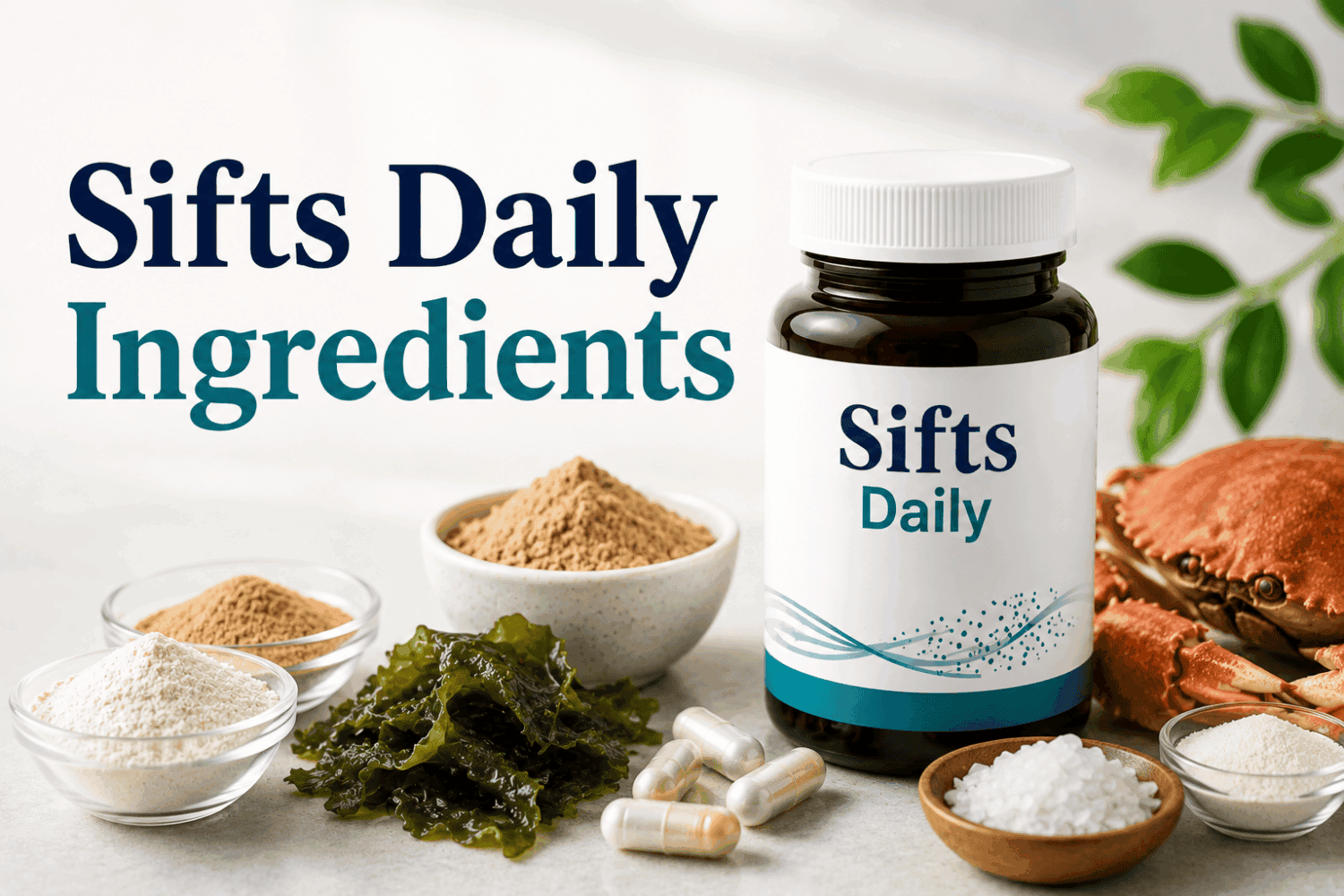
Sifts Daily Ingredients: The most important due diligence any supplement buyer can do is understand exactly what is in the product, why each ingredient is there, what the research shows, and, equally important, what the research doesn’t show. Marketing copy simplifies. This ingredient analysis does not.
Sifts Daily contains five active ingredients: chitosan, apple pectin, baobab fruit extract, slippery elm, and magnesium glycinate. Each serves a distinct function in the formulation’s three-stage Binder-Barrier-Protect framework. Understanding each one helps you evaluate whether the formulation is coherently designed, whether the research supports the claims, and whether there are any individual ingredient concerns relevant to your situation.
TL;DR
- Chitosan: Primary microplastic binder with 4 peer-reviewed studies (2025-2026); contains shellfish allergen; medium-MW at ≥85% deacetylation is the correct specification
- Apple Pectin: High-DE soluble fiber for gel-formation (physical particle trapping) and prebiotic gut support; well-evidenced for general gut health
- Baobab Fruit Extract: Rich polyphenol and antioxidant source relevant to oxidative stress from plastic-associated chemicals; supports gut microbiome diversity
- Slippery Elm: Mucilaginous bark extract that coats and soothes the gut lining; WHO-acknowledged traditional use; limited specific microplastic research
- Magnesium Glycinate: Provides glycine which supports tight-junction proteins in the gut epithelium; directly relevant to reducing gut permeability to microplastics
The Formulation Framework: Binder, Buffer, Protect
Before covering each ingredient individually, the overall formulation logic helps situate each component in its intended role.
Binder (Chitosan): Primary mechanism. Electrostatically attracts and binds negatively charged microplastic particles in the gut, forming complexes that exit in feces rather than remaining free to interact with the gut wall.
Buffer (Apple Pectin, Baobab): Secondary mechanism. Apple pectin creates gel-forming viscosity that physically traps particles in the fecal matrix and extends the contact time between chitosan and particles. Baobab provides antioxidant protection against oxidative stress from plastic-associated chemicals (BPA, PFAS) that hitchhike on microplastic surfaces.
Protect (Slippery Elm, Magnesium Glycinate): Gut barrier support. Slippery elm forms a mucosal coating that physically reduces particle-wall contact. Magnesium glycinate provides glycine for tight-junction protein support, strengthening the barrier through which nanoplastics could cross from the gut lumen into systemic circulation.
This three-stage framework is coherently designed. Each ingredient serves a mechanistically distinct function. The multi-ingredient approach is more comprehensive than a single chitosan capsule because it addresses not only binding but also physical trapping, oxidative protection, and gut barrier integrity.
Ingredient 1: Chitosan
What It Is
Chitosan is a dietary fiber produced by the chemical deacetylation of chitin, the structural polymer found in crustacean shells (shrimp, crab, lobster) and fungal cell walls. Commercial chitosan is predominantly produced from crustacean sources in the seafood processing industry.
Sifts Daily specifies medium-molecular-weight chitosan with at least 85% degree of deacetylation (DD). These two parameters are critical quality specifications:
Degree of deacetylation (DD, ≥85%): Determines the density of free amino groups available for protonation in the gut. Higher DD means more amino groups, which means more positive charge at digestive pH, which means stronger electrostatic attraction to negatively charged microplastic surfaces. The 2026 Journal of Materials Chemistry B study established that chitosan must exceed approximately 90 cP intrinsic viscosity, which corresponds to appropriate molecular weight at ≥85% DD, to achieve effective microplastic entrapment networks.
Medium molecular weight: Affects how chitosan behaves in solution. Low-MW chitosan remains fully dissolved and doesn’t form networks. Very high-MW chitosan forms excessively dense gels that may impair digestive function. Medium-MW chitosan (typically 50 to 300 kDa) forms the entangled polymer networks that achieve the particle entrapment characterized in the materials chemistry research.
The Research (Summarized)
Four peer-reviewed studies from 2025 to 2026 provide the evidence base:
- Human crossover study (Foods, 2025, PMID: 40646942): 45% more microplastic particles in stool within 12 hours of chitosan dose
- Animal head-to-head study (Sci Rep, 2025, PMID: 40268980): Chitosan reduced GI microplastic retention from 12.1% to 6.1%, outperforming three other fiber types
- Human blood study (Journal of Xenobiotics, 2026): 26.3% reduction in blood microplastic concentration after 15 days of daily supplementation
- In vitro materials study (J Mater Chem B, 2026): Up to 87% topological entrapment of HDPE, PVC, PET under simulated gastric conditions
Additional Documented Properties
Beyond microplastic binding, chitosan has a well-documented research history:
Cholesterol reduction: Chitosan binds bile acids and lipids in the small intestine, reducing cholesterol reabsorption. Multiple meta-analyses support a modest cholesterol-lowering effect at doses of 1.2 to 3g per day. This is the same lipid-binding mechanism that creates the fat-soluble medication interaction concern (see the side effects discussion).
Wound healing: Chitosan is used in approved medical wound dressings due to its hemostatic properties and ability to support tissue healing. This is a topical application unrelated to oral supplementation.
Antimicrobial properties: In vitro research shows chitosan has antimicrobial activity against certain bacteria and fungi. The clinical significance of this for the gut microbiome at supplement doses is not established.
Safety and Limitations
Shellfish allergen: Hard contraindication for shellfish-allergic individuals. Non-negotiable.
Fat-soluble compound interaction: Space at least two hours from fat-soluble vitamins (A, D, E, K) and lipid-soluble medications.
Not vegetarian/vegan: Produced from crustacean shells.
Molecular weight specification matters: Unspecified “chitosan” supplements may use low-MW or low-deacetylation chitosan that performs differently. Sifts Daily’s specification of medium-MW and ≥85% DD is the relevant quality marker.
Ingredient 2: Apple Pectin
What It Is
Pectin is a structural polysaccharide found in plant cell walls, particularly in the skin and core of apples and citrus fruits. Apple pectin is extracted from apple pomace (the solid material remaining after apple juice pressing) through hot water extraction and precipitation.
“High-DE” (high degree of esterification) pectin forms gels in the presence of sugar and acid, the basis for its traditional use as a jam and jelly thickener. In the gut, high-DE pectin gels in the presence of the ionic conditions of intestinal fluid, creating increased viscosity.
How It Supports the Formulation
Physical particle trapping: The gel-forming behavior of apple pectin in the gut creates a more viscous intestinal environment that may physically entrap microplastic particles in the mucilaginous matrix, keeping them associated with the fecal mass and reducing their freedom to interact with the intestinal epithelium independently of chitosan’s electrostatic binding.
Transit modulation: Pectin gels slow the rate at which contents pass through the upper gastrointestinal tract. This controlled slowing allows more time for chitosan-microplastic complex formation and more complete association of particles with the fecal matrix before reaching the colon.
Prebiotic function: Apple pectin is highly fermentable by colonic bacteria, particularly Bifidobacterium and Bacteroides species. Fermentation produces short-chain fatty acids (acetate, propionate, butyrate) that support colonocyte health, reduce inflammatory signaling, and improve tight junction expression. Multiple studies confirm apple pectin’s selective prebiotic activity (PMID: 36079886 is one relevant reference).
Safety
Apple pectin is a food-grade compound recognized as safe by the FDA and EFSA. No significant adverse effects have been reported at supplement doses. Very high doses (above 10g per day) may cause bloating in some individuals. At the levels in Sifts Daily, this is not a typical concern.
Limitations
No human study has directly measured apple pectin’s effect on fecal microplastic excretion independently of chitosan. The evidence for its inclusion is mechanistic and supported by its prebiotic research base, but not directly experimental for the microplastic application.
Ingredient 3: Baobab Fruit Extract
What It Is
Baobab is the common name for trees of the genus Adansonia, found primarily in Africa, Madagascar, and Australia. The fruit of the African baobab (Adansonia digitata) has been used as a traditional food and medicine for centuries.
Baobab fruit pulp is exceptional in its nutritional composition:
Vitamin C: Among the highest concentrations of any fruit, with approximately 200 to 500mg of vitamin C per 100g of dried pulp, 10 times more than oranges by weight.
Polyphenols: Rich in quercetin, kaempferol, ferulic acid, and procyanidins, antioxidant compounds with documented anti-inflammatory activity.
Prebiotic fiber: The fruit pulp contains significant amounts of prebiotic fiber (pectin-type and non-starch polysaccharides) that support gut microbiome diversity.
Minerals: Meaningful amounts of potassium, magnesium, calcium, and iron.
Research published in Critical Reviews in Food Science and Nutrition (PMID: 19093269) documented baobab’s antioxidant capacity and gut microbiome-supporting properties in detail.
Why It’s in Sifts Daily
Antioxidant defense against plastic-associated chemicals: Microplastics don’t arrive in the gut as chemically inert particles. They carry surface-adsorbed compounds accumulated from their environmental exposure: BPA (bisphenol A), PFAS compounds, phthalates, polycyclic aromatic hydrocarbons, and other persistent organic pollutants. Many of these compounds are known oxidative stressors, they generate reactive oxygen species that cause cellular damage.
Baobab’s high polyphenol content provides a source of dietary antioxidants that can scavenge reactive oxygen species in the gut environment, potentially reducing the oxidative stress component of microplastic-associated exposure. This is a mechanistically sound rationale for including an antioxidant-rich component in a microplastic support formulation.
Gut microbiome diversity: A diverse, robust gut microbiome is increasingly recognized as central to gut barrier integrity and immune function. Baobab’s prebiotic fiber contributes to microbiome diversity, complementing apple pectin’s more selective Bifidobacterium stimulation.
Safety
Baobab fruit is a traditional food consumed in large quantities as a staple food in multiple African countries. Its safety at supplement doses is well-supported by both traditional use and modern safety assessments. The EFSA has approved baobab fruit pulp as a novel food in the EU. No significant adverse effects have been documented at typical supplement doses.
Limitations
Baobab’s specific effect on microplastic-associated oxidative stress in humans has not been studied directly. Its antioxidant activity is well-documented, but the specific relevance to microplastic chemical payload is a mechanistic inference rather than a directly tested outcome.
Ingredient 4: Slippery Elm
What It Is
Slippery elm (Ulmus rubra, also known as red elm) is a tree native to eastern North America. The inner bark of slippery elm contains mucilage, a complex mixture of polysaccharide compounds that form a thick, gel-like substance when they contact water.
This mucilaginous property is the basis for slippery elm’s traditional use as a digestive soother. The World Health Organization published a monograph on slippery elm recognizing its traditional use for soothing gastrointestinal complaints, particularly inflammatory conditions of the mucous membranes. The WHO monograph notes its demulcent (soothing) and emollient properties are well-established through traditional use, though formal clinical trial evidence is limited.
How It Functions in the Formulation
Mucosal coating: When slippery elm mucilage reaches the gut lining, it adheres to the mucous membrane and forms a protective gel coating. This coating creates a physical barrier between the gut lumen contents (including microplastic particles) and the epithelial surface beneath.
A continuous, reinforced mucous layer reduces the direct contact of microplastic particles with intestinal epithelial cells, the cells through which small particles could potentially be taken up and transported into the bloodstream. By thickening and reinforcing the mucosal barrier, slippery elm may reduce this pathway for particle uptake.
Anti-inflammatory soothing: The mucilage has mild anti-inflammatory properties in gut tissue, which may reduce the inflammatory response that microplastic-associated chemical exposure can trigger.
Safety
Slippery elm has an extensive traditional safety record over centuries of use in Native American medicine and subsequently in Western herbal medicine. No significant adverse effects have been documented at typical supplement doses. It is recognized as generally safe (GRAS status by the FDA for use as a food flavoring).
Limitations
Slippery elm’s specific role in microplastic management has not been directly studied. The mucosal coating mechanism is mechanistically relevant, but whether the concentrations in Sifts Daily’s formulation produce meaningful mucosal coverage in human gut physiology has not been measured. The inclusion is mechanistically rational and well-tolerated, but represents the weakest evidence link in the formulation compared to chitosan’s direct experimental support.
Ingredient 5: Magnesium Glycinate
What It Is
Magnesium glycinate is a chelated form of magnesium, magnesium bound to glycine, the simplest amino acid. It is one of the most bioavailable forms of magnesium supplementation and is also among the most gentle on the digestive system.
The Glycine Component
While magnesium glycinate is primarily valued for its magnesium delivery, in the context of the Sifts Daily formulation, the glycine component is the more specifically relevant player.
Glycine is a conditionally essential amino acid that plays multiple roles in gut physiology:
Tight junction protein support: Tight junctions are the protein complexes that seal the spaces between intestinal epithelial cells, controlling what can pass from the gut lumen into the bloodstream. The proteins that make up tight junctions (occludin, claudins, ZO-1) require glycine for proper synthesis and maintenance. A 2017 study published in Current Nutrition and Food Science (PMID: 29093983) specifically addressed glycine’s role in intestinal barrier function.
Stronger tight junctions mean a more selective barrier, one that better restricts the passage of microplastics and nanoplastics (and other luminal contents) into systemic circulation. This is the “Protect” mechanism at the molecular level.
Anti-inflammatory effects: Glycine has documented anti-inflammatory properties in gut tissue, reducing cytokine signaling that can compromise barrier function during inflammatory episodes.
Hepatoprotective activity: Glycine supports liver function, which is relevant because the liver is the primary organ for clearing particles and chemicals that do cross the gut barrier.
The Magnesium Component
Magnesium itself is the fourth most abundant mineral in the body and participates in over 300 enzymatic reactions. Magnesium deficiency is common (estimated 50% or more of US adults), and deficiency impairs many processes relevant to gut health including:
- Smooth muscle contraction for peristalsis (gut motility)
- Enzymatic function in digestive processes
- Mitochondrial function in epithelial cells
Magnesium glycinate’s high bioavailability ensures meaningful magnesium delivery without the laxative effect of magnesium oxide or magnesium citrate at high doses, making it the appropriate form for a supplement intended for daily ongoing use.
Safety
Magnesium glycinate is extremely well-tolerated. It is one of the gentlest magnesium forms and is commonly recommended specifically because it does not cause the loose stools associated with higher doses of other magnesium forms. No significant adverse effects have been documented at supplement doses for healthy adults.
Overall Formulation Assessment
The five-ingredient Sifts Daily formulation is coherently designed around a logical multi-stage approach to gut-based microplastic support:
What the formulation does well:
- Chitosan has the strongest and most specific evidence base for microplastic binding of any supplement ingredient
- Each supporting ingredient has a mechanistically distinct and complementary role
- The safety profile of all five ingredients is generally favorable for healthy adults without shellfish allergy
- The specification of chitosan molecular weight and deacetylation shows evidence-informed formulation rather than just ingredient labeling
What the formulation hasn’t proven:
- The combination of all five ingredients together has not been tested in a clinical trial for microplastic excretion, the human studies tested chitosan formulations, not the complete Sifts Daily blend
- The optimal doses of supporting ingredients for microplastic support specifically are not characterized
- Long-term safety of the combined formulation at daily doses for years has not been studied
These limitations are honest caveats about a genuinely new product category, not criticisms of poor formulation. No microplastic supplement has finished-product clinical trials because the category is too new. The Sifts Daily formulation is among the most evidence-informed options available given the current state of the research.
Frequently Asked Questions
What is the main active ingredient in Sifts Daily?
Chitosan is the primary active ingredient, with the most direct experimental evidence for microplastic binding (4 peer-reviewed studies, 2025-2026). The supporting ingredients (apple pectin, baobab, slippery elm, magnesium glycinate) complement chitosan’s mechanism through additional physical trapping, antioxidant protection, and gut barrier support.
Is there chitosan in other supplements?
Yes, chitosan supplements are widely available, primarily marketed for cholesterol reduction and weight management. The difference between a generic chitosan supplement and Sifts Daily is the specification (medium-MW, ≥85% DD), the supporting ingredient stack, and the specific formulation intended for microplastic elimination. Not all chitosan supplements publish their molecular weight and deacetylation specifications, which are important quality parameters.
What is baobab in Sifts Daily?
Baobab (Adansonia digitata) fruit extract is included for its polyphenol-rich antioxidant content, which may provide cellular protection against oxidative stress generated by plastic-associated chemicals (BPA, PFAS) carried on microplastic surfaces. It also contributes prebiotic fiber that supports gut microbiome diversity.
Why is slippery elm in a microplastic supplement?
Slippery elm forms a mucilaginous gel that coats the gut lining, creating a physical protective layer that may reduce direct microplastic-wall contact. It supports the “Protect” layer of the Binder-Barrier-Protect framework by reinforcing the mucosal barrier between gut contents and the epithelial surface.
Does magnesium glycinate help with microplastics?
Indirectly. The glycine component of magnesium glycinate supports tight-junction protein function in the gut epithelium, the structures that control what passes from the gut into the bloodstream. Stronger tight junctions reduce the permeability of the gut barrier to small microplastic and nanoplastic particles.
Is the apple pectin in Sifts Daily enough to make a difference?
Apple pectin’s gel-forming properties contribute to the fiber matrix that physically traps and holds microplastic-chitosan complexes in the fecal mass. Its prebiotic activity additionally supports gut health broadly. The specific dose and the combination with chitosan is what the formulation is designed around, rather than standalone pectin at the levels in Sifts Daily.
Are there proprietary blends in Sifts Daily?
No. Sifts Daily publishes its Supplement Facts panel with individual ingredient information. There is no proprietary blend that obscures ingredient doses. This transparency is a positive quality signal and allows buyers to evaluate the formulation independently.
Why doesn’t Sifts Daily contain probiotics?
Unlike some gut health supplements, Sifts Daily does not include a probiotic component. The formulation targets the specific mechanisms of microplastic binding and gut barrier protection rather than general gut microbiome supplementation. The prebiotic components (apple pectin, baobab) support beneficial bacteria growth, but the strategy is to feed existing beneficial bacteria rather than add new ones.
Is the Sifts Daily formulation patented?
The brand does not currently state a product formulation patent. The Sifts Daily name is a trademark. Individual ingredients are not patentable as they exist in nature, though specific formulation ratios and processing methods can potentially be patented.

